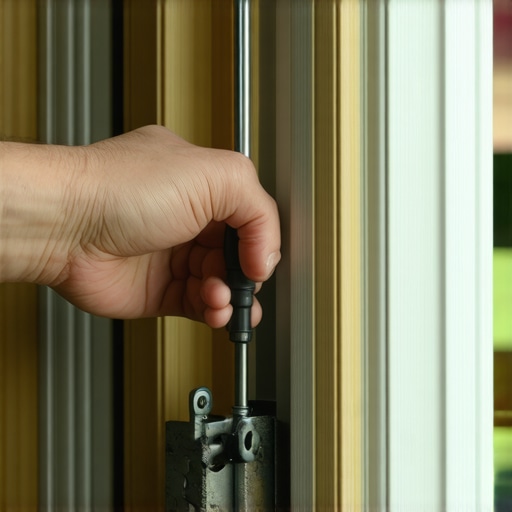
The Frustration of the Spinning Casement Handle
You turn the handle expecting the satisfying resistance of a high-performance sash moving into place, but instead, you feel a sickening lack of friction. The handle spins freely, and the window stays exactly where it is. As a glazier with over 25 years in the field, I have seen this failure mode in thousands of homes. It is a classic mechanical breakdown that points to a disconnect between the user interface (the handle) and the mechanical drive (the operator). When we talk about window repair, we are really talking about the physics of torque and the limitations of soft metals like zinc and aluminum. A casement window is a marvel of engineering designed to provide a compression seal that surpasses almost any other operable window type. But when the crank fails, that seal is compromised, and your home’s thermal envelope is breached.
The Boston Nor’easter: A Lesson in Hardware Fatigue
I remember pulling a casement operator out of a historic home in Boston during a brutal Nor’easter. The homeowner called because the window was stuck open about three inches, and the handle was just spinning. The previous installer had ignored the rough opening tolerances, forcing the sash to sit slightly crooked. To compensate, a previous window cleaner had used a pair of pliers to force the window shut over years of neglected maintenance. When I finally got the operator assembly out, the internal worm gear was completely sheared. The previous worker had relied on the hardware to overcome a structural misalignment, and the physics of the situation finally won. This is why I tell people that a spinning crank is often a symptom of a much larger issue, such as a sagging sash or a lack of proper lubrication on the hinge tracks. If the sash cannot move freely, the operator becomes a sacrificial lamb.
“Installation is just as critical as the window performance itself. A high-performance window installed poorly will fail.” – AAMA Installation Masters Guide
The Anatomy of the Failure: Splines and Worm Gears
To understand why your crank is spinning, you must understand the anatomy of the operator. The handle sits on a spindle, which is usually a splined shaft. These splines are small, vertical ridges that interlock with corresponding grooves inside the handle. In many cases, especially with cheaper builder-grade hardware, the handle is made of a softer zinc alloy while the spindle is made of hardened steel. Over time, if the window becomes difficult to open due to paint-bond or dirt, the harder steel spindle will strip the softer grooves inside the handle. This is the best-case scenario because replacing a handle is a five-minute job. However, if the handle is intact, the failure is internal. Inside the gearbox, a worm gear drives a larger gear attached to the arm. If those internal teeth are stripped, the entire operator must be removed and replaced. This is where the technical precision of a master glazier is required to ensure the new hardware is aligned perfectly within the rough opening.
The Cold Climate Reality: Why a Tight Seal Matters
In Northern climates where winter temperatures drop well below freezing, a casement window that does not close properly is a massive energy liability. Casement windows are favored in these regions because, unlike double-hung windows that slide, casements pull the sash tight against the weatherstripping. This creates a compression seal that significantly reduces air infiltration. When your crank spins and fails to pull the sash into the frame, you aren’t just dealing with a mechanical nuisance; you are losing heat through convection and increasing the risk of condensation. If the warm, moist air from your home hits the cold glass surface or leaks into the wall cavity, you will face rot and mold. For those in cold climates, the U-factor of the glass (the measure of heat transfer) is only as good as the hardware that keeps it closed. A low U-factor window that won’t seal is just an expensive hole in the wall. You need that operator to pull the sash against the frame with enough force to compress the gaskets, ensuring the dew point stays outside the wall assembly.
Step-by-Step Diagnostic and Repair Protocol
First, remove the set screw on the handle using an Allen wrench or a Phillips head screwdriver. Pull the handle off and inspect the splines. If the ridges on the spindle are sharp but the inside of the handle is smooth, you just need a new handle. This is a common window repair that homeowners can handle. If the spindle itself is smooth, or if you can turn the spindle with a pair of pliers and the arm doesn’t move, the operator is dead. To replace the operator, you must first open the window. If it is stuck shut, you may need to carefully remove the glazing bead to access the sash or try to manipulate the arm from the outside. Once open, disconnect the arm from the track on the bottom of the sash. You will likely need to remove the wooden or vinyl trim (the stool and apron) or the plastic cover on the operator to reach the mounting screws. Replace the old unit with a high-quality stainless steel operator. Before you button everything up, check the sash for squareness. If the sash is sagging, you must adjust the hinges or shim the glass within the sash frame to ensure it enters the opening without resistance.
“ASTM E2112 emphasizes that any breach in the window’s ability to maintain a tight seal compromises the thermal envelope of the entire structure.” – ASTM Standards for Fenestration
The Myth of Perpetual Performance
Many homeowners believe that once they replace windows, they never have to think about them again. This is a fallacy. Even the most expensive fiberglass or wood-clad windows require maintenance. A window cleaner should do more than just wipe the glass; they should be clearing the tracks and inspecting the weep holes. If the hinge tracks are full of grit and debris, the friction increases exponentially, putting massive stress on the crank mechanism. I recommend lubricating the hinge tracks and the operator arm with a dry silicone spray twice a year. Avoid thick greases that attract dust, which creates a grinding paste that will eat through your hardware in a matter of seasons. If you find yourself having to force the handle to get the window to lock, something is wrong with the alignment. Do not keep turning; instead, inspect the sash snubbers and the locking points. Proper window repair starts with prevention.
When to Repair and When to Replace
There comes a point where repairing a 30-year-old casement is throwing good money after bad. If the frame is showing signs of rot, or if the insulated glass unit (IGU) has a blown seal and is constantly foggy, it is time to replace windows entirely. Modern windows offer significantly better thermal performance, with Low-E coatings on Surface #3 for cold climates to reflect heat back into the room. However, if the frame is solid and the glass is clear, a simple operator replacement is a sustainable and cost-effective fix. A master glazier knows that the integrity of the window is a sum of its parts: the glass, the frame, the weatherstripping, and the hardware. If one fails, the system fails. Keep your hardware lubricated, your tracks clean, and never force a handle that doesn’t want to turn. Physics always wins in the end, and the splines on your crank are the first thing to go when you fight against a stuck window.