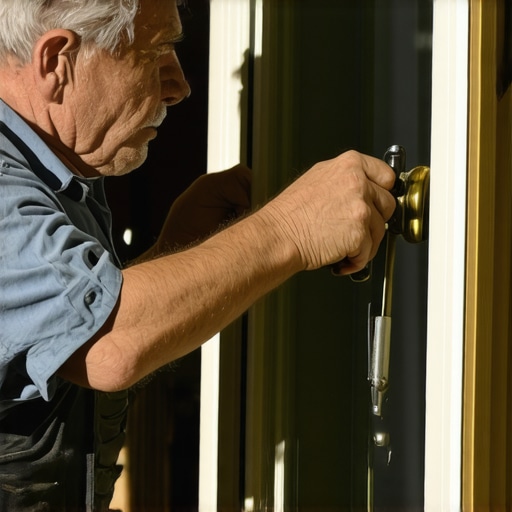
Nothing signals a failure of the thermal envelope quite like a casement window that refuses to seat properly against its weatherstripping. In my twenty-five years as a master glazier, I have seen every possible failure of the operable window, but the crank-handle casement is the most misunderstood. When that handle turns and the window remains stationary, or worse, the arm slips off the track mid-swing, the homeowner is left with more than just a security risk. They are left with a massive hole in their building envelope that allows expensive conditioned air to escape and outside humidity to infiltrate the rough opening.
The Sales Pitch Takedown: A Reality Check on Repair vs. Replacement
I recall sitting across from a homeowner in a drafty suburban colonial who had been visited by a high-pressure salesman earlier that morning. This ‘Tin Man’ had told them that because their casement windows were slipping off the track, the entire sash had warped beyond salvation and that they needed a full-frame replacement for the tune of thirty thousand dollars. He spoke about krypton gas and space-age coatings, but he ignored the fundamental physics of the window operator. I took one look at the mechanism, saw a loose set screw on the sliding shoe, and tightened it. Within sixty seconds, the window was functional. I had to explain to the homeowner that while triple-pane glass is an excellent investment for a new build in a cold climate, the ROI on replacing a structurally sound window just because of a hardware failure is often measured in centuries, not decades. This is why understanding the mechanics of your window repair is essential before you even consider the words replace windows.
“Installation and maintenance are just as critical as the window performance itself. A high-performance window that cannot close properly due to hardware neglect will fail to meet any of its energy efficiency ratings.” – AAMA Installation Masters Guide
The Mechanics of the Casement Operator: Why it Slips
To fix a crank-handle window, you must understand the physics of the operator arm. The crank you turn inside the house is a worm gear. It drives a gear that moves a steel arm. At the end of that arm is a nylon or steel shoe that slides within a stainless steel track mounted to the underside of the sash. When the arm slips off the track, it is usually due to one of three mechanical failures: a worn-out track, a damaged shoe, or an sash that has shifted out of its rough opening tolerances. In cold climates like Minneapolis or Chicago, where we focus on the U-Factor, a casement window is preferred because the wind actually pushes the sash tighter against the seals. However, if the hardware is failing, that seal is compromised, and the U-Factor essentially drops to zero. We talk about ‘Dew Point’ and ‘Solar Heat Gain,’ but those numbers only matter if the sash is locked tight. If the window is slipping, the mechanical advantage of the crank is lost, and you are fighting the weight of the sash against the friction of the track.
Diagnostic Steps for the Slipping Window
The first step in any window repair is to fully open the window and inspect the track. Use a high-quality window cleaner to remove years of debris, dead insects, and dried-up grease. A clean track is the only way to see if the metal has been flared open. Often, if a window has been forced open against a stuck seal, the force of the operator arm will bend the lips of the track. If the track is flared, the shoe will pop out every time the arm reaches that specific angle. You also need to inspect the sash itself. Is the glazing bead intact? Is the glass still centered in the sash? If the sash has sagged due to gravity or poor shim placement during the original installation, the angle of the arm will be incorrect, causing it to lever itself out of the track. We use the term ‘Operable’ to describe these windows, but they only remain operable if the geometry of the rough opening remains square.
The Thermal Impact of Faulty Hardware
In northern climates, the enemy is heat loss and condensation. A casement window that doesn’t close fully creates a cold spot on the interior glass surface. This drops the surface temperature below the dew point, leading to condensation that can rot out the wood muntins or the windowsill. By fixing the crank-handle mechanism, you are effectively restoring the thermal performance of the unit. We look for Low-E coatings on Surface #3 to reflect heat back into the room, but a 1/8-inch gap at the top of the sash due to a slipping arm will move more BTUs out of your house than any coating can save. This is why precise window repair is an energy-efficiency project as much as a mechanical one.
“The installation of replacement hardware must maintain the integrity of the original water-shedding system, including the sill pan and flashing.” – ASTM E2112 Standard Practice
Step-by-Step Fix: Restoring the Operator
First, detach the operator arm entirely. Check the splines on the crank handle and the operator stud. If they are rounded off, no amount of track work will fix the slipping feeling. If the splines are good, move to the track. If the track is flared, you can sometimes use a pair of vice-grips to gently crimp the track back to its original profile, but usually, a replacement track is the better option. Next, look at the shoe. If it is nylon and has a flat spot, it will catch and jump out. Replace the shoe if necessary. When reassembling, do not use heavy grease. Grease attracts grit, which turns into an abrasive paste that eats the hardware. Instead, use a dry silicone spray. This provides the necessary lubrication for the shoe to glide without the buildup. Finally, check the snubbers and hinges. If the hinges are caked with old window cleaner or dirt, the friction will be too high for the operator to handle, leading to the arm popping out under pressure. Ensure the flashing tape around the window is still intact if you have to remove any trim to access the operator housing. A master glazier knows that water management is a science, and every screw hole is a potential leak point if not handled with care.
When to Give Up and Replace Windows
While I advocate for repair, there is a point of no return. If you find that the sill pan is rusted through or the wood at the bottom of the sash is so soft you can poke a screwdriver through it, the mechanical failure of the crank is just a symptom of a dead window. At that point, you are looking at a full-frame replacement. In that case, you want to look for a window with a high-performance warm-edge spacer and a multi-point locking system. A multi-point lock pulls the sash into the frame at three different points, taking the pressure off the crank operator and ensuring a long-term air seal. But until that wood is rotted, keep your tools out and your checkbook closed. Most of these ‘failures’ are just maintenance issues that a little patience and the right trade cant can solve. Keep your weep holes clear, your tracks clean, and your hardware lubricated, and that casement window will outlast the mortgage.