The Thermodynamics of Fenestration: Why Heat is the Enemy of Clarity
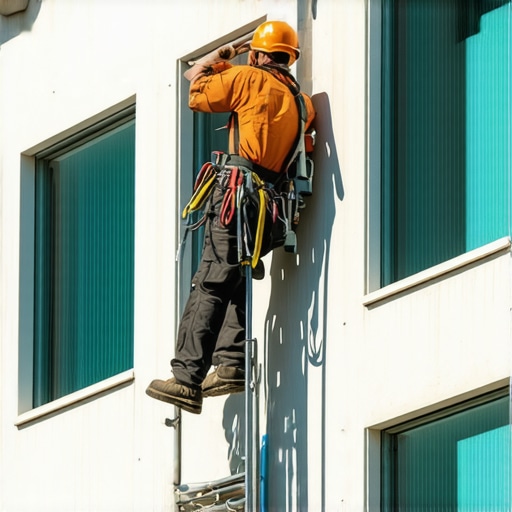
As a master glazier with a quarter-century in the trade, I have seen every possible failure in window performance and maintenance. One of the most common mistakes that even professional window cleaner crews make on high-rise structures is attempting to work in direct solar exposure. It is not just about the difficulty of the job; it is about the physics of the glass itself. When we talk about high-performance glazing, we are talking about a complex system of coatings and gas fills designed to manage energy. A window is essentially a thermal battery. In a high-rise environment, the glass is subjected to intense ultraviolet radiation and heat absorption. When you introduce a cold cleaning solution to a pane that has been baking in the sun, you are creating a recipe for failure, streaking, and in extreme cases, thermal shock. This is where a deep understanding of the Solar Heat Gain Coefficient (SHGC) becomes vital for anyone involved in building maintenance.
The Condensation Crisis: A Master Glazier Narrative
I recall a specific instance where a building manager in a high-rise residential tower called me in a total panic. They had just invested hundreds of thousands of dollars to replace windows throughout the south facade, and within weeks, the residents were complaining that the new windows were ‘sweating’ on the interior. The manager was convinced that the IGU (Insulated Glass Unit) seals had failed across the entire building. I arrived on-site with my hygrometer and a thermal imaging camera. After spending an hour in three different units, I had to break the news: it was not the windows. I showed them that the interior humidity was hovering at 60 percent while the residents were running humidifiers during a cold snap. The high-performance Low-E coating was doing its job by keeping the inner pane warmer than the old single-pane units ever were, but the sheer volume of moisture in the air had nowhere to go. It was a lifestyle and HVAC issue, not a glazing failure. This taught that manager that even the best window repair or replacement cannot overcome the basic laws of psychrometrics if the interior environment is not managed correctly.
“Installation is just as critical as the window performance itself. A high-performance window installed poorly will fail.” – AAMA Installation Masters Guide
The Science of Surface Temperature and Surfactants
When a window cleaner applies a solution to glass in direct sunlight, the evaporation rate increases exponentially. Most cleaning agents are surfactants designed to lower the surface tension of water, allowing it to encapsulate dirt and particulates. However, when the glass surface temperature exceeds 100 degrees Fahrenheit, the water carrier evaporates before the squeegee can remove the suspended solids. This leaves behind a microscopic layer of soap residue and mineral deposits that can actually bond to the glass or the hydrophilic coating. Over time, this repeated ‘burning’ of chemicals into the glass surface can lead to permanent etching. If you are looking to replace windows because they look perpetually hazy, it might not be a seal failure; it might be decades of poor maintenance in the wrong lighting conditions. On high-rise buildings, we often use glass with a Low-E coating on Surface 2 to reflect heat back outside. This means the outer pane (Surface 1) gets incredibly hot because the heat is being bounced back through it from the coating behind it. Cleaning this surface in the sun is a fool’s errand.
The Technical Breakdown: U-Factor and SHGC in High-Rise Glazing
To understand why we wait for the shade, we have to look at the NFRC labels. In a southern-facing high-rise context, the SHGC is the king of metrics. A low SHGC means the glass is highly effective at blocking solar radiation. This is achieved through thin-film metallic oxides sputtered onto the glass in a vacuum chamber. These coatings are sensitive. While they are usually protected inside the IGU, the thermal stress placed on the glass during a hot day is immense. If you are considering a window repair for a cracked pane, you must ensure the replacement glass matches the original specifications exactly. Using a pane with a different SHGC or U-Factor (the measure of non-solar heat flow) will not only ruin the aesthetic of the building but can also cause the new pane to expand and contract at a different rate than its neighbors, leading to stress cracks at the glazing bead.
“Standard practice for the installation of exterior windows, doors and skylights requires that the water-resistive barrier be integrated with the fenestration unit to ensure a continuous drainage plane.” – ASTM E2112
Anatomy of the High-Rise Window: From Rough Opening to Sill Pan
Maintenance is not just about the glass; it is about the entire system. Every window cleaner should be trained to look for signs of wear in the peripheral components. The weep hole, for instance, is a critical feature of any window frame. These small openings are designed to allow water that bypasses the primary seals to exit the frame. In many high-rise window repair scenarios, I find that these holes have been painted over or clogged with debris, leading to water backing up into the building. When we replace windows in these structures, we pay close attention to the sill pan and the flashing tape. If the rough opening was not properly flashed during the original construction, no amount of high-end glazing will prevent water ingress. We use shims to perfectly level the unit within the opening, ensuring that the operable sash can move freely without binding. A window that is out of square by even an eighth of an inch will eventually suffer from air infiltration and hardware failure.
The Mathematics of Window ROI: Comfort vs. Cost
Many homeowners and building managers are sold on the idea that they should replace windows to save money on energy bills. While new windows do improve efficiency, the real ROI is often measured in comfort and building longevity. A triple-pane unit with argon or krypton gas fill will significantly lower the U-Factor, making the room feel more stable. The gas acts as an insulator because it is heavier and slower-moving than air, reducing the convective currents within the IGU. However, if the window repair is limited to just replacing the glass without addressing the air leaks around the frame, the energy savings will be negligible. We look at the entire envelope. Is the glazing bead still pliable? Is the muntin purely decorative or is it a true divided lite that complicates the cleaning process? These are the technical details that dictate the maintenance schedule.
Structural Integrity and Thermal Stress
In high-rise maintenance, the wind load is a factor we cannot ignore. The glass must be thick enough to withstand positive and negative pressures at high altitudes. When we clean or repair these units, we are interacting with a system under tension. Direct sunlight causes the glass to expand within the frame. If the shims were placed too tightly or if the glazing pocket does not allow for this expansion, the glass will eventually fail. This is why we schedule our most sensitive work for the early morning or the late afternoon when the glass is in its most stable thermal state. By avoiding the peak heat of the day, we ensure that our cleaning solutions work as intended and that we are not adding unnecessary stress to the glazing system. Understanding the relationship between the rough opening, the frame material, and the glass tech is what separates a true glazier from a handyman with a ladder.