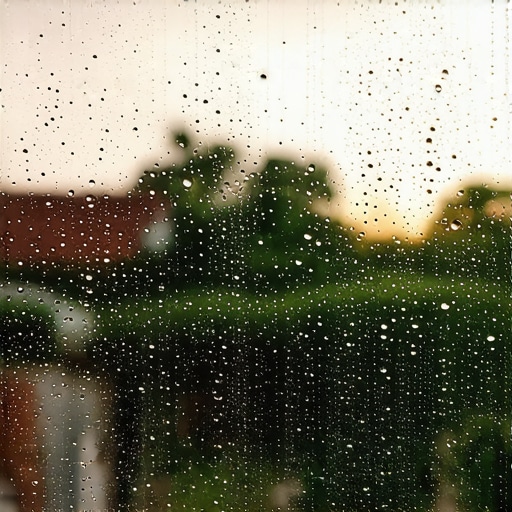
The Science of Surface Tension and Window Maintenance
Most homeowners treat glass as a solid, impenetrable barrier, but as a master glazier, I see it differently. Glass is an amorphous solid with a microscopic surface profile that can trap minerals, pollutants, and the very surfactants found in your blue-tinted window cleaner. When you use heavy soaps, you are often just redistributing oils across the glazing bead and the sash. This leads to the dreaded streaking that catches the low-angle sun in October. To truly achieve a rain-repellent finish that rivals factory-applied hydrophobic coatings, we have to look at the chemistry of the glass surface itself.
A homeowner called me in a panic last spring because their new high-efficiency windows were ‘sweating’ and looked permanently hazy. I walked in with my hygrometer and a high-powered inspection light. I showed them that the humidity was nearly 60 percent, but more importantly, the ‘haze’ was actually a thick layer of paraffin and silicone residue from a cheap store-bought window cleaner. It wasn’t a seal failure; it was their cleaning routine. I used a simple cornstarch mixture to strip the glass back to its virgin state, and the ‘fog’ disappeared instantly. It is a classic case of why understanding your materials matters more than buying the most expensive chemicals.
“Installation is just as critical as the window performance itself. A high-performance window installed poorly will fail.” – AAMA Installation Masters Guide
Why Traditional Soaps Fail the Glass Class
Standard dish soaps and commercial cleaners are designed to lift grease, but they often contain wetting agents that leave a microscopic film. This film is hydrophilic, meaning it loves water. When it rains, the water clings to this residue, flattens out, and traps dirt as it evaporates. This is why your windows look worse after a light drizzle. If you are tired of the cycle of cleaning, you might be tempted to replace windows entirely, but unless the IGU (Insulated Glass Unit) has a breached seal, a technical cleaning can often restore the VT (Visible Transmittance) to original specifications. If the glass is etched by hard water, however, you move from the realm of cleaning into window repair or full sash replacement.
The Cornstarch Physics: How a Pantry Staple Outperforms Chemicals
Cornstarch is a miracle for glazing. It acts as a very fine, non-polymeric abrasive. On a molecular level, the starch granules are jagged enough to mechanically break the bond of mineral deposits and old soap scum without reaching the Mohs hardness required to scratch the glass itself. When mixed with water and a bit of vinegar, it creates a solution that suspended the debris. As you wipe it away, the cornstarch absorbs the oils, leaving the glass surface completely bare. This bare surface is naturally more hydrophobic than a soap-filmed surface, causing rainwater to bead and roll off the pane before it can leave a spot. This is critical for the longevity of the unit, as it prevents water from sitting in the glazing pocket where it could eventually overwhelm the weep hole system.
“Properly maintained glazing systems are essential for the thermal performance and structural integrity of the building envelope.” – ASTM E2112 Standard Practice
Step-by-Step: The $1 Cornstarch Hack
To execute this correctly, you need to treat the window as a precision instrument. Start by inspecting the rough opening and the sill pan for any debris. If the weep holes are clogged, no amount of cleaning will save your frames from rot. Mix one tablespoon of cornstarch into a quart of warm water, adding a splash of white vinegar to help dissolve any calcium. Use a lint-free microfiber cloth to apply the mixture. You will notice the solution dries to a light powder. This is where the magic happens. Use a dry cloth to buff the powder away. The friction removes the microscopic residues that ‘window cleaner’ products leave behind. You are not just cleaning; you are polishing the glass at a microscopic level.
When Cleaning Reveals the Need for Window Repair
While this hack works wonders for visibility, it often reveals the structural issues that a layer of dirt was hiding. If you notice moisture between the panes during your cleaning, the desiccant in the spacer bar is saturated, and the seal has failed. In this scenario, no hack will help; you need professional window repair to replace the IGU. Similarly, if you find that the sash is difficult to move or the weatherstripping is brittle, the energy efficiency of the unit is compromised. A window’s U-Factor—the rate at which it loses non-solar heat—is heavily dependent on the air-tightness of the assembly. If the frame has warped or the shims have shifted, the gap between the sash and the frame will allow for significant air infiltration, making even the cleanest glass feel like a hole in your budget.
Thermal Performance and Maintenance
In colder climates, maintaining a clean glass surface is about more than just aesthetics. A clean surface ensures that the Low-E coatings—whether they are on Surface 2 or Surface 3—can function without interference. When dirt and grime build up, they can slightly alter the emissivity of the glass, though the primary concern remains the degradation of the seals. If you are in a high-moisture environment, keeping the exterior glass clear allows for better solar heat gain during the winter months, which can marginally reduce the load on your heating system. For those with high-performance triple-pane units, keeping the glass clear is the only way to justify the initial investment in such high-spec technology. Don’t let a $0.05 layer of soap scum ruin the performance of a $1,000 window unit.
Conclusion: Precision Over Price
The goal of window maintenance should be to preserve the clarity and the thermal envelope of your home. By ditching the soap and utilizing the cornstarch method, you are opting for a technical solution that respects the material science of glass. It is a cost-effective way to ensure your windows perform as intended, but always keep an eye on the hardware and the perimeter seals. A clean window is a beautiful thing, but a dry, airtight window is what keeps your home standing for the next fifty years.