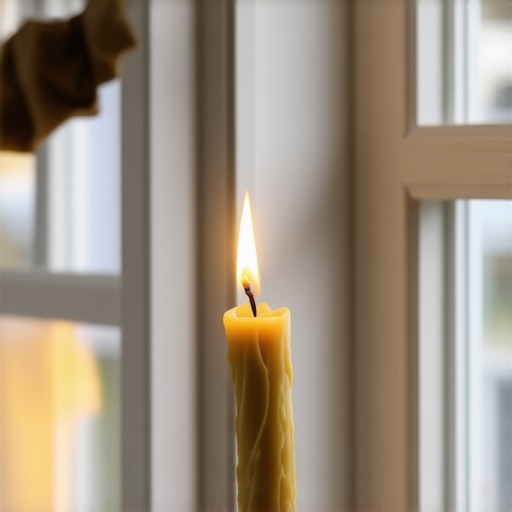
The Science of the Flicker: Diagnosing Window Failure
In my twenty-five years as a glazier, I have seen every shortcut in the book. Most homeowners ignore their windows until the glass cracks or the frame rots, but the silent failure happens much sooner. It starts with a draft that you cannot see but can definitely feel. This is where the candle test comes in. If you hold a lit candle near your window sash on a windy day and the flame dances, you are looking at a failure of the air infiltration barrier. This isn’t just a minor annoyance; it is a sign that your home’s building envelope has been compromised. Air leakage is measured in cubic feet per minute per square foot of window area, and a significant flicker indicates your windows are likely performing well below the industry standard of 0.30 cfm/sq ft.
“Installation is just as critical as the window performance itself. A high-performance window installed poorly will fail.” AAMA Installation Masters Guide
I remember a call I took last February from a homeowner in a high-wind corridor. They were in a panic because their relatively new windows were ‘sweating’ and the curtains were moving even though the windows were locked tight. I walked in with my hygrometer and a simple smoke pen. The humidity was over 60 percent, and the air was whistling past the meeting rail. It wasn’t just the windows; it was a combination of their lifestyle and a poor installation where the shims were misplaced, causing the frame to bow. This is the reality of the ‘caulk-and-walk’ installer who ignores the structural integrity of the rough opening. They think a bit of expanding foam fixes everything, but if the window isn’t plumb, level, and square, the weatherstripping will never seat properly.
The Installation Autopsy: Why Windows Leak
When we talk about a window failing, we are rarely talking about the glass itself. We are talking about the system. A window is a hole in your thermal envelope that must manage water, air, and heat. The most common point of failure is the interface between the window frame and the rough opening. If the previous installer didn’t use a proper sill pan, any water that gets past the glazing bead has nowhere to go but into your wall studs. I have performed countless autopsies on window openings where the header was black with rot because the drip cap was missing or the flashing tape was applied in the wrong order, violating the shingle principle where every layer must overlap the one below it.
For those in cold climates, the enemy is conductive heat loss. This is where the U-Factor becomes the most important number on your NFRC label. A low U-Factor means the window is better at keeping the heat inside. We achieve this through the use of an Insulated Glass Unit (IGU). An IGU isn’t just two panes of glass; it is a sealed environment. The gap is typically filled with Argon gas, which is denser than air and slows down the convective currents between the panes. If that gas leaks out, a process called desiccation failure occurs, often leading to the ‘sweating’ or fogging you see between the glass. At that point, a window repair is often more expensive than a full replace windows project because the seal is gone.
“The thermal performance of a fenestration system is determined by the heat transfer through the center-of-glass, the edge-of-glass, and the frame.” NFRC 100-2010
Materials Matter: Vinyl, Fiberglass, and the Expansion Factor
Choosing the right frame material is a matter of thermal stability. Vinyl is popular because it is cost-effective, but it has a high coefficient of thermal expansion. In a region with 100-degree temperature swings between summer and winter, a vinyl frame can expand and contract significantly, putting stress on the sealant joints and the weep hole system. Fiberglass, on the other hand, is made of glass fibers and resin, meaning it expands at almost the same rate as the glass itself. This leads to much longer seal life for your IGU. If you are hiring a window cleaner and they notice the glazing bead is popping out, it is often because the frame has moved too much for the glass to keep up. This is a technical failure that a simple bead of caulk cannot fix.
The High Cost of Poor Thermal Logic
In northern regions, we focus on Surface #3 for our Low-E coatings. By placing the microscopic metallic layer on the third surface of the glass (counting from the outside in), we allow solar heat to enter the home during the winter while reflecting the long-wave infrared heat from your furnace back into the room. If you get this wrong, or if a salesperson sells you a ‘Southern’ glass package in a cold climate, you will be shivering all winter regardless of how new your windows are. The candle test is the first step in realizing that your home is losing the battle against the elements. If the flame flickers at the sash or where the muntin meets the frame, it is time to stop looking for a temporary window repair and start looking for a master installer who understands the physics of the rough opening. Managing a window means managing the dew point; if the interior glass surface temperature drops below the dew point of the room’s air, you will have condensation, which leads to mold and the eventual destruction of your drywall.