The Glazier’s Secret: Why Your Windows Aren’t Actually Broken
I have spent over two decades in the glazing industry, hauling heavy IGU units up ladders and fixing the disasters left behind by installers who think a tube of cheap silicone solves every problem. Most homeowners are told they need to replace windows the moment they feel a slight chill or see a fogged pane. It is the oldest trick in the book used by high-pressure sales outfits. They want you to sign a five-figure contract when the reality is often a twenty-dollar fix. Before you commit to a full tear-out, you need to understand the physics of the window repair world and perform what I call the 2026 Air-Tight Seal Test.
“Installation is just as critical as the window performance itself. A high-performance window installed poorly will fail.” – AAMA Installation Masters Guide
A few winters ago, I received a call from a frantic homeowner in a sub-zero climate. They were convinced their three-year-old double-hung windows were defective because the sills were constantly wet. I walked in with my digital hygrometer and discovered the indoor humidity was hovering at 58 percent while it was negative ten degrees outside. The windows weren’t leaking air; the homeowners were essentially running a tropical rainforest inside a sealed box. The moisture was condensing on the cold glass surface because the dew point had been reached. This is a classic example of why you do not always need to replace windows. Sometimes, you just need to manage your interior environment or replace a failing glazing bead.
The 2026 Air-Tight Seal Test: A Technical Walkthrough
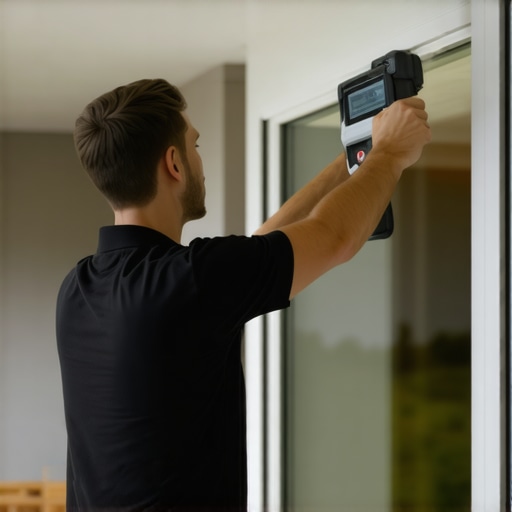
To determine if your windows are truly failing, we use a three-stage diagnostic. First, the Smoke Pen Test. Forget the candle; it is too messy. A non-toxic smoke pen allows you to see the micro-currents of air. Run it along the sash meeting rail and the jamb. If the smoke dissipates rapidly or is pulled toward the exterior, your weatherstripping has lost its compression set. This is a common window repair that does not require a full replacement. Second, the Dollar Bill Test. Close the window on a crisp bill. If you can pull it out without resistance, the operable parts are not engaging the seals. Finally, the Thermal Gradient Check. Use an infrared thermometer to check the temperature of the glass versus the frame. If the frame is significantly colder than the glass, you have a thermal bridge issue, likely due to missing insulation in the rough opening.
“Standard Practice for Installation of Exterior Windows, Doors and Skylights requires a continuous air barrier and proper integration with the water-resistive barrier.” – ASTM E2112
Understanding the Anatomy of Failure
When we talk about windows, we are talking about a complex assembly of parts. The sash is the part that holds the glass; the muntins are the grids that divide the panes. If you see moisture inside the two panes of glass, the seal of the Insulated Glass Unit (IGU) has failed. This is caused by solar pumping. As the sun hits the window, the gas inside expands and pushes against the seals. At night, it contracts. Over thousands of cycles, the seal eventually fractures. However, you can often just replace the IGU rather than the entire frame. This is a much more cost-effective window repair. A professional window cleaner can often spot these early signs of seal failure before they become a fogged-out mess.
The Physics of Heat Loss in Cold Climates
In northern regions, the U-Factor is the most critical metric. This measures the rate of non-solar heat loss. If your windows are cold to the touch, it is often because the Low-E coating was applied to the wrong surface or is non-existent. In cold climates, we want the Low-E coating on Surface #3 (the exterior-facing side of the inner pane) to reflect heat back into the room. If your window repair specialist suggests a triple-pane upgrade, ensure they are also checking the sill pan and flashing tape. Without a proper water management system, even a triple-pane window will eventually cause rot in your wall studs. I have seen rough openings completely disintegrated because an installer relied on the nailing fin rather than a mechanical flashing system.
Why Maintenance Trumps Replacement
Before you look into the cost to replace windows, consider the mechanical maintenance. Just like a car, a window has moving parts. Lubricating the balances, cleaning the weep holes so water can escape the frame, and replacing worn-out shims can extend the life of your fenestration by decades. If you are hiring a window cleaner, ask them to check the condition of the exterior caulking. If it is cracked or pulling away, that is your first entry point for moisture. A small bead of high-quality polyurethane sealant can prevent a thousand-dollar window repair down the road. Remember, the goal of the 2026 Air-Tight Seal Test is to give you data, not a sales pitch. If the frame is square, the wood is solid, and the sash operates smoothly, you have a repairable asset, not a liability.