The Chemistry of Glass Corrosion: Why Your Windows Look Permanently Fogged
As a master glazier with over 25 years in the field, I have seen thousands of homeowners make the same mistake: they see a white, hazy film on their glass and assume the seal has failed and they need to replace windows immediately. But before you sign a ten-thousand-dollar contract for a full-frame tear-out, you need to understand the physics of what is actually happening on your glass surface. Hard water spots are not just ‘dirt.’ In the industry, we call this stage-one or stage-two corrosion. When mineral-heavy water—usually from a poorly aimed irrigation system or alkaline rain—hits your glass, the water evaporates, leaving behind calcium and magnesium deposits. If left in the sun, these minerals undergo a chemical bond with the silica in the glass, effectively ‘etching’ themselves into the surface.
The Narrative: The $20,000 Misdiagnosis
A homeowner called me in a panic because their new windows were ‘sweating’ and turning white. I walked in with my hygrometer and showed them the humidity was 60%, but more importantly, I looked at the exterior glass. I pulled out a 10x jeweler’s loupe and showed them the crystalline structure of the magnesium buildup. It wasn’t the windows; it was their lifestyle and their sprinkler system. They were ready to spend $20,000 on a window repair that wouldn’t have solved the problem because the root cause was environmental. We didn’t need a new sash; we needed a chemical restoration of the existing glazing bead and glass pane.
“Installation is just as critical as the window performance itself. A high-performance window installed poorly will fail, but a well-installed window that is not maintained will degrade just as fast.” – AAMA Installation Masters Guide
The 2026 Method: Beyond the Squeegee
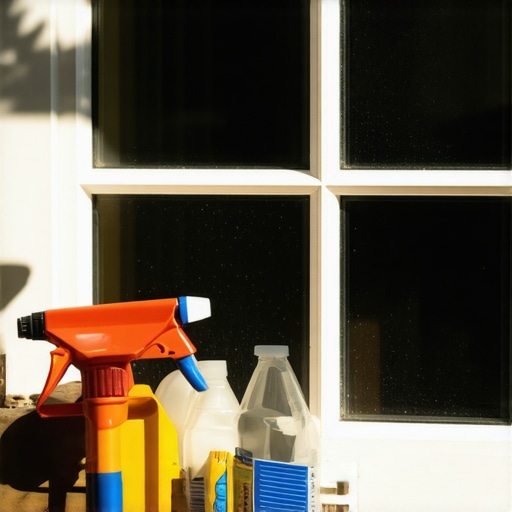
By 2026, the industry has moved far beyond the ‘vinegar and newspaper’ myths. We are now utilizing nanotechnology-driven window cleaner solutions that rely on molecular leveling. Traditional cleaners are too high on the pH scale or lack the surfactants to break the ionic bond of calcium carbonate. The 2026 method involves a three-phase approach: Acidic Dissolution, Mechanical Polishing with Cerium Oxide, and Hydrophobic Sealing.
[image_placeholder_1]
First, we use a mild phosphoric acid solution. This isn’t your grocery store spray. This acid specifically targets the alkaline minerals without pitting the glass. Second, we use a shim-level precision when handling the operable parts of the window to ensure no chemicals leak into the sill pan. If these chemicals sit in the weep hole, they can corrode the internal spacers of the IGU (Insulated Glass Unit).
The Technical Deep Dive: Why SHGC and Climate Matter
If you live in a hot, southern climate like Phoenix or Florida, the sun acts as a catalyst. The Solar Heat Gain Coefficient (SHGC) isn’t just about how much heat enters your home; it’s about the temperature of the glass itself. In high-heat zones, the exterior glass surface can reach temperatures exceeding 140 degrees Fahrenheit. This heat ‘bakes’ the minerals into the glass at an accelerated rate. For these homes, we often recommend a Low-E coating on Surface #2, which helps reflect the heat, but the exterior surface still remains vulnerable to mineral etching.
“Proper maintenance of the glass and framing members is essential to ensuring the design life of the fenestration product. Neglect leads to irreversible surface degradation.” – NFRC Maintenance Standards
When to Repair vs. When to Replace
There is a point of no return. If you can feel the spots with your fingernail, you have reached Stage 3 corrosion. At this point, the minerals have eaten ‘pits’ into the glass. No window cleaner in the world can wash away a hole. This is when you must look at window repair options like professional glass polishing, which involves removing a microscopic layer of the glass surface. However, if the pitting is deep enough to compromise the structural integrity or the thermal performance of the IGU, it is time to replace windows.
When replacing, I always tell my clients to look at the flashing tape and the rough opening. If your previous windows were spotting, it’s possible water was also sitting in the muntins or the sash tracks. A proper install in 2026 requires a sill pan with a positive slope to ensure that any water—mineral-heavy or not—is evacuated immediately through the weep holes and away from the building envelope.
The Step-by-Step 2026 Restoration Protocol
1. **Decontamination:** Wash the window with a pH-neutral soap to remove loose particulates that could scratch the glass during polishing. 2. **Chemical Breakdown:** Apply a 2026-grade hydrochloric-citric acid blend to the spots. Let it dwell for 45 seconds—never in direct sunlight. 3. **Mechanical Agitation:** Use a 0000-grade synthetic steel wool or a specialized glass polishing pad. 4. **Neutralization:** Rinse with deionized water to ensure no acid remains in the glazing bead. 5. **Protection:** Apply a ceramic hydrophobic coating. This fills the microscopic pores of the glass, making it so smooth that water—and the minerals it carries—cannot find a ‘toehold’ to bond to.
Final Thoughts from the Glazing Bench
Don’t be fooled by the ‘Tin Man’ salesman telling you that a little hard water means your windows are ‘blown.’ Glass is a porous material on a molecular level. Treat it with the same respect you would the engine of a car. Use the right chemistry, maintain your weep holes, and you can extend the life of your glazing by decades. Water management is a science, not a chore.