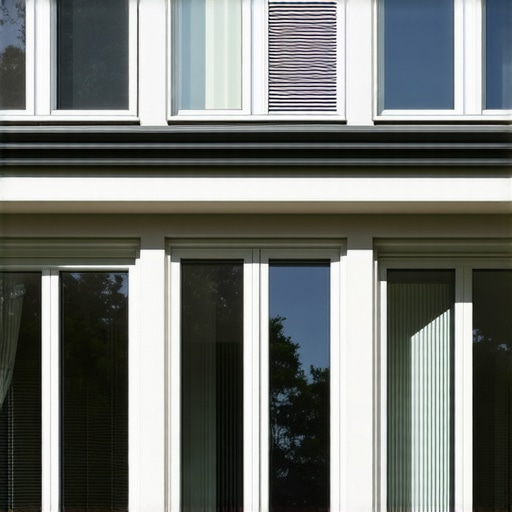
The Thermal Frontier: Why Bulk Still Beats the Vacuum in 2026
As we approach 2026, the fenestration industry is locked in a high-stakes arms race between the brute force of triple-pane technology and the surgical precision of Vacuum Insulated Glass (VIG). After twenty-five years of pulling sashes and leveling sills, I’ve seen every ‘revolutionary’ material come and go. I’ve watched as homeowners were promised the world by high-pressure sales reps, only to find themselves calling me five years later for a window repair because their ‘bleeding edge’ technology didn’t account for simple physics. To understand why triple-pane is still the superior choice to replace windows in your home this year, we have to look past the marketing brochures and into the physics of the IGU (Insulating Glass Unit).
The Condensation Crisis: A Reality Check
I remember walking into a high-end residence in suburban Chicago last winter. The homeowner was in a full-blown panic because their brand-new, expensive windows were ‘sweating’ at the edges of the glazing bead. They assumed the seals had failed instantly. I pulled out my hygrometer and found the indoor relative humidity was hovering at 62% while it was eight degrees outside. I had to explain that even the most advanced glass can’t defy the dew point if your interior environment is a swamp. It wasn’t a product failure; it was a lack of understanding regarding how thermal bridging at the spacer affects the interior glass temperature. This is where the choice between triple-pane and vacuum glass becomes critical. While vacuum glass offers an impressive center-of-glass R-value, its edge-of-glass performance often creates the very cold spots that lead to mold growth on your sash.
“Installation is just as critical as the window performance itself. A high-performance window installed poorly will fail to meet its energy-saving potential and may lead to structural damage.” – ASTM E2112 Standard Practice for Installation of Exterior Windows
The Physics of the Pocket: Triple-Pane vs. VIG
Triple-pane windows work through the principle of multi-layered resistance. By using three lites of glass, we create two distinct chambers. These aren’t just dead air spaces; they are filled with inert gases like Argon or Krypton. In a triple-pane setup, we can apply Low-E (low-emissivity) coatings to Surface #2 and Surface #5. This ‘Glazing Zooming’ allows us to reflect long-wave infrared radiation back into the house during a Minneapolis winter while still admitting visible light. Vacuum Insulated Glass, on the other hand, relies on a narrow 0.1mm to 0.2mm gap where the air has been evacuated. While a vacuum is a near-perfect insulator against conduction and convection, it requires thousands of tiny ‘micro-pillars’ or spacers to keep the glass from imploding under atmospheric pressure. These pillars act as thousands of tiny thermal bridges. When you replace windows with VIG, you are betting on the longevity of a perimeter seal that must maintain a vacuum for decades. In my experience, the more ‘active’ a component is, the more likely it is to fail.
The Weight of the Argument: Frames and Hardware
One common complaint about triple-pane is the weight. A standard triple-pane IGU is significantly heavier than a double-pane or VIG unit. This necessitates a robust frame—typically fiberglass or high-quality vinyl with multi-chambered profiles. It also requires heavy-duty operators if you’re installing casements. However, that mass is your friend. It provides superior sound attenuation (STC ratings) and structural rigidity. VIG is thin—often thin enough to be retrofitted into old 1/4-inch wood sashes. While that sounds appealing for historic preservation, it often leaves you with a high-performance glass unit sitting in a leaky, uninsulated rough opening. If the air is whistling around the shim and through the weight pocket, the R-12 glass is irrelevant. When you opt for a full-frame replacement with triple-pane, you are ensuring that the sill pan, flashing tape, and weep hole systems are all integrated into a modern, managed opening.
Decoding the NFRC Labels for 2026
When you look at the NFRC label on a 2026-model window, you need to look at the U-factor, not just the R-value. The U-factor measures the rate of heat loss for the *entire* window assembly.
“The NFRC provides a fair, accurate, and credible rating system for the energy performance of windows, doors, and skylights, ensuring consumers can compare products based on standardized metrics.” – NFRC Performance Guidelines
Triple-pane windows are currently hitting U-factors as low as 0.15. VIG can technically reach lower, but the cost-per-point of improvement is astronomical. For the average homeowner, the ROI on VIG is measured in half-centuries, whereas triple-pane provides immediate comfort benefits that justify its cost within 10 to 15 years in northern climates.
Maintenance and Longevity: The Installer’s View
Any window cleaner will tell you that cleaning glass with internal micro-pillars can be a strange experience. From certain angles in the sun, you can see the grid of spacers inside VIG. While subtle, it’s a visual artifact that some find distracting. More importantly, from the perspective of window repair, a failed triple-pane unit is easy to diagnose and replace. If a VIG seal fails, the vacuum is gone, and the thermal performance drops to nearly zero instantly. Triple-pane units, even if they lose some gas over twenty years, still have two physical barriers and two air gaps providing insulation. They are a ‘fail-safe’ technology, whereas VIG is a ‘fail-cold’ technology.
The Verdict: Why 2026 is the Year of Triple-Pane
In 2026, we are seeing the maturation of triple-pane manufacturing. It is no longer a specialty product; it is the benchmark for high-performance housing. It handles the ‘Shingle Principle’ of water management better because the frames are designed for the unit’s thickness, incorporating better drainage paths and deeper glazing beads. If you are looking to replace windows, don’t get distracted by the space-age allure of vacuum glass. Stick to the proven thermal mass of triple-pane. It’s the difference between a window that looks good on a spec sheet and a window that keeps your toes warm when the wind is howling off the lake at two in the morning. Focus on the installation, ensure your contractor uses a proper sill pan, and verify the rough opening is flashed correctly. That is how you manage a hole in your wall for the next thirty years.
This post provides a compelling analysis of why triple-pane windows continue to hold their ground against vacuum insulated glass, especially with the advancements in frame and installation techniques. I agree that the physical robustness of triple-pane units, combined with better water management in framing, makes them a more reliable investment in the long run. Having replaced windows in older homes myself, I’ve found that proper installation — including sill pans and flashing — often makes the biggest difference in performance and durability. The point about the micro-pillars in VIG acting as thermal bridges is eye-opening; I hadn’t considered how those tiny spacers could impact overall insulation. From my experience, the simplicity of diagnosing and replacing a failed triple-pane unit is a big plus, especially when planning for maintenance decades down the line. Has anyone here had direct experience with VIG in retrofit projects, and what challenges did you face regarding the long-term seal integrity? It seems like for most homeowners, the tried-and-true reliability of triple-pane might still outweigh the space-age allure of vacuum technology.
I found this article to be a really comprehensive look at why triple-pane windows still hold such strong relevance in 2026. Having dealt with both high-end upgrades and restoration projects, I can attest that robust framing and correct installation habits really make or break the insulation performance, regardless of the glass tech. The explanation about micro-pillars in VIG as thermal bridges was particularly insightful for me, as it clarifies why vacuum insulated glass might not always deliver as promised over the decades. I also appreciate the emphasis on U-factors and overall assembly performance rather than just R-values, which is often overlooked. One thing I wonder about is how the newer triple-pane designs with advanced Low-E coatings are evolving to further close the gap with VIG, especially for colder climates. Does anyone have thoughts on how these improvements might influence future choices for homeowners looking for both energy efficiency and durability? Overall, I agree that in the real world, a well-installed, heavier, but more durable triple-pane window could be the smarter investment.