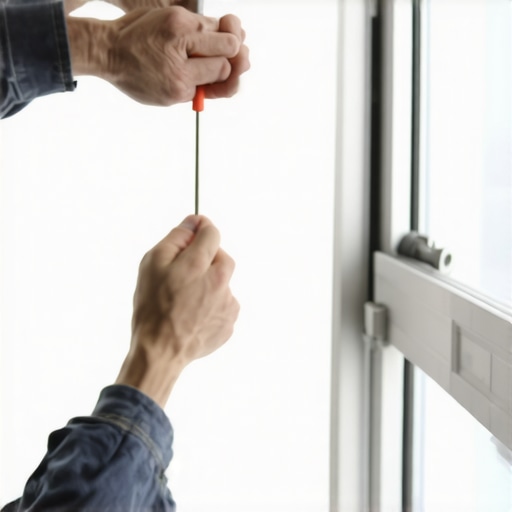
The Frustration of the Partial Opening: Why Your Sash is Stalling
There is a specific kind of irritation that occurs when you try to catch a cross-breeze on a spring afternoon, only for your window to stop dead after three inches of travel. As a glazier with over two decades in the field, I have seen homeowners nearly rip the handles off their casements or snap the lift rails on their double-hung units out of sheer desperation. A window that only opens a few inches is not just an inconvenience; it is a symptom of mechanical failure, structural shift, or a fundamental misunderstanding of the window’s anatomy. We are going to look past the surface and examine the physics of the sash, the tension of the balances, and the geometry of the rough opening.
I remember a call-out to a beautiful Victorian restoration in a cold-climate region where every single window in the master bedroom was stuck. The homeowner assumed the wood had simply swollen from the humidity. I pulled one of the sashes out and found that a previous ‘handyman’ had used standard interior caulk to fill gaps between the stop molding and the sash because he thought it would stop drafts. He had effectively glued the operable components together. But more often than not, the culprit is hidden inside the jamb. When I see a window that refuses to travel its full length, I am looking for the struggle between the hardware and the frame. This is not a ‘hit it with a hammer’ situation; it is a ‘measure twice, diagnose once’ situation.
“Installation is just as critical as the window performance itself. A high-performance window installed poorly will fail.” – AAMA Installation Masters Guide
The Anatomy of Movement: Understanding Balances and Tracks
In a double-hung window, the movement is governed by a balance system. Whether it is a block-and-tackle, a spiral balance, or a constant force coil, these mechanisms are designed to counteract the weight of the glass. When a window only opens a few inches, the balance may have reached a ‘dead spot’ or the shoe—the piece connecting the sash to the balance—has become jammed. In cold climates, the U-Factor of your window matters for heat retention, but the mechanical tolerances matter for operation. If the frame has bowed due to thermal expansion or contraction, the track becomes a pinch point.
If you are dealing with a vinyl window, the material has a high coefficient of thermal expansion. In the heat of the day, that vinyl frame might expand just enough to tighten the grip on the sash. If the installer did not leave the proper 1/4 inch gap in the rough opening for shimming and expansion, the frame will eventually ‘smile’ or ‘frown,’ causing the sash to bind. This is why a proper window repair often starts with a level and a square, not a screwdriver. We check if the jambs are plumb. If the center of the jamb is pinched inward, the sash will move freely at the bottom but seize as it travels upward toward the narrowest point.
The Role of Debris and Maintenance
Sometimes the solution is less about structural engineering and more about hygiene. As a professional, I often tell clients that a good window cleaner is their best friend, but only if they use the right products. Accumulated grit, dead insects, and dried-out factory lubricants create a paste that acts like sandpaper in the tracks. This friction increases the load on the operator or the balance system until the component fails. When a window stops short, check the tracks for physical obstructions. A build-up of paint is a common offender in older homes. If a painter was careless with the sash brush, they might have bridged the gap between the glazing bead and the stop, or filled the weep hole, which leads to moisture retention and wood swelling.
Mechanical Failure: When the Hardware Quits
If the window is clear of debris and the frame is square, we look at the hardware. For casement windows, the operator—the crank mechanism—often has a limited range because the transition arm has become disconnected or the gears are stripped. If the window opens two inches and then the handle spins freely, the splines on the handle or the operator stud are gone. In double-hung units, a broken string in a block-and-tackle balance will cause the sash to cock at an angle. Once the sash is no longer level, it will wedge itself against the jambs and refuse to move further. This is a safety hazard; a sash with a failed balance can come crashing down like a guillotine.
“The air leakage of a window is as important as its thermal resistance. A window that cannot close or open properly loses its airtight seal, defeating the purpose of high-performance glazing.” – NFRC Performance Standards
The Solution Path: From Repair to Replacement
How do we fix it? First, we identify if the issue is ‘Active’ or ‘Static.’ A static issue is a physical block, like a misplaced screw or a paint bond. An active issue is a mechanical failure. To fix a paint-locked window, you need a heavy-duty putty knife or a ‘window zipper’ tool to break the seal between the sash and the stop. Do not pry against the wood; you will mar the finish. Instead, work the tool slowly around the perimeter. If the issue is a failed balance, you must remove the sash. This usually involves tilting the sash in at a 90-degree angle and lifting it out of the pivot shoes. Once the sash is removed, you can access the balance covers and replace the faulty tensioners.
However, there comes a point where window repair is no longer cost-effective. If the frame is severely warped or the wood is showing signs of rot at the sill pan, it is time to replace windows. A modern fiberglass or high-quality vinyl replacement will offer better SHGC (Solar Heat Gain Coefficient) ratings and smoother operation. When we install a new unit, we ensure the rough opening is properly flashed with high-quality flashing tape and that the unit is supported by a level sill. We don’t just ‘caulk and walk.’ We ensure the weep hole is clear so that water can escape, preventing the very rot that often causes windows to seize in the first place.
The Glazier’s Final Word on Operation
A window is a mechanical system that lives in one of the harshest environments on earth: the exterior wall of your home. It is subjected to 100-degree temperature swings, UV radiation, and driving rain. To keep it operable, you must treat it like any other machine. Clean the tracks annually, lubricate the moving parts with a dry silicone spray (never use WD-40, as it attracts dust), and ensure the weatherstripping is not dragging. If your window only opens a few inches, it is telling you that something is out of alignment. Listen to it before a minor adjustment turns into a major glass replacement job. Focus on the geometry, respect the hardware, and never force a sash that is fighting back.