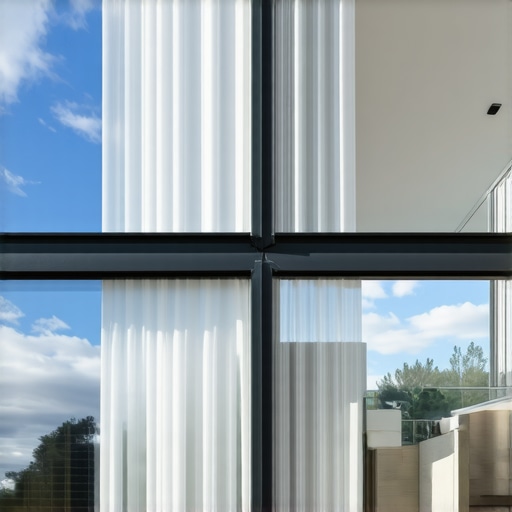
The Science Behind the Pane: Why Your Choice of Glass Dictates Your Comfort
When most homeowners think about their windows, they see a transparent barrier. As a master glazier with a quarter-century in the field, I see a complex thermal engine. A window is essentially a controlled hole in your thermal envelope, and the glass you choose determines whether that hole is a liability or an asset. Whether you are looking at a full window repair or planning to replace windows throughout your home, the distinction between Low-Emissivity (Low-E) and reflective glass is the most significant technical decision you will face.
Early in my career, I dealt with a situation that perfectly illustrates the confusion surrounding glass performance. A homeowner called me in a panic because their brand new high-performance windows were ‘sweating’ profusely every morning. They were convinced the units were defective. I walked in with my hygrometer and a thermal imaging camera. I showed them that the indoor relative humidity was hovering at 60 percent while the outside temperature was dropping to thirty degrees. It was not a failure of the glass; it was a physics problem related to the dew point. The windows were actually performing so well at keeping the heat in that the inner pane stayed warm, but the lack of air circulation in the house was forcing moisture to condense on the coolest available surface. We solved it with better ventilation, not new glass. This is the level of technical nuance required when discussing fenestration.
“The Solar Heat Gain Coefficient (SHGC) measures how well a product blocks heat caused by sunlight. SHGC is expressed as a number between 0 and 1. The lower a window’s SHGC, the less solar heat it transmits.” National Fenestration Rating Council (NFRC)
Decoding Low-E Technology: The Invisible Heat Shield
Low-E glass is not a tint; it is a sophisticated coating of microscopic metallic particles, usually silver or zinc oxide, applied to the glass surface. These coatings are designed to be spectrally selective. This means they allow visible light to pass through while reflecting long-wave infrared radiation (heat). When you are considering whether to replace windows, you must understand where this coating sits. In a standard double-pane insulated glass unit (IGU), there are four surfaces. Surface one faces the exterior, surface two is the inside of the outer pane, surface three is the outside of the inner pane, and surface four faces your living room. For cold climates, we often place the Low-E coating on surface three to reflect furnace heat back into the house. In scorching climates, we place it on surface two to reject solar heat before it even enters the air gap.
The physics of emissivity is about the ability of a material to radiate energy. Standard clear glass has an emissivity of about 0.84, meaning it absorbs and then radiates a large amount of heat. A high-performance Low-E coating can drop that emissivity to below 0.05. This is achieved through a process called sputtering, where atoms of silver are deposited in a vacuum chamber. This layer is so thin that it is thinner than a human hair, yet it acts as a thermal mirror. If you find your furniture is fading, it is because your current glass lacks the UV-blocking properties inherent in these metallic layers. During a window repair, replacing a failed clear IGU with a Low-E unit is the single best upgrade you can make for long-term comfort.
Reflective Glass: The Commercial Powerhouse
Reflective glass is a different beast entirely. Unlike Low-E, which aims for transparency, reflective glass is often treated with a vacuum-deposited metal film that creates a mirror-like appearance. You see this most often in high-rise office buildings. The primary goal here is to drastically reduce the Solar Heat Gain Coefficient (SHGC) in environments with massive glass-to-wall ratios. While Low-E is great for residential comfort, reflective glass is designed for high-intensity glare control and privacy. In residential settings, however, reflective glass can be polarizing. It can make a home feel dark and can create issues with bird strikes or neighbor complaints regarding reflected glare.
From a maintenance perspective, reflective glass requires a specific approach. A standard window cleaner might contain ammonia or other harsh chemicals that can degrade certain older reflective coatings if they are applied on the exterior surface. Most modern units are ‘hard-coated’ (pyrolytic) or have the coating protected inside the IGU, but you must always verify the glass type before scrubbing. When we perform a window repair on reflective units, matching the ‘VLT’ or Visible Light Transmittance is the hardest part. Even a five percent difference in the coating thickness can make a replacement pane look like a mismatched tooth in a smile.
“Installation is just as critical as the window performance itself. A high-performance window installed poorly will fail.” AAMA Installation Masters Guide
The Anatomy of a High-Performance Installation
You can buy the most expensive triple-pane krypton-filled glass in the world, but if your installer treats the rough opening with a ‘caulk-and-walk’ mentality, you are wasting your money. A proper installation requires a deep understanding of water management. We use a sill pan at the bottom of the rough opening to ensure that any water that bypasses the primary seals is directed back to the exterior. We use flashing tape integrated with the weather-resistive barrier in a shingle-fashion, ensuring that water always flows over the next layer, never behind it. When we shim a window, we aren’t just leveling it; we are ensuring the weight of the sash is properly distributed so the frame doesn’t bow, which would compromise the weatherstripping.
In many cases, homeowners think they need to replace windows when they actually just need a professional window repair. If you see fogging between the panes, the desiccant in the spacer bar has become saturated, and the seal has failed. This is a ‘blown’ unit. We can often replace just the glass and the glazing bead without ripping out the entire frame. This preserves the original trim and saves the homeowner thousands of dollars. However, if the frame is vinyl and has warped, or if it is wood and the sash is rotted, a full-frame replacement is the only logical path. During this process, we check the weep holes to ensure they are clear of debris. Weep holes are critical for allowing water to exit the frame track; if they are clogged, water will back up and eventually rot your subfloor.
Final Verdict: Comfort Over Hype
Choosing between Low-E and reflective glass comes down to your specific climate and aesthetic goals. For 95 percent of residential applications, a high-quality Low-E glass is the superior choice. It offers the best balance of thermal insulation, solar control, and natural light. Do not let a salesman talk you into reflective glass unless you have a specific privacy concern or a western-facing window that is literally melting your blinds. Always look for the NFRC label on the glass. This label is the only way to verify the U-Factor (the rate of heat loss) and the SHGC. If the installer cannot explain the difference between these numbers, they shouldn’t be touching your house. High-performance glazing is a science, and your home deserves a scientist, not just a handyman with a caulk gun.