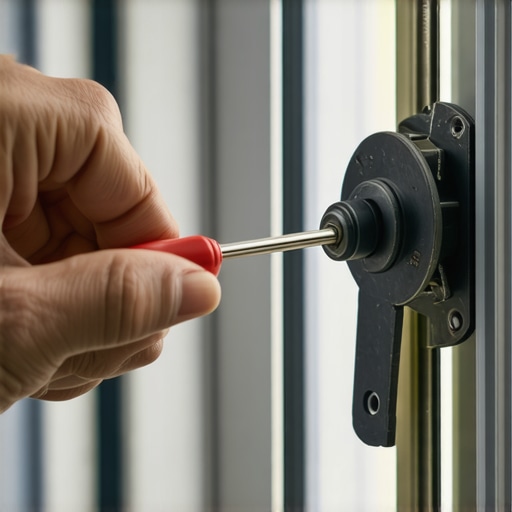
The Frustration of the Stripped Operator: Why Your Window Crank No Longer Grabs
There is a specific, sinking feeling that occurs when you reach for a casement handle, ready to catch a cross-breeze, and instead of the satisfying resistance of the worm gear engaging, you feel a hollow, gritty spin. In my twenty-five years as a master glazier, I have seen this thousands of times. Most homeowners assume the window is a total loss, but the reality of window repair often lies in understanding the mechanical relationship between the operator handle and the internal splines. When a window crank just spins, you are dealing with a failure of torque transfer, usually located at the interface of the handle and the operator spindle or within the gear housing itself.
I remember pulling a vinyl window out of a house in a damp coastal suburb where the owner complained about a spinning crank. When I stripped back the trim, the header was completely black with rot. Why? The previous installer relied on the nailing fin instead of proper flashing tape, but the mechanical failure was the final straw. The window had been stuck slightly ajar because the crank wouldn’t pull it tight against the weatherstripping. For two winters, moisture-laden interior air hit the cold exterior glass and condensed, running down into a compromised sill pan that was never sloped correctly. A simple mechanical fix, ignored, led to a four-figure structural repair. This is why a functioning operator is not just about convenience; it is about the integrity of the building envelope.
“Installation is just as critical as the window performance itself. A high-performance window installed poorly will fail.” AAMA Installation Masters Guide
Analyzing the Anatomy of a Casement Operator
To understand the fix, you must understand the physics of the casement window. Unlike a double-hung window that relies on balances and gravity, a casement window is essentially a vertical door for your wall. It uses a mechanical advantage to compress a heavy sash against a bulb seal. This requires significant force. The operator consists of a handle that fits onto a splined shaft. Inside the metal housing, a worm gear drives a larger gear attached to the operator arm. If you are in a Northern climate, this compression is what gives you a superior U-factor. When that crank fails to pull the sash into the frame, you are no longer benefiting from your argon gas fill or your Low-E coatings because cold air is bypassing the system entirely via air infiltration.
The first step in any window repair for a spinning crank is to determine where the disconnect is happening. Is the handle spinning on the shaft, or is the shaft spinning but the arm isn’t moving? Remove the set screw on the handle using a hex key or a flathead screwdriver. Pull the handle off and inspect the splines. These are the small teeth inside the handle and on the operator spindle. If the teeth inside the handle are smoothed out, you are in luck. Die-cast zinc handles are often designed to be the sacrificial lamb in the system, stripping out before the more expensive internal gears do. If the spindle itself is rounded off, the repair becomes more involved.
Step-By-Step Mechanical Autopsy and Repair
If the handle is the culprit, you simply need a replacement with the correct spline count. Most industry standards like Truth or Encore use an 11/32 inch spline, but older units might vary. However, if the handle is fine and the shaft is spinning without moving the arm, the internal worm gear has likely detached or stripped. At this point, you are looking at replacing the entire operator assembly. This involves opening the window manually. If the window is stuck shut, you may need to remove the screen and gently push the sash while someone else turns the remains of the crank. Once open, you will need to disconnect the operator arm from the track on the bottom of the sash. This usually involves removing a small e-clip or sliding the plastic guide shoe out of a notch in the track.
When you reach the point of unscrewing the operator from the wood or vinyl sill, pay close attention to the rough opening and the condition of the wood. If you see staining, the spinning crank might have been caused by the sash dragging on a sagging frame. This is often where a window cleaner or a casual handyman misses the forest for the trees. You can put a new operator in, but if the sash is out of square because the house has settled or the shims have compressed, the new gears will strip within a year. Use a square to check the corners. If the frame is racked, you might need to replace windows rather than just the hardware.
The Thermal Implications of a Broken Seal
In cold climates, a casement window is a high-performance tool. The latching mechanism pulls the sash tight, but the crank is what gets it close enough for the locks to engage. If the crank spins and the window remains open by even an eighth of an inch, your energy bills will reflect it. This air gap allows for convective heat loss that no amount of triple-pane glass can offset. Furthermore, the dew point moves inside the wall cavity. Warm, moist air from your kitchen or bathroom hits the cold air entering through the gap, causing hidden condensation. This is the primary driver of mold in modern, tightly built homes. Proper maintenance of your window hardware is a prerequisite for a healthy home.
“Standard Practice for Installation of Exterior Windows, Doors and Skylights requires that the fenestration product be capable of performing its intended function, which includes the mechanical operation of all hardware.” ASTM E2112
If you find that the hardware is fine but the window is simply too heavy to move, check the hinges. Friction hinges can become clogged with debris or oxidation. A high-quality dry silicone spray is the glazier’s best friend here. Avoid heavy oils or WD-40, which attract dust and eventually turn into a grinding paste that destroys the very gears you are trying to protect. Keeping the tracks clear and the hinges lubricated reduces the torque required by the crank, extending the life of the splines and the worm gear.
When to Repair vs. When to Replace
Not every spinning crank is a death sentence for the unit. Most operators are held in by three to five screws and can be swapped out in twenty minutes for less than fifty dollars. However, if you find that the screws holding the operator are no longer gripping because the wood sill is soft and punky, you are facing a structural failure. In these instances, the window repair is merely a cosmetic bandage on a deeper wound. If you are dealing with older single-pane units that have failing hardware, the ROI on a full-frame replacement is often justified not just by energy savings, but by the massive upgrade in structural water management. Modern windows include integrated sill pans and better flashing interfaces that prevent the rot I mentioned earlier.
For those in coastal areas, ensure your replacement hardware is stainless steel. The salt air is a relentless catalyst for galvanic corrosion, especially in the thin metal components of a window crank. If you see white powdery oxidation on your operator, it is only a matter of time before the gears seize or strip. Replacing these components proactively can prevent a situation where a window is stuck open during a storm. Remember, a window is a hole in your home protection. It must be able to close and seal with the precision of a bank vault door. If your crank is spinning, that protection is compromised. Address the splines, check the operator, and ensure your building envelope remains intact. It is the difference between a house that breathes and a house that rots.