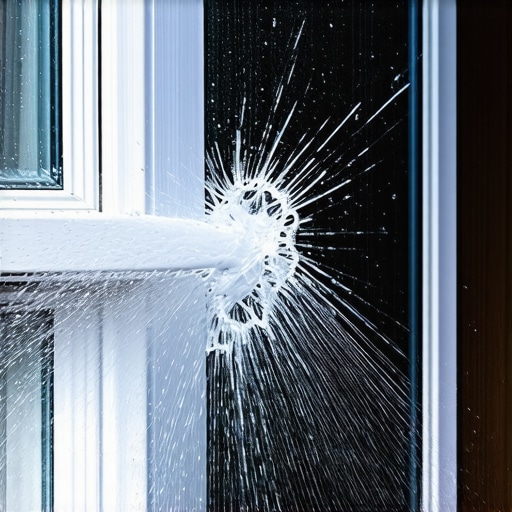
The High Pressure Mistake: Why Your Window Is Not a Sidewalk
As a master glazier with over 25 years in the field, I have seen every imaginable form of window failure. From the gradual degradation of wood sash components in century-old homes to the sudden structural collapse of poorly shimmed high-rise units. But perhaps the most frustrating phone call I receive is the one that starts with: I was just trying to get the pollen off my siding. I pulled a vinyl window out of a house in a damp northern suburb recently and the header was completely black with rot. Why? The previous installer had done a decent job with the nailing fin, but the homeowner had taken a 3000 PSI pressure washer to the exterior. They thought they were being a thorough window cleaner, but they were actually injecting high-velocity water directly into the rough opening, bypassing the flashing tape and saturating the wood structure until it became a mushroom farm. The damage was so extensive that a simple window repair was off the table, the only option left was to replace windows throughout the entire south-facing facade.
“Installation is just as critical as the window performance itself. A high-performance window installed poorly will fail.” – AAMA Installation Masters Guide
To understand why a pressure washer is the natural enemy of your glazing, you have to understand the physics of an Insulated Glass Unit or IGU. An IGU is not just two panes of glass, it is a sealed system containing an spacer, a desiccant, and often a gas fill like Argon. This system relies on two distinct seals. The primary seal, usually made of Polyisobutylene (PIB), is designed to be an airtight barrier to keep the gas in and the moisture out. The secondary seal, often a structural silicone or polysulfide, holds the unit together. When you hit the glazing bead with a high-pressure stream, you are applying a force the window was never designed to withstand. Standard wind-driven rain exerts a certain amount of hydrostatic pressure, but a pressure washer can exceed that by a factor of fifty. This force can physically displace the glazing bead, allowing water to sit in the glazing pocket. Once water is trapped against the PIB seal, it begins a process of emulsification and mechanical stress that eventually leads to seal failure. Once that seal is breached, the Argon gas escapes and is replaced by moist air. In our northern climate, where the U-Factor is the most critical metric for comfort, this loss of gas fill is devastating. The U-Factor, which measures the rate of heat loss, spikes immediately. You might not see the fogging inside the glass right away, but the thermal performance has already been compromised.
“The integrity of the seal in an Insulating Glass Unit is the primary factor in determining its long-term thermal performance.” – NFRC Performance Standards
The Anatomy of a Leak: Beyond the Glass
It is not just the glass seals that are at risk. A window is a complex assembly of moving parts and weatherstripping. Consider the weep hole. These small openings at the bottom of the frame are designed to allow water that enters the glazing track to exit to the exterior. They work on the shingle principle, using gravity to move water down and out. When you blast a window with a pressure washer, you are often forcing water up and into these weep holes or, worse, forcing water past the weatherstripping of an operable sash. In a heavy storm, water might trickle in, but a pressure washer creates a localized high-pressure zone that can push water over the interior leg of the sill pan. Once water crosses that threshold, it enters the wall cavity. Because modern homes are built with tight air barriers, that water has nowhere to go. It sits on the wooden shim, wicks into the drywall, and begins to rot the framing from the inside out. By the time you see a stain on your interior paint, the structural damage is already advanced.
Frame Material Science and Pressure Sensitivity
Different frame materials react differently to this abuse. Vinyl frames, which are popular for their cost-effectiveness, have a high coefficient of thermal expansion. They move and flex. This flexibility means that the seals between the vinyl and the glass are reliant on the glazing bead’s tension. High pressure can easily pop these beads out of their track. Wood windows are even more vulnerable. A pressure washer can strip the paint or finish right off the wood, exposing the grain to immediate moisture absorption. Once wood sashes absorb water, they swell, making the window difficult to operate and eventually leading to rot. Even fiberglass, which is incredibly stable and matches the expansion rate of glass, has joints and seams that can be compromised by a focused jet of water. If you are looking to replace windows, you want to invest in units with a high Performance Grade (PG) rating, but even a PG-50 window is not rated for a direct hit from a gas-powered pressure washer nozzle.
The Correct Way to Maintain Your View
If you want to be an effective window cleaner without causing a need for window repair, the secret is volume, not pressure. A soft wash system that uses a gentle flow of water combined with a high-quality surfactant is the only professional way to clean. You want to use a soft-bristled brush on a telescoping pole to break the surface tension of the dirt and then rinse with a garden hose. This mimics the action of natural rainfall and ensures that the water management system of the window, including the drip cap and the sill pan, can function as intended. We must respect the dew point and the thermal dynamics of our homes. In cold climates, maintaining the integrity of that IGU seal is the difference between a cozy living room and a drafty, expensive nightmare. Don’t let a ten-minute cleaning session turn into a twenty-thousand dollar replacement project. Water management is a science, and your windows are the most technical part of your home’s envelope. Treat them with the precision they deserve. “