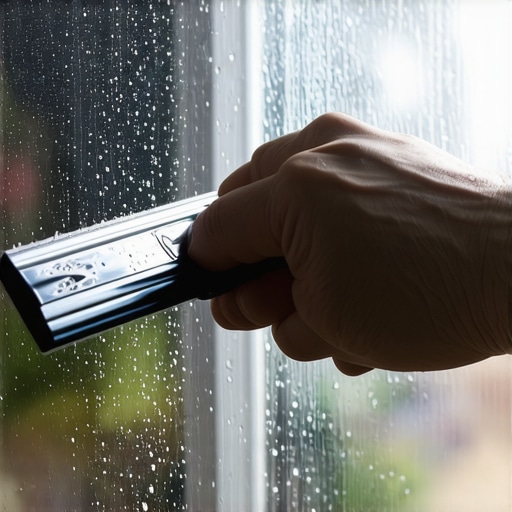
The Physics of the Perfect Squeegee Stroke
In my twenty-five years of handling glass, from towering curtain walls to the delicate muntin grids of a historic farmhouse, I have learned that a window is not merely a piece of silica. It is a dynamic thermal barrier. Most homeowners and even some window cleaner novices believe that getting a streak-free shine is about the soap. It is not. It is about the physics of the squeegee stroke and the maintenance of the glazing bead. To master the squeegee, you must understand the surface tension of the water against the glass. A professional fanning stroke, also known as the S-technique, allows the technician to maintain a continuous leading edge, directing the slurry of dirt and surfactant toward the bottom of the sash without leaving a single holiday or line. If you are doing a straight pull from top to bottom, you are likely leaving water behind at the top of the glazing bead, which eventually seeps into the sash and can cause premature seal failure. This is why many people eventually have to replace windows; they do not realize that poor cleaning habits can actually lead to moisture being trapped where it does not belong.
The Condensation Crisis: A Master Glazier Narrative
I recall a specific instance where a homeowner called me in a panic because their new windows were sweating. They were convinced the units were defective. I walked in with my hygrometer and showed them the humidity was sixty percent. It was not the windows; it was their lifestyle. They had a massive collection of indoor plants and a humidifier running in the master suite. The new, high-performance windows were so airtight that the moisture had nowhere to go. I had to explain that even the most expensive triple-pane unit will reach its dew point if the interior environment is not managed. This is a common misconception in the world of window repair. Often, what people think is a broken seal is actually just physics at work on the surface of the glass. However, if that condensation starts appearing between the panes, within the insulated glass unit or IGU, then you are looking at a permanent failure of the spacer system. In that case, you do not need a cleaner; you need a glazier to replace the glass or the entire operable sash.
“Installation is just as critical as the window performance itself. A high-performance window installed poorly will fail.” AAMA Installation Masters Guide
The Anatomy of Window Performance: U-Factor and SHGC
When we talk about the technical side of glass, we must look at the NFRC labels. For those of us in northern climates where heat loss is the primary enemy, the U-Factor is the most critical metric. The U-Factor measures the rate of heat transfer. You want this number as low as possible. In a cold climate like Chicago or Minneapolis, we are looking for units with a Low-E coating on Surface number three. This allows the sun’s short-wave infrared radiation to enter the home during the winter but reflects the long-wave infrared radiation produced by your furnace back into the room. This is the secret to thermal comfort. If you have a single-pane window, you are essentially living with a hole in your wall. The radiant cold from that glass will make you feel chilled even if the thermostat says seventy degrees. When you finally decide to replace windows, you are not just buying glass; you are buying a managed thermal environment.
Why Window Repair Often Leads to Replacement
Many homeowners ask about window repair for old wood sashes that have become difficult to move. Often, the issue is that the house has settled, and the rough opening is no longer square. You can shim a window to a certain extent, but when the frame itself is torqued, the operable parts will never glide correctly. Furthermore, if the flashing tape was never applied correctly during the original installation, water may have reached the wooden studs. I have seen countless cases where a simple request for a window cleaner revealed a rotted sill pan. If water is not directed out through the weep holes in the frame, it will find its way into the wall cavity. This is where the shingle principle of water management is vital. Everything must overlap so that gravity carries water away from the structure. If your current windows do not have a functional drip cap or proper integration with the building wrap, a repair is often just a temporary patch on a larger structural problem.
“The fenestration system’s performance is intrinsically linked to the integrity of its perimeter seals and the management of moisture at the rough opening.” NFRC Performance Manual
Understanding Frame Materials: From Vinyl to Fiberglass
The choice of frame material is just as important as the glass package. Vinyl is the most common because it is cost-effective, but it has a high coefficient of thermal expansion. This means it grows and shrinks significantly with temperature changes, which can put stress on the glazing bead and the seals of the IGU. Fiberglass, on the other hand, is made of pultruded glass fibers and resin, meaning it expands and contracts at nearly the same rate as the glass itself. This leads to a much more stable window over time. Wood offers the best thermal break but requires a level of maintenance that many modern homeowners are unwilling to provide. If you do not paint or stain your wood windows every few years, the moisture will eventually win. When a window cleaner works on wood windows, they must be careful not to saturate the wood where the glass meets the sash, as this is a prime spot for rot to begin. Every component, from the muntin to the sill, must be inspected for integrity during a routine cleaning.
The Secret to Longevity: Beyond the Squeegee
To truly maintain your windows, you must look at the weep holes. These are the small outlets at the bottom of the exterior frame that allow water to escape the track. If these are clogged with dirt, dead insects, or debris, the water will back up and eventually overflow the interior dam of the window, leading to water damage on your drywall or flooring. A professional window cleaner should always clear these out. Additionally, check the condition of the weatherstripping. If the pile is worn or the rubber is brittle, you will have air infiltration. No amount of Low-E coating can compensate for a drafty sash. If you can see light through the corners of your window when it is closed and locked, your energy bills are suffering. This is the point where window repair is no longer the most economical path. Modern replacement windows offer far better air-tightness ratings than anything produced twenty years ago. The goal is to create a tight seal at the rough opening using high-quality flashing tape and expanding foam that is specifically designed for windows so that it does not bow the jambs. Precision is the difference between a window that lasts forty years and one that fails in five.
The Role of Gas Fills and Spacers
Between the panes of a modern IGU, we typically find Argon or occasionally other noble gases. These gases are denser than air and provide better thermal insulation by slowing down the convection currents inside the glass unit. However, the gas is only as good as the spacer that holds the panes apart. Older aluminum spacers acted as a thermal bridge, conducting cold directly to the edge of the glass, which is why you often see condensation at the perimeter. Modern warm-edge spacers are made of composite materials that do not conduct heat, which keeps the edge of the glass warmer and reduces the risk of condensation. When you are performing a squeegee stroke, you might notice that the edges of the glass are the hardest to get dry. This is because the glazing bead creates a small lip where water likes to hide. Using a micro-fiber detailing cloth to wipe the perimeter after your main stroke is the only way to ensure that no water remains to dwell against the seals. Understanding these technical nuances is what separates a master glazier from a handyman. It is about more than just a clear view; it is about protecting the structural integrity of the home through science and proper technique. Don’t buy into the sales hype of miracle glass; buy into the proven physics of a well-engineered fenestration system installed by a professional who understands the importance of the rough opening and the shingle principle. In the end, the secret to a perfect window is a combination of the right materials, a precise installation, and the knowledge of how to maintain them correctly over the long haul. Keep your weep holes clear, your glazing beads tight, and your squeegee blade sharp.