The Sun-Baked Adhesive Nightmare: A Glazier’s Perspective
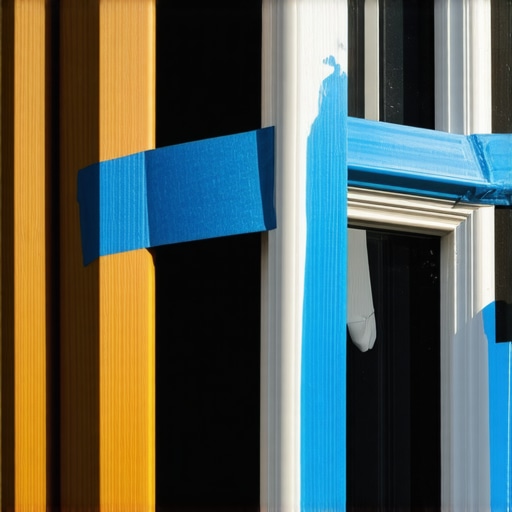
I once walked onto a job site in the peak of a Texas August where the homeowner had attempted a DIY refresh of their wood sashes. They had applied high-quality blue painter’s tape to the perimeter of the glazing bead three weeks prior, but then life got in the way. By the time I arrived to inspect a separate issue, the tape had literally fused to the glass. When we tried to peel it, the paper backing delaminated, leaving a crusty, yellowed ridge of adhesive that had chemically bonded to the surface of the glass. This is not just an aesthetic annoyance; it is a technical failure of site management that can lead to permanent damage requiring professional window repair or, in extreme cases, the need to replace windows entirely. As a master glazier with 25 years in the field, I have seen ‘caulk-and-walk’ contractors ignore this, but the physics of adhesive migration is unforgiving.
“Protection of fenestration products during construction and finishing is critical. Failure to remove protective materials can lead to permanent surface degradation or finish failure.” – AAMA Installation Masters Guide
The Science of Adhesive Cross-Linking
To understand why this happens, we have to look at the chemistry of Pressure Sensitive Adhesives (PSA). Most masking tapes used in painting rely on an acrylate or rubber-based adhesive. When you apply this to a window, you are placing it on a surface that is constantly bombarded by ultraviolet (UV) radiation and fluctuating thermal loads. In a southern climate, where the Solar Heat Gain Coefficient (SHGC) is the primary enemy, the glass temperature can easily exceed 140 degrees Fahrenheit. This heat acts as a catalyst for a process called cross-linking. The polymers in the adhesive begin to form stronger chemical bonds with the glass surface, moving from a temporary physical bond to a more permanent chemical one. This is why a window cleaner cannot simply wipe away the residue; the adhesive has migrated into the microscopic pores of the glass. If the window has a Low-E coating on surface #1 (the exterior), the situation is even more dire, as aggressive scraping to remove the tape can strip the metallic oxides from the glass.
Thermal Stress and the Glass Surface
In high-heat environments like Phoenix or Dallas, we prioritize blocking the sun’s radiant energy. Most modern high-performance units feature a Low-E coating on Surface #2, which is the inside face of the outer pane. However, even with this protection, the glass absorbs significant thermal energy. When you leave tape on the sash or the glass, you create a thermal bridge that holds heat differently than the surrounding clear glass. This localized thermal stress can, in rare instances of extreme temperature swings, lead to a stress crack, especially if the tape is applied unevenly or over a pre-existing shim point in the rough opening. Managing the dew point and moisture is usually our main concern in the North, but in the South, managing the ‘bake’ is what preserves the longevity of your window repair efforts.
The Mechanical Risk of Removal
When you finally decide to remove that sun-baked tape, you are likely to reach for a razor blade. This is where most homeowners go wrong. If you aren’t careful, you will slice right through the glazing bead or the EPDM gaskets that provide the primary seal against water infiltration. Once those seals are compromised, you’ve invited moisture into the sash, which eventually leads to rot or seal failure in the Insulated Glass Unit (IGU). [image placeholder] A professional window cleaner knows how to use lubrication and specific chemical solvents to break the bond without etching the glass, but the best window repair is the one you never have to do. If the tape has been on for more than 14 days, you are no longer dealing with a simple cleaning task; you are performing a delicate surgical extraction.
“Glass surfaces must be protected from chemical attack and mechanical abrasion. Certain adhesives can leave residues that react with atmospheric pollutants to cause permanent staining.” – NFRC Technical Manual
How to Salvage the Situation
If you find yourself in this predicament, the first rule is to stop pulling if the tape starts to shred. Use a heat gun on a low setting to slightly soften the adhesive—being extremely careful not to overheat the glass and cause a thermal break. Apply a specialized citrus-based solvent that can penetrate the paper backing. For those who realize the damage is too extensive, perhaps because the previous installer relied on poor flashing tape or didn’t use a proper sill pan, it may be time to consult a specialist to replace windows with more durable fiberglass or thermally broken aluminum frames. Remember, a window is a complex system designed to manage heat, light, and water. Using it as a canvas for long-term masking tape storage is a recipe for a ‘Condensation Crisis’ or a mechanical failure. Water management is a science, and so is adhesive removal. If you’ve left the tape on too long, don’t just scrape; understand the material science of what you are fighting.