The sound of a sliding glass door grinding against its frame is more than just a nuisance; it is the auditory signal of mechanical failure. As a glazier with over 25 years of field experience, I have seen thousands of homeowners ignore this sound until the moment the door becomes a permanent fixture of the wall, fused by friction and oxidation. When a door grinds, you are witnessing the physical degradation of the track or the total collapse of the tandem roller assembly. This is not a problem that a quick spray of lubricant will solve. In fact, most off the shelf lubricants act as a magnet for grit, accelerating the destruction of the glazing system.
The Installation Autopsy: Why Doors Fail
I pulled a vinyl sliding door out of a house in a coastal region once and the header was completely black with rot. Why? The previous installer relied on the nailing fin instead of proper flashing tape and a dedicated sill pan. This neglect allowed moisture to migrate into the rough opening, causing the wood framing to swell and exert downward pressure on the head jamb. When the frame is squeezed, the operable panel loses its clearance. The grinding you hear is often the top of the sash rubbing against the head or the bottom rollers being crushed into the stainless steel track cover because the door is no longer square within its opening.
“Installation is just as critical as the window performance itself. A high-performance window installed poorly will fail.” AAMA Installation Masters Guide
In coastal environments, the enemy is often corrosion. Salt air enters the weep hole of the track and begins to oxidize the aluminum. If your door features a mill finish rather than an anodized or powder-coated finish, the metal will pit. These pits create a microscopic mountain range that the nylon or stainless steel rollers must navigate. Every time you slide the door, those rollers are taking a beating. Eventually, the roller housing fails, and the metal wheel begins to drag directly on the track, creating that signature metallic screech.
Step 1: The Initial Debris Removal and Inspection
Before you consider a window repair or a full tear-out to replace windows, you must clean the field of play. Use a vacuum with a narrow crevice tool to remove the large particulate matter from the track. Do not reach for the WD-40 yet. Instead, use a professional grade window cleaner that does not leave a film. Scrub the track with a stiff nylon brush. If you see silver shavings, your rollers are already compromised. The goal is to expose the actual surface of the track to see if it is still smooth. If the track is deeply gouged, no amount of cleaning will fix the grind; you will need to install a stainless steel track cover, which is a thin sheath that snaps over the existing rail to provide a new, smooth surface for the rollers.
Step 2: Adjusting the Tandem Rollers
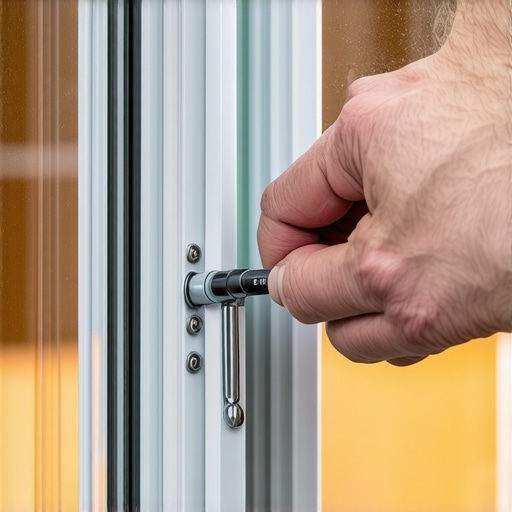
Most modern sliding doors are supported by tandem rollers located at the bottom of the sash. These rollers are adjustable. Look for a small hole at the bottom of the door on the interior or the side edge. Inside, you will find a screw that raises or lowers the roller assembly. When a door grinds against the bottom frame, it often means the rollers have vibrated into a lower position or the bearings have flattened. By turning the screw clockwise, you extend the roller, lifting the door further off the track. If the door is leaning, you can adjust one side more than the other to square the sash within the rough opening. However, if the screw turns but the door does not rise, the internal spring or the housing is snapped. At this point, the sash must be removed.
Step 3: Removing the Sash for Roller Replacement
This is where the technical difficulty spikes. A standard 6 foot sliding door panel with dual pane tempered glass can weigh upwards of 120 pounds. In coastal zones where we use impact-rated glass (Missile Level D), that weight can double. You must slide the operable panel to the center of the opening and lift it vertically into the head jamb. Once the bottom clears the track, tilt the bottom toward you and remove the panel. Set it on a pair of sawhorses. Examine the rollers. If they are caked in black grease and hair, they are dead. A glazier knows that a clean roller is a functioning roller. We choose replacement rollers based on the metallurgy of the track. If you have a stainless steel track, use stainless steel rollers. Mixing metals can lead to galvanic corrosion, which will weld your components together over time.
“The selection of appropriate hardware for the specific environmental conditions is paramount to the longevity of the fenestration assembly.” ASTM E2112 Standard Practice
The Physics of the Thermal Break
In hot, southern climates, we often see aluminum frames that lack a proper thermal break. The sun hits that metal and it expands at a different rate than the glass and the surrounding drywall. This expansion can cause the track to bow upward in the middle, a phenomenon known as crowned sill. If your door only grinds in the center of the run but moves freely at the ends, your sill is likely crowned. Fixing this requires more than a shim; it requires the removal of the entire unit to level the subfloor. This is why we insist on a perfectly level rough opening. If the sill is not dead level, gravity will eventually win, and your rollers will be the first casualty.
Long-Term Maintenance and Window Repair
Once you have replaced the rollers or smoothed the track, the maintenance cycle begins. Never use silicone spray or oil-based lubricants in a sliding door track. These substances are tack-traps for dust and sand. Instead, use a dry Teflon or paraffin wax. This provides the necessary slip without the buildup. Additionally, check your weep hole periodically. If water backs up in the track because the weep holes are clogged with debris, it will sit against the roller bearings. Even stainless steel will eventually succumb to constant submersion in stagnant, salty water. Proper window repair is about water management as much as it is about mechanical movement.