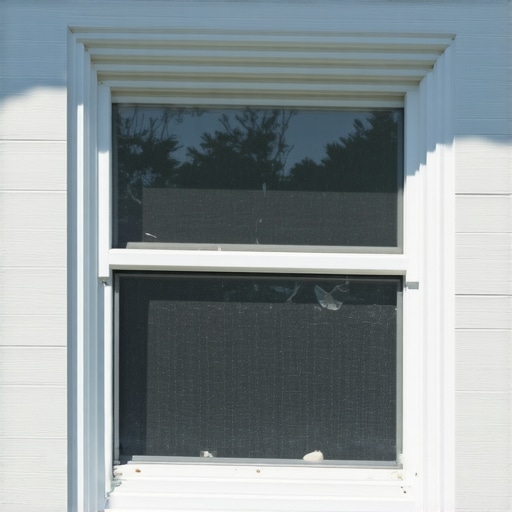
The Physical Reality of Vinyl Deformation
When you look at your window and notice the side jambs are curving inward or the head header is sagging, you are witnessing a failure of thermal management and structural allowance. In my twenty-five years as a glazier, I have seen thousands of these cases, and it almost always comes back to the same fundamental misunderstanding: vinyl is a polymer that lives and breathes with the temperature. Unlike wood or thermally broken aluminum, unplasticized polyvinyl chloride (uPVC) has a high coefficient of thermal expansion. This means it moves. If your installer did not account for that movement, the window is going to bow.
I pulled a vinyl window out of a house in a sun-drenched suburb last August and the header was completely black with rot. Why? The previous installer relied on the nailing fin instead of proper flashing tape, but more importantly, they had wedged the window into a Rough Opening that was too small. As the summer sun beat down on that dark-colored frame, the vinyl expanded. With no room to grow outward, the frame buckled inward, breaking the seal between the Sash and the weatherstripping. Water didn’t just leak; it poured into the wall cavity every time it rained, hidden behind the siding until the structural studs were nothing but mush.
“Installation is just as critical as the window performance itself. A high-performance window installed poorly will fail.” – AAMA Installation Masters Guide
The Science of Thermal Expansion and Heat Distortion
To understand why your frames are bowing, we have to talk about the Heat Distortion Temperature (HDT). Most residential vinyl windows are rated for an HDT around 160 degrees Fahrenheit. While 160 degrees sounds like a desert peak, the surface temperature of a dark bronze or black vinyl frame can easily reach 170 degrees when exposed to direct solar radiation on a 95-degree afternoon. This is where the physics of the Glazing Bead and the frame profile become critical.
When the vinyl reaches these temperatures, it loses its structural rigidity. If the window was installed with over-expanded spray foam or if the Shim placement was too tight, the internal pressure forces the material to warp. This is especially prevalent in the South where the Solar Heat Gain Coefficient (SHGC) is the primary enemy. In these hotter climates, the sun’s radiant energy is absorbed by the frame. If you have high-performance Low-E glass, it might even be reflecting heat back onto the vinyl sections, a phenomenon known as the ‘double-burn’ effect, which further accelerates the softening of the PVC.
The Role of the Installer vs. The Manufacturer
Many homeowners blame the manufacturer when a window bows, but the autopsy usually reveals an installation error. A master glazier knows that you must maintain a consistent gap between the window frame and the wood framing. This gap allows the window to expand and contract without putting stress on the Operable parts of the unit. If the window is pinned too tightly by fasteners or if the Sill Pan is not level, the frame will ‘smile’ or ‘frown,’ leading to air infiltration that no window cleaner or amount of caulk can fix.
Proper window repair in these instances is rarely about fixing the vinyl itself. Once a frame has undergone significant heat distortion and bowing, the molecular structure of the PVC is often permanently compromised. You cannot simply ‘bend it back.’ You are often looking at a situation where you must replace windows entirely to restore the thermal envelope of the home. The key is to ensure the new units are installed with Flashing Tape that is integrated into the house wrap and that the Rough Opening provides at least a quarter-inch of ‘shimmer room’ on all sides.
“The fenestration interface must be designed to collect and drain water to the exterior. Failure to provide a path for moisture to escape via Weep Hole systems or sill drainage leads to accelerated material degradation.” – ASTM E2112 Standard Practice
Technical Indicators: When to Repair and When to Replace
How do you know if your bowing is a minor cosmetic issue or a structural failure? First, check the Sash operation. If the window is difficult to lift or if the locks no longer align, the frame has shifted beyond its functional tolerance. Second, look at the Glazing Bead. If it is popping out of its channel, the frame is twisting. Third, examine the corners. Vinyl windows are fusion-welded. If you see cracks at the mitered corners, the thermal stress has exceeded the strength of the weld.
If you are in a high-heat region like Texas or Arizona, you should be looking for vinyl with high concentrations of titanium dioxide. This additive acts as a sunscreen for your windows, reflecting UV rays and keeping the material temperature below the HDT. Without these stabilizers, cheaper vinyl windows will not only bow but also chalk and become brittle within a decade. For those living in these climates, replace windows with fiberglass or thermally broken aluminum might be a better long-term investment, as these materials have much lower expansion rates than PVC.
The Window Cleaner’s Perspective on Frame Health
Interestingly, a professional window cleaner is often the first person to notice bowing. When they run a squeegee down the glass and notice a gap increasing toward the center of the frame, or if they see that the Muntin bars are no longer parallel with the jambs, they are seeing the early stages of frame fatigue. Cleaners also notice when Weep Holes are blocked. If water cannot escape the bottom track, it sits against the vinyl. In the sun, this water heats up, creating a localized ‘sauna’ effect that can soften the bottom rail of the sash even faster than dry heat.
Water management is a science, not an afterthought. Every window installation must follow the shingle principle: every layer of flashing and weatherstripping must lap over the one below it. When a frame bows, it creates a ‘reverse lap’ where water can be sucked into the building through capillary action. This is why a ‘caulk-and-walk’ installation is so dangerous. Caulk is a temporary seal; Flashing Tape and a proper Sill Pan are permanent systems.
Conclusion: Precision Over Price
If your vinyl windows are starting to bow, don’t just reach for a tube of sealant. Understand that your home’s skin is under mechanical stress. Whether it is a lack of expansion room in the Rough Opening, poor Shim technique, or simply a low-quality vinyl compound unable to handle the local SHGC demands, the solution requires a technical eye. Real ROI in window replacement isn’t found in the cheapest sticker price; it is found in the precision of the installation and the science of the materials chosen for your specific climate. Always demand an installation that meets AAMA standards, or you will be watching your investment warp right before your eyes.