The Glazier’s Perspective: Why Your Grandmother’s Cleaning Hack is Killing Your Windows
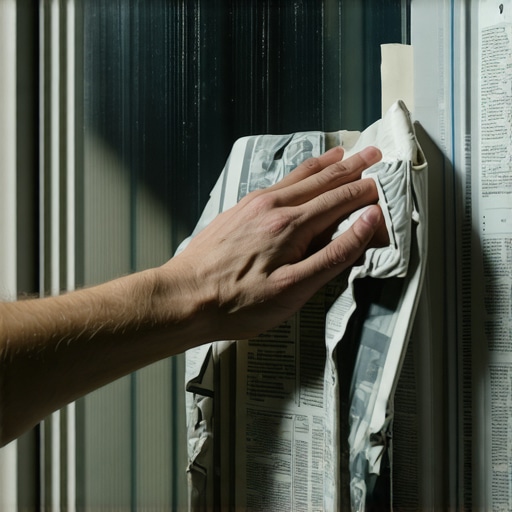
I have spent over a quarter of a century staring through, installing, and repairing glass. In that time, I have seen it all: from high-performance triple-pane units in skyscrapers to delicate wood sashes in 19th-century Victorian homes. One myth persists with the stubbornness of a failed seal, and that is the idea that old newspaper is the best tool for a window cleaner. It is a piece of advice passed down through generations, yet it is fundamentally flawed in the context of modern fenestration technology. If you are still rubbing newsprint on your glazing, you are likely doing more harm than good to your view and your home’s thermal envelope.
“The performance of a fenestration product is dependent on the maintenance of its components and the integrity of its seals. Improper cleaning agents or abrasive materials can degrade the surface and compromise the system.” – AAMA Maintenance and Care Guide
A homeowner called me in a panic because their new windows were ‘sweating’ and looked perpetually cloudy. I walked in with my hygrometer and showed them the humidity was 60 percent. It wasn’t the windows; it was their lifestyle, but more importantly, their cleaning habits had made the situation worse. They had been scrubbing the interior glass with local newspapers for months, trying to wipe away the condensation. When I put my magnifying loupe to the Sash, I showed them the microscopic truth: they were effectively sanding their glass. The ink and the rough fibers were leaving behind a residue that held onto moisture, making the ‘sweating’ appear even more aggressive than it was.
The Chemistry of Ink and Glass
Back in the mid-20th century, newspapers were printed with petroleum-based inks. These inks contained a high concentration of solvents that actually acted as a mild polishing agent. When combined with the slightly abrasive nature of the paper, it could, in theory, strip away heavy grime from a simple piece of soda-lime glass. However, the world has changed. Modern newspapers use soy-based inks. These inks are safer for the environment but terrible for glass. They are prone to smearing and leave a carbon-based film that attracts dust and pollen. This creates a vicious cycle where the homeowner cleans more frequently, applying more pressure and causing more friction on the Glazing Bead and the glass surface itself.
The Microscopic Topography of a Window
To understand why this is a bad idea, you have to look at glass like a glazier does. It is not a perfectly flat, solid surface. At a molecular level, float glass has peaks and valleys. When you use a window cleaner solution with newspaper, the wood pulp fibers, which are essentially tiny shards of timber, get caught in these valleys. This doesn’t just leave streaks; it creates micro-abrasions. Over time, these abrasions scatter light, leading to a loss of clarity that no amount of scrubbing can fix. If you reach the point where the glass looks ‘hazy’ even when dry, you are likely looking at permanent surface damage that might force you to replace windows prematurely.
The Low-E Coating Nightmare
Modern high-performance windows are not just glass; they are complex thermal machines. In colder northern climates like Chicago or Minneapolis, we prioritize the U-Factor. We want to keep heat inside. To do this, manufacturers apply Low-E (Low-Emissivity) coatings. Usually, these are ‘soft coats’ buried inside the Insulated Glass Unit (IGU) on Surface #2 or #3. However, some modern windows use a ‘hard coat’ on Surface #4 (the side you touch inside the house) to further boost thermal performance. Newspaper is the enemy of Surface #4. Those abrasive fibers can scratch the metallic oxide layer, permanently damaging the window’s ability to reflect long-wave infrared radiation. Once that coating is scratched, the thermal integrity is compromised, and the only solution is a window repair that involves replacing the entire IGU.
“Glass surfaces should be cleaned with a soft, lint-free cloth and a mild soap or a professional-grade window cleaner to avoid damaging high-performance coatings that are essential for energy efficiency.” – NFRC Glass Care Standards
Thermal Stress and Mechanical Pressure
When you clean a window with newspaper, you tend to apply significant circular pressure to get rid of the inevitable streaks. In a cold climate, the temperature differential between the interior glass and the exterior pane is massive. Applying heavy mechanical pressure to the center of a cold Sash can induce thermal stress. I have seen Rough Opening tolerances so tight that the slight expansion of the frame combined with the pressure of a vigorous cleaning caused a stress crack to propagate from the edge of the glass. Furthermore, the friction creates static electricity. This static charge acts like a magnet for the very soot and particulates you are trying to remove. A professional squeegee and a microfiber cloth, by contrast, glide across the surface, neutralizing static and lifting debris without the need for excessive force.
When Cleaning Reveals the Need to Replace Windows
Sometimes, the frustration with ‘dirty’ windows isn’t about the cleaning method at all. If you are cleaning both sides of the glass and you still see a fog, you are dealing with desiccant failure. Inside the spacer bar of your IGU is a desiccant designed to absorb moisture. Once that material is saturated, the moisture begins to condense between the panes. No newspaper, squeegee, or chemical will fix this. This is the moment where you must decide to replace windows or seek a professional window repair. Replacing just the glass unit is often possible, but if the frame is a cheap vinyl that has bowed or the Sill Pan is leaking, a full-frame replacement is the only way to protect your home’s structure from rot.
The Master Glazier’s Protocol
If you want clear glass, stop looking at the recycling bin. Start with a dedicated window cleaner that is pH-neutral. Use a Shim if necessary to stabilize any loose decorative Muntins before you begin. Use a high-quality squeegee with a fresh rubber blade. The goal is to suspend the dirt in the solution and then physically remove the solution from the glass, rather than rubbing the dirt around with a piece of paper. This preserves the Weep Hole functionality by not clogging it with paper pulp and ensures that your Flashing Tape and seals remain undisturbed by aggressive scrubbing motions. Remember, a window is a hole in your wall that you’ve paid a lot of money to plug correctly. Treat the glass with the same respect you would the engine of a high-performance car. Newspaper belongs on the coffee table, not on your Operable sashes.