In my twenty-five years of handling glass and timber, I have seen too many beautiful historic windows sacrificed to the landfill because a contractor claimed they were beyond repair. They usually point to a snapped cord as evidence of total failure. I remember a specific project in a drafty 1890s Victorian where I pulled a vinyl window out of a house that had been retrofitted poorly. The header was completely black with rot because the previous installer relied on the nailing fin and a bead of silicone instead of proper flashing tape and the shingle principle. They had replaced an original weighted sash window that only needed a five-dollar cord. It was a tragedy of building science. If you understand the anatomy of a weighted system, you can restore functionality without a full-frame tear-out. Replacing a sash cord is not just a repair; it is an act of preservation that respects the original rough opening and the thermal logic of the building.
The Anatomy of the Weighted Sash System
Before you reach for your hammer, you must understand the physics of the counterweight. Within the jamb of an old wood window, there is a hollow chamber containing two weights, usually cast iron or lead. These weights are connected to the sash via a cord that runs over a pulley. The system is designed so that the weight of the sash is perfectly balanced, allowing it to stay open at any position. This is the definition of an operable window. When a cord snaps, the weight drops to the bottom of the pocket, and the sash becomes a heavy, dangerous guillotine. To fix this without pulling the entire frame, we have to access the weight pocket door. This is often a small, rectangular piece of wood held in by a single screw or simply wedged into the lower part of the jamb track. You will need to remove the stop bead first, which is the interior trim piece that keeps the lower sash in place. Use a sharp utility knife to score the paint bridge. If you do not score the paint, you will splinter the wood, and as any master glazier will tell you, a sloppy tear-down leads to a sloppy build.
“Installation is just as critical as the window performance itself. A high-performance window installed poorly will fail.” – AAMA Installation Masters Guide
Technical Breakdown: Step-by-Step Cord Replacement
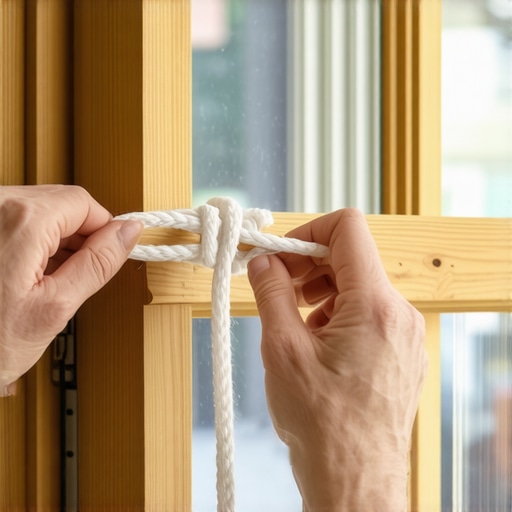
Once the stop bead is removed, the lower sash can be swung inward. You will see the cord channel routed into the side of the sash. Do not just let the sash hang by the one remaining cord. Support it on a chair or have an assistant hold it. Now, look for the pocket door. If it has been painted over for decades, you might need a hammer and a small pry bar to pop it loose. Inside, you will find the fallen weight. This is where the glazing zooming comes in: don’t just grab any rope from the hardware store. You need a #7 or #8 braided cotton sash cord with a synthetic core. The synthetic core prevents the cord from stretching over time, which would eventually cause the weight to bottom out in the pocket before the sash is fully closed. Tie a small lead weight or a couple of heavy nuts to a piece of mason’s line. Drop this over the pulley and down into the pocket. Once you see it at the bottom, tie the new sash cord to the mason’s line and pull it up and over the pulley. This is the most efficient way to thread the needle without dismantling the head casing. Secure the cord to the weight using a bowline knot, as this knot will not slip under tension but can be untied if needed in the future.
Climate Logic and Thermal Performance
Many homeowners are pressured to replace windows because they feel a draft. In northern climates like Chicago or Minneapolis, the U-factor is the primary metric of concern. A single pane of glass has a poor U-factor, but the wood frame itself is actually a fantastic insulator, far superior to non-thermally broken aluminum. When you replace a sash cord, you also have the opportunity to address air infiltration. The weight pocket is a notorious source of heat loss. While some might suggest filling it with spray foam, this would render the counterweight system useless. Instead, ensure the pocket door fits tightly and use a high-quality glazing bead or weatherstripping to seal the gaps. A well-maintained historic window with a snug-fitting storm window can often rival the thermal performance of a modern double-pane unit without the risk of seal failure. As the NFRC (National Fenestration Rating Council) emphasizes, the total window U-factor includes the frame and the edge of the glass, not just the center of the glass. By maintaining the original wood, you are keeping a material that handles the dew point and expansion/contraction cycles better than cheap vinyl.
“The air leakage of a window is a major factor in building envelope performance, and proper maintenance of operable components is essential for energy conservation.” – ASTM E2112 Standard Practice
The Physics of Glass and Glazing Putty
While you have the sash out to replace the cord, examine the glazing. This is the putty that holds the glass in the muntin bars. If the putty is cracked or missing, the window is no longer water-tight. Water will seep into the wood, leading to rot that eventually destroys the rough opening. A window cleaner might tell you that the glass is just dirty, but a glazier sees the health of the seal. If you need to re-glaze, use a linseed oil-based putty. It takes longer to cure, but it remains flexible enough to move with the wood. Remember, wood is a living material that expands and contracts with humidity. If you use a hard, non-flexible caulk, it will pull away from the wood within a year. This is the difference between a professional repair and a caulk-and-walk job. Also, check the weep holes in the exterior sill. If these are clogged with paint, water will back up into the wall cavity, leading to the kind of header rot I mentioned earlier.
Conclusion: The Value of Restoration
Replacing a sash cord is a technical skill that saves the character of a home. Before you listen to a high-pressure salesman talking about the ROI of triple-pane krypton-filled units, consider that the ROI for a cord repair is almost immediate. You regain the use of the window, improve safety, and maintain the architectural integrity of the structure. A historic wood window that has lasted 100 years can last another 100 if the cords are replaced and the paint is maintained. Do not buy into the myth that new is always better. In the world of fenestration, the best window is the one that is properly installed, meticulously maintained, and functionally balanced.