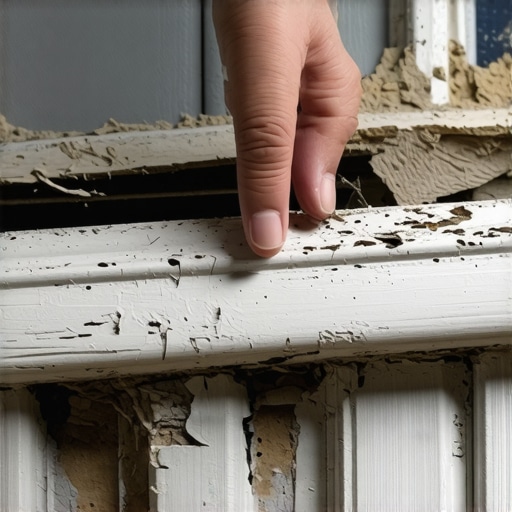
Why Your Wooden Window Sills Are Soft to the Touch: The Silent Anatomy of Window Rot
When you press your thumb into a wooden window sill and it yields like a wet sponge, you are not just looking at a cosmetic issue. You are witnessing the biological failure of your home’s thermal envelope. As a glazier with over two decades in the field, I have seen this scenario play out in thousands of homes, and it is rarely the wood’s fault. Wood is a resilient, cellular material that can last centuries if we respect the physics of water management. When it goes soft, it means the system has been breached, and the structural integrity of your Rough Opening is now at risk.
The Anatomy of an Installation Failure
I pulled a double-hung wood window out of a house in a damp climate last November and the Rough Opening was a disaster. The header was completely black with rot, and the jack studs were so saturated they crumbled in my hand. Why? The previous installer relied on a bead of cheap latex caulk and the nailing fin instead of proper flashing tape and a sloped Sill Pan. They treated the window like a picture frame when they should have treated it like a dam. This is the ‘caulk and walk’ mentality that keeps bad installers in business and homeowners in debt. When water bypasses the exterior casing, it must have a path out. Without a Sill Pan and a Drip Cap, that water stays trapped against the wood, raising the moisture content above 20 percent, which is the magic number for fungal growth.
“Installation is just as critical as the window performance itself. A high-performance window installed poorly will fail.” – AAMA Installation Masters Guide
The Physics of the Soft Sill: Moisture and Mycology
The soft texture you feel is the result of lignicolous fungi literally eating the cellulose and lignin that give wood its strength. This process requires four things: oxygen, a favorable temperature, a food source (your window), and moisture. We cannot remove the first three, so we must control the fourth. In northern climates where the temperature differential between the interior and exterior is extreme, we also deal with the Dew Point. When warm, humid indoor air hits a cold glass surface, it condenses. If your windows lack warm-edge spacers or a proper U-Factor, that condensation pools at the bottom of the Sash and eventually seeps into the Glazing Bead. Over time, this constant saturation leads to a total breakdown of the wood fibers. A professional window cleaner often sees the early warning signs of this: dark staining under the finish or a slight bubbling of the paint. If you ignore these signs, a simple window repair becomes impossible, and you are forced to replace windows entirely.
The Shingle Principle and Water Management
In the trade, we live by the Shingle Principle. This means every layer of the building envelope must lap over the one below it so that gravity pulls water away from the structure. When I perform an installation autopsy on a soft sill, I almost always find that the flashing was installed ‘upside down’ or that the house wrap was tucked into the frame in a way that funneled water behind the siding. A window is a hole in your wall. To keep it dry, we use Flashing Tape and integrated head flashings. If these are missing, water enters through capillary action, defying gravity to move upward and inward into the grain of the wood. This is why a ‘pocket replacement’ or ‘insert window’ is often a risky bet for an older home; if the original frame is already compromised by moisture, putting a new vinyl unit inside it is just hiding the rot, not fixing it.
“Water penetration is the leading cause of premature building envelope failure. Proper integration of the fenestration product into the water-resistive barrier is paramount.” – ASTM E2112 Standard Practice
Thermal Logic: Why Your Climate Matters
In cold climates, the enemy is Heat Loss and Condensation. We look for a low U-Factor to keep the interior glass surface warm. If the glass stays warm, the air against it stays above the dew point, and the sill stays dry. We recommend triple-pane units with an Argon gas fill and a Low-E coating on Surface #3 to reflect heat back into the room. This prevents the moisture cycle that leads to rot. Conversely, if you are in a high-humidity coastal area, the salt air and constant vapor pressure require a different strategy. In those zones, we prioritize high-performance coatings and perhaps fiberglass frames which have a zero-expansion coefficient, ensuring the seals remain airtight even under intense thermal stress. Fiberglass is functionally superior to wood in these environments because it is essentially inert; it does not provide a food source for the fungi that make your sills soft.
The Real Cost of Neglect
Many homeowners try to solve the problem with a quick window repair using wood filler or epoxy. While this might stop the aesthetic decline temporarily, it does nothing to address the source of the moisture. If the Flashing Tape is failing or the Rough Opening is not sloped, the rot will continue behind the patch. This is where the decision to replace windows becomes a structural necessity rather than an aesthetic choice. When we do a full-frame tear-out, we strip the opening down to the studs, replace the rotted lumber, and install a modern, multi-layered flashing system. We use Shims to ensure the frame is perfectly level and plumb, allowing the Operable parts of the window to move without friction, which also preserves the weatherstripping. This level of precision is what separates a Master Glazier from a general laborer.
Conclusion: Science Over Silicone
A soft window sill is a diagnostic report from your house, telling you that the water management system has failed. Whether it is through condensation from a poorly insulated glass pack or a breach in the exterior flashing, the result is the same: the slow destruction of your home’s framing. Do not let a salesman talk you into a ‘quick fix’ without a thermal analysis and a moisture probe. You need to understand the U-Factor, the SHGC, and the specific flashing requirements of your climate zone. Water is patient, and it will find every gap in your defense. Your only protection is a technically sound installation that respects the laws of thermodynamics and the Shingle Principle. Stop relying on a tube of caulk and start looking at the science of your windows.