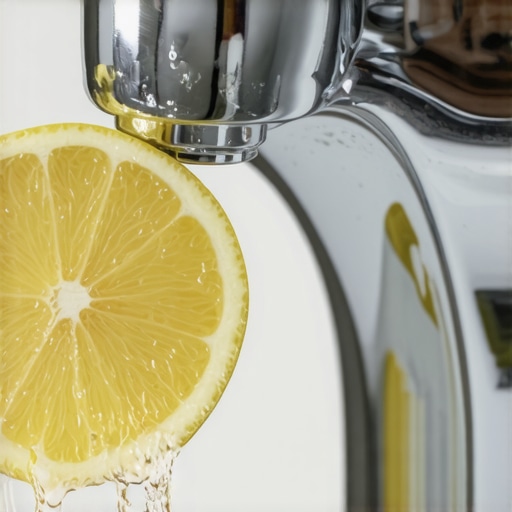
The Chemistry of the Crust: Why Your Windows Look Like They Have Scalp
In twenty-five years of handling everything from monolithic plate glass to high-performance low-emissivity units, I have seen homeowners spend thousands on specialized cleaners only to fail. Those stubborn, cloudy circles on your glass are not just dirt. They are an accumulation of calcium and magnesium carbonates, often deposited by hard water from irrigation systems or acidic rain runoff from building materials. To understand how to fix them, you have to understand the surface of the glass itself. While glass looks smooth to the naked eye, under a microscope it is a jagged landscape of peaks and valleys. When hard water hits that surface and evaporates, the minerals settle into those microscopic valleys, eventually bonding to the silica. This is where the citric acid in a common lemon becomes a master glazier’s secret weapon. The acid works as a chelating agent, breaking the ionic bonds of the mineral deposits so they can be lifted away without scratching the delicate surface of the glass or damaging the glazing bead.
“Installation is just as critical as the window performance itself. A high-performance window installed poorly will fail.” – AAMA Installation Masters Guide
A homeowner once called me in a panic because their new windows were ‘sweating’ and developing thick white crusts at the bottom of the sash. I walked in with my hygrometer and showed them the humidity was 60 percent. It was not a failure of the insulated glass unit seal; it was their lifestyle and a misdirected lawn sprinkler. The sprinkler was hitting the glass during the heat of the day, and the sun was baking the minerals into the glass at temperatures exceeding 120 degrees Fahrenheit. No standard window cleaner was going to touch that. We had to go back to basic chemistry. By using the natural acidity of lemon juice, we were able to dissolve the alkaline minerals. But the real lesson was about water management. If you do not control where the water goes, it will eventually destroy your window repair budget and the structural integrity of your rough opening.
The Anatomy of a Window Failure
When we talk about hard water spots, we are often talking about a symptom of a larger moisture management problem. In the South, where the Solar Heat Gain Coefficient (SHGC) is the metric that determines whether your cooling bill is manageable, the sun acts as a catalyst for mineral etching. If your windows are constantly wet, you need to look at the weep hole system. Every modern operable window is designed with a drainage path. Water enters the track, flows through the frame, and exits through the weep holes. If these are clogged with debris or painted shut by a careless ‘caulk-and-walk’ contractor, that water sits against the glass and the spacers. This leads to premature seal failure and permanent etching that even the strongest lemon juice solution cannot fix. I have performed countless installation autopsies where the flashing tape was applied in the wrong order, allowing water to get behind the nailing fin and rot the shim blocks. By the time you see the water spots on the inside, the header is already compromised.
“The window assembly must be integrated with the water-resistive barrier in a manner that sheds water to the exterior.” – ASTM E2112 Standard Practice
The Science of Lemon Juice and Citric Acid
Why lemon juice? Most commercial cleaners are surfactants designed to lift organic oils. They are useless against inorganic mineral scales. Lemon juice contains about five percent to six percent citric acid. When applied to a hard water spot, the hydrogen ions in the acid react with the calcium carbonate (the spot) to create carbon dioxide gas and water-soluble calcium citrate. This is the same logic used in high-end descaling agents but at a fraction of the cost. For a master glazier, the goal is always to protect the integrity of the glass. You never use an abrasive pad on a high-performance coating. If you have a Low-E coating on Surface #1 (the exterior), you must be extremely careful. Most modern units in hot climates have the coating on Surface #2 to reflect heat outside, which protects the coating from physical damage. However, if you are dealing with older single-pane glass or specific aftermarket tints, the acid in the lemon juice is the safest way to chemically dissolve the minerals without mechanical scratching.
Repair vs. Replace: When is the Glass Beyond Saving?
There comes a point where window repair is no longer an option. If the minerals have sat on the glass for years in a high-heat environment like Arizona or Florida, the glass undergoes a process called stage two corrosion. This is when the minerals have actually etched into the molecular structure of the glass. You can feel this with your fingernail; it feels like a physical divot. At this point, you are not cleaning the glass; you are trying to polish it, which can create optical distortion. This is when you need to consider if you should replace windows entirely. When you do make that jump, you need to look at the numbers, not the sales pitch. In southern climates, you want a window with an SHGC of 0.25 or lower. You are looking for a thermally broken frame and a sill pan that is properly sloped to the exterior. Do not let a salesman talk you into triple-pane glass for a house in Miami; the ROI on that is nearly non-existent because the primary enemy is radiant heat, not conductive heat loss. You want a high-quality double-pane unit with a warm-edge spacer and a proper flashing system that respects the shingle principle of water shedding.
Mastering the Application
To use this method effectively, you do not just rub a lemon on the window. You create a concentrated solution. Mix fresh lemon juice with distilled water (distilled is key because tap water contains the very minerals you are trying to remove). Apply the solution to the sash and let it sit for several minutes, but do not let it dry. The acid needs time to work on the calcium bonds. Use a soft microfiber cloth to gently work the solution into the spots. Once the minerals are dissolved, rinse with distilled water and dry immediately. Check the muntins and the glazing bead for any trapped liquid. If you leave acidic residue on certain types of painted aluminum frames, it can cause pitting over time. Always finish by inspecting the weep holes. A clear drainage path is the only way to prevent future mineral buildup. This is not just about aesthetics; it is about maintaining the building envelope. A clean window allows for better visible transmittance, which reduces the need for artificial lighting and helps manage the internal temperature of your home through passive solar control.