The Anatomy of a Mechanical Failure: Why Your Sash Won’t Stay Up
I walked into a home last February where the owner was convinced their new double-pane windows were defective because of a massive ice buildup on the interior sill. I pulled out my hygrometer and saw the indoor humidity was hitting 55 percent, but that wasn’t the whole story. The real culprit was a dropped internal balance. The lower sash had slipped just a fraction of an inch because the tension system failed, breaking the primary weatherseal at the meeting rail. This allowed a constant stream of sub-zero air to hit that humid interior environment, turning the window into a literal ice machine. It wasn’t a manufacturing defect in the glass; it was a mechanical failure of the hardware that governs the operable movement of the sash.
When a window dropped its internal balance, you are dealing with a failure in the counter-balance system designed to offset the weight of the glass. In the world of window repair, this is one of the most common service calls, yet it is frequently misunderstood by those who take a ‘caulk and walk’ approach to home maintenance. Whether you have a block-and-tackle, a spiral balance, or a constant-force coil spring, the physics remain the same: the system must provide exactly enough upward force to counteract gravity without making the window difficult to close.
“Installation is just as critical as the window performance itself. A high-performance window installed poorly will fail.” AAMA Installation Masters Guide
Identifying the Balance System in Your Rough Opening
Before you can execute a repair, you must identify the hardware. If you have an older double-hung window, you likely have a block-and-tackle system. This uses a series of pulleys and a weighted cord hidden within the jamb. Modern vinyl windows typically use a constant-force balance, which is a stainless steel coil spring that looks like a heavy-duty measuring tape. When this spring snaps or the plastic glazing bead or housing cracks, the sash becomes a dead weight. You’ll know it’s happened when you hear a sharp ‘crack’ followed by the sash sliding down on one or both sides.
The Rough Opening of your window is a violent place for hardware. It deals with extreme thermal expansion and contraction. In northern climates like Chicago or Minneapolis, the U-Factor of your window is king, but that U-Factor is irrelevant if the sash won’t stay seated against the bulb seal. When the temperature drops, plastic components become brittle. A window cleaner might move the sash for a routine cleaning, and the sudden stress on a frozen plastic pivot shoe causes it to shatter. This is why window repair is often a seasonal necessity.
The Technical Fix: Resetting the Pivot Shoe
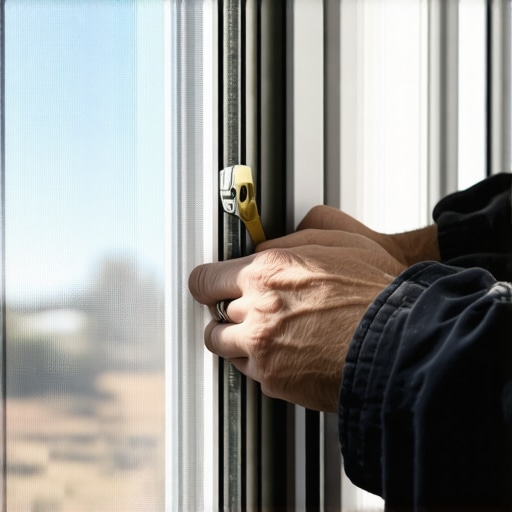
If your window sash is tilted or won’t stay up, the first thing to check is the pivot shoe. This is the U-shaped plastic block that slides up and down in the jamb channel. To fix a dropped balance, you often need to reset this shoe. First, tilt the sash in to a 90-degree angle and lift it out of the frame. This exposes the tracks. Look for the shoe that has slipped to the bottom of the track. You will need a large flat-head screwdriver to rotate the metal cam inside the shoe. Be careful: these springs are under significant tension. Turn the cam until the ‘U’ opening faces up, which unlocks the brake. You can then slide the shoe back up to the height of its counterpart on the other side. Lock it back by turning the cam 90 degrees, re-insert the sash, and test the movement.
However, if the coil has actually snapped, you are looking at a hardware replacement. You must find the stamped number on the balance to ensure you get the correct weight rating. Using a balance meant for a 10-pound sash on a 20-pound sash is a recipe for immediate failure. This level of precision is what separates a master glazier from a handyman. We don’t guess at weights; we calculate the load of the IGU (Insulated Glass Unit) and the frame material.
When Maintenance Becomes a Necessity
Many homeowners ask if they should replace windows entirely when a balance fails. If the frame is wood and the muntin bars are rotting, then yes, replacement is the path. But if the frame is a high-quality fiberglass or thermally broken aluminum, a simple hardware swap is the more sustainable choice. Window cleaner professionals often notice these issues first; dirt and grit in the tracks act like sandpaper on the plastic shoes, eventually wearing them down until they can no longer hold the tension of the spring.
“The performance of the fenestration system is dependent upon the integration of the window into the building envelope.” ASTM E2112 Standard Practice
In colder climates, the focus must be on the thermal break. If you are performing a window repair on a metal-framed window, ensure the thermal break is not compromised. A dropped sash often indicates that the frame has warped slightly due to improper shim placement during the original installation. If the frame is ‘bowed’ out, the pivot bar on the sash can actually slip out of the shoe entirely. This isn’t a balance problem; it’s a framing problem.
The Math of Replacement vs. Repair
The ROI on a full window replacement can take decades if you are only looking at energy savings. However, the ROI on comfort is immediate. A window that does not stay up is a safety hazard and a thermal bridge. If your windows are more than 20 years old and utilize single-pane glass with no Low-E coating, it is time to replace windows. Modern units with Argon gas fills and Low-E coatings on Surface 3 (for cold climates) or Surface 2 (for hot climates) will significantly reduce the radiant heat transfer that makes a room feel uncomfortable. But if your units are relatively new and just have a ‘dropped’ sash, don’t let a salesman talk you into a 20000 dollar replacement when a 50 dollar balance and a little flashing tape at the sill could solve your air infiltration issues.