Most homeowners and even some professional cleaners view a window as a simple, flat sheet of silica. As a glazier with over 25 years of experience in the field, I can tell you that this perspective is the first step toward ruining a high-performance glazing system. A window is a complex thermal barrier, a managed opening in the building envelope that must deal with vapor pressure, solar radiation, and structural loads. When we talk about high-end glass detailing, we are not just talking about removing dirt. We are talking about maintaining the integrity of specialized coatings and ensuring the optical clarity of the sash remains perfect for decades.
A homeowner in a chilly northern climate once called me in a total panic because their brand-new, expensive triple-pane windows were sweating profusely on the interior surface. I walked into the residence with my hygrometer and a high-intensity inspection light. I showed them that the humidity in the room was nearly 60 percent, but more importantly, the windows were not actually failing. The issue was a microscopic layer of cleaning residue left behind by a standard window cleaner using cheap paper towels. This residue was creating a nucleation point for water vapor to cling to, making the condensation appear far worse than it was. This was not a case for window repair or a reason to replace windows; it was a lesson in the molecular topography of glass.
“Installation is just as critical as the window performance itself. A high-performance window installed poorly will fail.” AAMA Installation Masters Guide
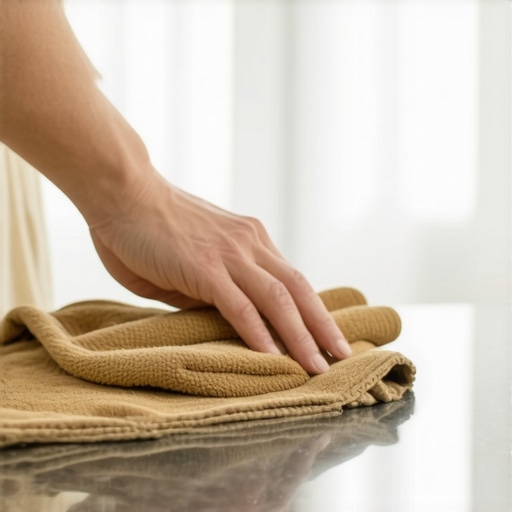
To understand why suede cloths are the only acceptable tool for high-end detailing, we must first look at the glass surface through the lens of physics. While glass looks smooth, it is actually full of microscopic peaks and valleys. When you use a standard microfiber or a wood-pulp-based paper towel, you are dragging fibers across these peaks. These materials often leave behind lint or, worse, a static charge that acts as a magnet for dust and environmental pollutants. Synthetic suede, specifically those engineered from a dense blend of polyester and polyurethane, possesses a unique capillary structure. It does not just move water around; it lifts contaminants out of the microscopic pores of the glass without leaving a secondary trail of debris.
In northern climates where the U-factor is the primary metric of success, the interior surface temperature of the glass is critical. We often utilize Low-E coatings on Surface 3 to reflect heat back into the living space. However, some modern high-performance units also feature a pyrolytic hard-coat on Surface 4, which is the surface you actually touch inside the house. These coatings are incredibly thin and can be compromised by abrasive cleaning materials. A suede cloth provides a low-friction interface that protects these delicate metallic oxides. If you scratch a Low-E coating while trying to be a diligent window cleaner, you have effectively created a permanent thermal bridge that can lead to localized cold spots and future condensation issues.
When we examine the anatomy of the window, including the glazing bead and the muntin bars, the precision of a suede cloth becomes even more apparent. Traditional squeegees often leave a line of moisture at the edge of the glazing bead. If this moisture is not wicked away correctly, it can sit in the channel and eventually work its way past the primary seal of the Insulated Glass Unit (IGU). Once moisture reaches the spacer bar, the desiccant becomes saturated and the window is destined for seal failure. Using a suede detailing cloth allows us to tightly navigate the perimeter where the glass meets the sash, ensuring no water remains to threaten the secondary seal.
“Maintenance of the fenestration system must be performed in a manner that does not degrade the optical or thermal properties of the glazing.” ASTM E2112 Standard Practice
For those in cold regions like Chicago or Minneapolis, the management of the dew point is a daily struggle during winter. The U-factor, which measures the rate of heat loss, is heavily influenced by the cleanliness of the glass. A film of oil or surfactant from poor cleaning products changes the emissivity of the surface. By using a high-quality suede cloth and deionized water, we maintain the lowest possible emissivity on the glass surface, helping the window perform exactly as the NFRC label promised it would. This is the difference between a simple cleaning job and professional glazing maintenance.
We also have to consider the rough opening and the overall health of the frame. During a detailing session, I always check the weep holes in the sill pan. If these are clogged with the same lint and debris that cheap cleaning cloths leave behind, the window cannot drain properly. Water will back up into the frame, rot the wooden shims, and eventually lead to a situation where you have to replace windows entirely. A suede cloth is lint-free, meaning it won’t contribute to the clogging of these vital drainage paths. It is about the holistic health of the window system, not just the view through the pane.
If you find that your windows are consistently foggy between the panes, no amount of detailing will help. That is a sign of a collapsed spacer or a breached seal, necessitating a window repair or a full IGU replacement. But if the glass is simply underperforming or looking dull, the transition to a suede-based detailing protocol is the most cost-effective way to preserve your investment. You have spent thousands on high-performance fenestration; do not let a five-cent paper towel be the reason your glass loses its edge. The physics of the building envelope demand precision, and in the world of the master glazier, precision is found in the weave of a suede cloth.