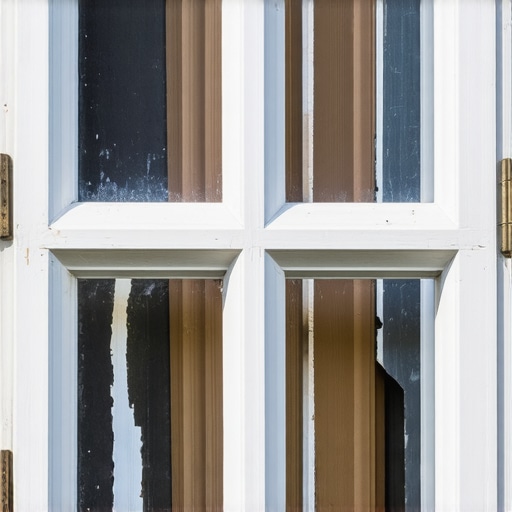
I once pulled a double-hung sash from a 1920s bungalow where the homeowner thought they just needed a quick window repair. As soon as my pry bar hit the bottom rail, the wood disintegrated into grey powder. The paint had looked fine from ten feet away, but the microscopic checks in the finish had been siphoning rainwater directly into the end grain for a decade. The previous painter had failed to seal the meeting rail properly, and the result was a structural failure that required a full-frame replacement. This is the reality of wooden fenestration; it is a living, breathing material that requires a sacrificial barrier to survive the relentless assault of UV radiation and moisture migration.
The Anatomy of a Wooden Window: Why It Moves
To understand why you need to replace windows or maintain them every five years, you have to understand the cellular structure of timber. Wood is hygroscopic, meaning it constantly exchanges moisture with the environment. When the humidity rises, the fibers swell; when the air dries out, they contract. A wooden sash is not a static object; it is a mechanical assembly of stiles, rails, and muntins that are constantly in motion. The paint film is the only thing standing between the lignin in the wood and the photo-oxidation caused by solar radiation. Without this protective layer, the sun breaks down the cellular bonds, leading to silvering and eventually, deep-seated rot.
“Installation is just as critical as the window performance itself. A high-performance window installed poorly will fail.” AAMA Installation Masters Guide
This principle applies equally to maintenance. A high-quality wood window with a failing paint job is essentially a high-performance engine running without oil. Eventually, the friction of the elements will seize the system. In northern climates, this is exacerbated by the Dew Point. When warm, moist indoor air hits a cold glass surface, condensation forms. If your paint at the glazing bead is cracked, that water doesn’t just sit there; it wicks into the wood, trapped behind the paint on the exterior side, creating a perfect incubator for fungal growth.
The Technical Reality of the Five-Year Cycle
Why five years? It is not an arbitrary number. Most high-quality architectural coatings are designed to withstand about 1,800 to 2,500 days of direct UV exposure before the resinous binders begin to chalk. Once the binder fails, the pigment is no longer held in a flexible matrix. The paint becomes brittle. Because wood expands and contracts at a different rate than the paint film, this brittleness leads to hairline fractures. These fractures are often invisible to the naked eye but are wide enough for liquid water to enter via capillary action. In cold climates, we focus heavily on the U-Factor. Wood has excellent natural thermal resistance, but if the wood becomes saturated with water, its R-value plummets. Water is a conductor of heat. A water-logged wood window loses energy much faster than a dry one, defeating the purpose of your expensive Low-E glass. For those in the north, we prioritize Low-E coatings on Surface #3 to reflect long-wave infrared radiation back into the home, but this thermal efficiency is negated if the rough opening is surrounded by damp, rotting timber.
Glazing Zooming: The Role of the Low-E Coating
Many homeowners ask if they should just replace windows with vinyl or fiberglass when the paint starts to peel. Before you make that leap, consider the thermal physics. A traditional wood window with a high-performance insulated glass unit (IGU) can rival modern composites. The key is the glazing bead and the seal. When we look at a window, we are managing a complex interface of materials. The glass itself might have an argon gas fill to reduce convective heat transfer within the 1/2 inch air space. The “warm-edge” spacer separates the two panes of glass, reducing the thermal bridge that often leads to condensation at the edge of the glass. If you are diligent with your maintenance, using a mild window cleaner that doesn’t contain harsh ammonia (which can degrade certain coatings and sealants), a wood window can last over a century. Compare this to the 15 to 20 year lifespan of many budget-grade vinyl units that can’t be repaired once the frame warps or the weep hole system fails.
The Installation Autopsy: Where Paint Fails First
When I perform a site inspection, I look at the sill pan and the drip cap. If the paint is peeling at the bottom corners of the operable sash, it’s usually a sign that the shimming process during the original installation was slightly off, causing the sash to rub against the frame. This friction strips the paint, exposing the raw wood.
“Water penetration is the primary cause of premature window failure. Ensuring a continuous path for drainage is mandatory for any fenestration system.” ASTM E2112 Standard Practice
The five-year paint cycle allows you to catch these mechanical issues before they become structural disasters. During a window repair, we often find that the flashing tape was either missing or improperly lapped, leading to water being trapped behind the casing. By maintaining the paint, you are effectively sealing the secondary defense layer of the building envelope.
Maintenance vs. Replacement: The ROI Calculation
Don’t be fooled by high-pressure sales pitches claiming that new windows will pay for themselves in energy savings in five years. The math doesn’t work. The real ROI of maintaining your wooden windows is the preservation of the home’s structural integrity and its aesthetic value. A well-maintained wood window is a mark of quality. When you replace windows, you are often trading a repairable, high-mass material for a non-repairable, high-expansion material like vinyl. If you are in a climate with extreme temperature swings, vinyl can expand and contract up to seven times more than wood, which puts immense stress on the seals and the rough opening. Keeping your wood windows painted keeps them stable. It prevents the moisture-driven dimensional changes that lead to air leakage and drafts. A tight, well-painted wood window with proper weatherstripping will often outperform a cheap replacement unit in every metric that matters: comfort, acoustics, and longevity.