The Integrity of the Sash: Why Preservation Trumps Replacement
In twenty-five years of staring through glass, I have seen more architectural crimes committed in the name of ‘efficiency’ than I care to count. I once sat across from a high-pressure ‘quick-flip’ contractor who was trying to convince a homeowner to junk their 1910 Craftsman windows for ‘maintenance-free’ vinyl inserts. He called the original leaded glass a ‘thermal liability.’ I had to step in and show the homeowner that while a modern replace windows project has its place, ripping out century-old artisan glazing is often a permanent solution to a temporary maintenance problem. We are talking about hand-rolled glass held together by lead cames that have survived world wars; you do not just throw that in a dumpster because it has a bit of soot on it. If you treat the metal right, that glass will be there long after the vinyl frames have yellowed and warped in the sun.
The Chemistry of the Came: Understanding Lead Oxidation
When you approach a leaded glass panel, you aren’t just looking at a window; you are looking at a structural matrix. The metal strips holding the glass pieces together are called cames, usually made of lead, but sometimes zinc, brass, or copper. Lead is a soft, non-ferrous metal that develops a protective layer of oxidation over time, known as a patina. This patina is the window’s natural defense mechanism. The biggest mistake any amateur window cleaner makes is trying to scrub that patina away until the metal shines. That is not cleaning; that is stripping the window of its skin. This is why window repair professionals cringe when they see someone approaching historic glass with a bottle of blue, ammonia-based spray. Ammonia is a high-pH solvent that reacts aggressively with lead, causing a chemical reaction that can lead to ‘lead rot’ or white powdery corrosion. This isn’t just an aesthetic issue; it weakens the structural integrity of the entire sash.
“Installation and restoration practices must prioritize the preservation of the building envelope’s integrity. A high-performance window installed poorly will fail, but a historic window maintained correctly can exceed its projected lifespan by decades.” – ASTM E2112 Standard Practice for Installation of Exterior Windows
The Physics of the Clean: Avoiding Mechanical Stress
Glazing zooming requires us to look at the interface between the glass and the lead. Every piece of glass is held in place by a glazing bead of cement or putty tucked under the heart of the lead came. Over decades, this putty becomes brittle. If you apply too much pressure during cleaning, you aren’t just wiping the glass; you are flexing the lead matrix. This creates micro-gaps where water can infiltrate, leading to the eventual failure of the sill pan or rotting of the rough opening. In cold Northern climates like Chicago or Boston, that trapped moisture undergoes freeze-thaw cycles. Water expands when it freezes, and it will literally push the lead away from the glass, destroying the weather seal. This is why we focus on the U-Factor even in restoration; a tight seal on a leaded window, backed by a high-quality storm window, provides better thermal performance than many realize by reflecting long-wave infrared radiation and preventing air infiltration.
The Master Glazier’s Step-by-Step Cleaning Protocol
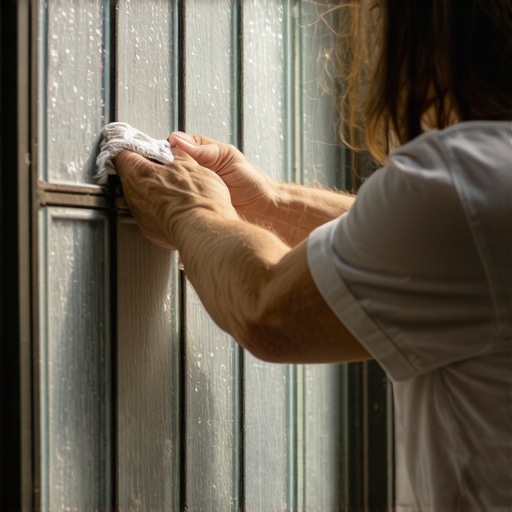
First, you must assess the stability of the muntin and cames. If the window rattles when you touch it, stop cleaning and call for a professional window repair specialist to re-cement the panel. If it is structurally sound, your primary tool is distilled water. Tap water contains minerals like calcium and magnesium that leave deposits on the glass and can react with the lead. Use a pH-neutral, non-ionic detergent. Non-ionic means the soap has no electrical charge, so it won’t react with the metallic ions in the lead came. Avoid any ‘streak-free’ formulas that contain acetic acid (vinegar) or ammonia. Use a natural sea sponge or a high-quality microfiber cloth. You want to work in small sections, starting from the top and moving down, ensuring you do not let any liquid sit in the ‘valleys’ where the glass meets the lead. If liquid pools there, it can seep behind the came and soften the internal putty. Use a soft-bristled toothbrush for the corners, but never scrub the metal itself.
The Thermal Logic: Protecting the Glass in Cold Climates
In regions where the winter wind howls, the goal is to manage the dew point. If you have original leaded glass, your biggest enemy isn’t just dirt; it is condensation. When warm, moist indoor air hits the cold surface of the leaded glass, it liquefies. This moisture sits on the lead cames and the wooden sash, leading to mold and decay. To prevent this, we don’t necessarily need to replace windows with triple-pane units. Instead, we look at the installation of an exterior storm window with a weep hole system. This creates an insulating dead-air space that moves the dew point away from the historic glass. It is about thermodynamics: by reducing the temperature gradient across the leaded panel, you reduce the risk of thermal stress cracks in the glass and moisture damage to the lead.
“The thermal performance of a fenestration system is a product of both the glazing material and the frame’s ability to resist air and water infiltration under pressure.” – NFRC Fenestration Rating Principles
Restoring the Luster Without the Damage
After the glass is clean, the lead may look dull. That is fine. However, if you want to protect the metal, you can apply a very thin layer of high-quality microcrystalline wax. This is the same stuff museums use to protect ancient bronzes. Apply it with a soft cloth, let it haze, and buff it gently. This creates a sacrificial barrier against atmospheric pollutants and moisture. It also makes future cleaning easier because the soot won’t be able to bond directly to the porous lead. Do not use automotive wax, which contains abrasives, or furniture polish, which contains silicones that can migrate into the wood sash and make future painting or window repair impossible. You are a steward of history, not just a window cleaner. Your job is to preserve the ‘shingle principle’ of the window—ensuring that every layer of the assembly, from the drip cap to the shim, is designed to shed water and protect the artisan work within. If you find that the wood around the glass is soft, you are dealing with a failure of the flashing system, and no amount of cleaning will save it. You must address the sill pan and the rough opening tolerances to ensure the window remains operable and dry for the next century.