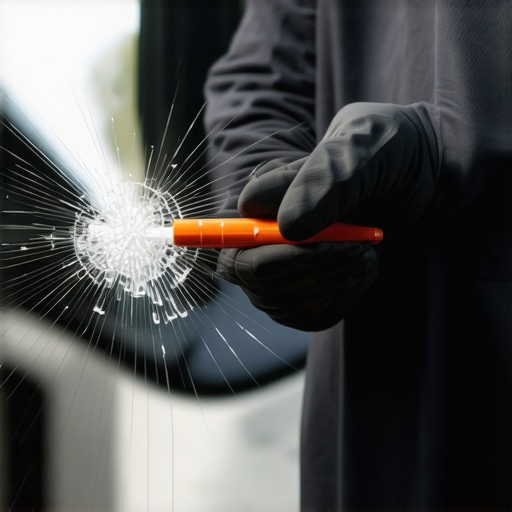
A crack in a piece of glass is not a static event. It is a dynamic failure of structural integrity that is currently in progress. As a master glazier with over two decades in the field, I have seen homeowners ignore a hairline fracture in a sash only to find a shattered mess after a single cold snap. Whether we are discussing the laminated safety glass of a windshield or the annealed float glass of a residential window, the physics of crack propagation remain relentless. When the molecular bonds of the silicate lattice are severed, stress concentrates at the very tip of that crack. Every vibration, every temperature fluctuation, and every gust of wind acts as a lever, prying that crack further apart.
The Anatomy of a Fracture: Why Glass Fails
To understand how to stop a crack, you must first understand why it moves. Glass is an amorphous solid. It is incredibly strong under compression but notoriously weak under tension. When a pebble hits your windshield or a stray baseball strikes a window pane, it creates a point of localized failure. This is often where I see the most common mistake: the belief that the glass is just ‘broken.’ In reality, the glass has been ‘loaded’ with internal stress. In my years of window repair, I have found that the environment is usually what finishes the job that the initial impact started.
“Installation is just as critical as the window performance itself. A high-performance window installed poorly will fail.” AAMA Installation Masters Guide
Consider the Narrative of the Rotting Header. I once pulled a double-hung wood window out of a 1920s bungalow where the homeowner complained the glass kept cracking for no reason. Upon removing the exterior casing, I found the header was completely black with rot. The previous installer had skipped the flashing tape and relied on a bead of cheap caulk. The structural framing had sagged, putting hundreds of pounds of pressure directly onto the window sash. The glass was not failing because it was weak; it was failing because the rough opening had become a vice. This is why a proper inspection is the first step in any window repair strategy.
Immediate Triage for Windshields and Residential Glass
If you discover a fresh crack, the clock is ticking. For a windshield, the construction is laminated, meaning there is a polyvinyl butyral (PVB) interlayer sandwiched between two sheets of glass. This interlayer is designed to hold the shards together, but it also provides a pathway for moisture and dirt. If you want to save the glass, you must keep the crack clean. A piece of clear packing tape over the strike point can prevent a window cleaner or rainwater from driving contaminants into the fracture. Once dirt enters the crack, a professional resin injection will never be truly invisible.
For residential windows, the situation is different. Most home windows are either single-pane annealed glass or double-pane Insulated Glass Units (IGUs). If a crack appears in an IGU, the hermetic seal is compromised. The argon or krypton gas that provides your thermal barrier has escaped, and moist air has entered. While you can apply a specialized glass adhesive or even clear nail polish as a temporary stabilizer to stop the crack from spreading, you are merely delaying the inevitable. The desiccant inside the spacer bar will soon become saturated, leading to permanent fogging between the panes. In this scenario, you don’t just need a repair; you need to replace windows to restore your home’s thermal envelope.
Thermal Stress and the North-Climate Struggle
In colder regions like Minneapolis or Chicago, the enemy is the Delta T, the difference between the indoor and outdoor temperature. When you have a hairline crack and you crank up the heater, you are creating a massive thermal gradient. The glass near the heater expands while the glass near the cold edge of the sash remains contracted. This differential expansion creates tensile stress that can snap a crack across the entire width of the pane in seconds. This is why I always warn clients against using a hair dryer to defrost a window or an ice-scraper with excessive force.
“The thermal performance of a fenestration system is dependent on the integrity of the glazing seal and the maintenance of the gas fill within the cavity.” NFRC Performance Standards
To mitigate this in a cold climate, the U-Factor is your most critical metric. If you are looking at window repair options, consider that modern glass technology uses warm-edge spacers. These spacers are made of low-conductivity materials that keep the edges of the glass warmer, reducing the likelihood of stress fractures and condensation. When a client asks if they should repair or replace windows, I tell them to look at their glazing bead. If the glazing bead is brittle and the glass is vibrating in the sash, the lack of support is contributing to the stress. Proper shimming within the rough opening ensures the frame is square, level, and plumb, which is the only way to ensure the glass is not under unnecessary load.
The Technical Fix: Resin Injection and Stress Relief
For windshields, the goal is to stop the crack tip. Professionals use a bridge and injector tool to vacuum the air out of the crack and replace it with a UV-curable resin. The refractive index of the resin is designed to match the glass, making the crack nearly disappear. However, if the crack is longer than a dollar bill or located near the edge of the glass where the structural bond to the frame is tightest, replacement is the only safe option. In residential glazing, ‘drilling the crack’ is a technique sometimes used where a tiny hole is drilled at the very end of the fracture to dissipate the stress concentration. While technically sound, it is rarely aesthetically pleasing for a home.
Conclusion: The Glazier’s Final Word
Whether you are dealing with a chip from a stone or a stress fracture from a shifting foundation, ignoring glass damage is a gamble with physics. A window cleaner might be the first to notice these small issues during a routine maintenance session, and that is the time to act. Don’t wait for the crack to reach the sash. Evaluate the structural integrity of your rough opening, check your sill pan for moisture, and ensure your flashing tape is doing its job. Glass is the soul of the building envelope, but it requires a perfect environment to remain clear and strong. When that environment fails, the glass is simply the first thing to tell you. If the repair is no longer viable, invest in high-quality replacements with a low SHGC for the south or a superior U-Factor for the north. Do it right, or don’t do it at all.