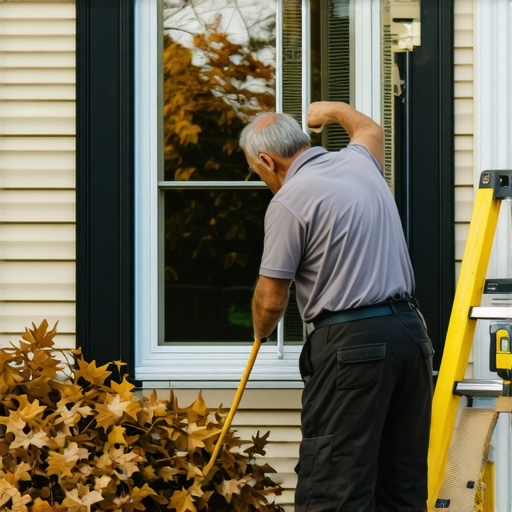
The Master Glazier Perspective on Seasonal Fenestration Integrity
As the mercury begins its inevitable descent, most homeowners think about their furnace or their roof. In my 25 years in the glazing industry, I have seen the same mistake repeated thousands of times: ignoring the critical thermal boundary that windows represent. A window is not a static object; it is a dynamic mechanical system that must manage air pressure, moisture vapor, and thermal transfer. When you ignore your fall maintenance, you are not just risking a drafty evening. You are risking the structural integrity of your rough opening and the longevity of your insulated glass units (IGUs). I have spent decades replacing rotted headers and failed sills that could have been saved by twenty minutes of inspection and a five-dollar tube of high-grade sealant. My approach is rooted in the physics of the building envelope, not the sales pitch of a window company looking to hit a quota.
The Condensation Crisis: A Narrative Warning
I remember a call I received a few years ago from a homeowner in a newly weatherized bungalow. They were in a panic because their brand new, high-performance windows were ‘crying’ every morning. Water was pooling on the sills, and they were convinced I had sold them a batch of ‘leakers.’ I did not reach for my tool belt when I arrived. Instead, I pulled out my psychrometer. I showed them that their interior humidity was hovering at 62 percent while the exterior temperature had dropped to 35 degrees. It was not a window failure; it was a physics reality. Their attic had been sealed so tight that the interior vapor pressure had no escape route but the coldest surface: the glass. By explaining the Dew Point and the role of the warm-edge spacer in their IGUs, I saved them from a needless and expensive replacement. This is why understanding your windows is more important than simply looking through them.
“Installation is just as critical as the window performance itself. A high-performance window installed poorly will fail.” AAMA Installation Masters Guide
The Physics of the Fall Checklist: Managing Heat Loss
In northern climates, the fall maintenance ritual is a battle against U-Factor. While the Solar Heat Gain Coefficient (SHGC) is the priority in the Sun Belt, those of us dealing with frost and snow must focus on the rate of non-solar heat flow. Lower U-Factor numbers mean better insulation. During your fall inspection, you are looking for anything that compromises this thermal resistance. This starts with air infiltration. Even a microscopic gap in your weatherstripping can allow the ‘stack effect’ of your home to pull cold air through the sash at a rate that negates even the most advanced Low-E coatings.
Step 1: The Exterior Envelope and Drainage Planes
Start your maintenance on the outside. Every operable window is designed with a drainage system. Look at the bottom of your frame for the weep hole. These small openings are designed to allow water that enters the glazing track to exit the building. Over the summer, these frequently become clogged with spider webs, dust, or debris. Use a small wire or a can of compressed air to ensure they are clear. If water backs up in the track, it will eventually find its way into the sill pan and, eventually, your subfloor. This is the primary cause of window repair calls that eventually turn into a full-scale need to replace windows. Next, inspect the drip cap. This is the L-shaped flashing at the top of the window. If it is bent or missing, water will run behind the window frame rather than over it. This is a non-negotiable component of a proper installation.
Step 2: Hardware, Sash Alignment, and Seals
Open every window in your house. Do not just check the glass; check the mechanics. For casement windows, the operator (the crank mechanism) should move without grinding. If it resists, use a dry silicone lubricant. Avoid grease, which attracts grit and will eventually act as an abrasive. Check the sash for alignment. When the window is closed, does it sit square in the frame? If it is tilted, it indicates that the house has shifted or the original installer did not shim the frame correctly. This misalignment creates gaps in the weatherstripping. Speaking of weatherstripping, inspect the gaskets. Whether they are TPV (thermoplastic vulcanizate) or simple foam, they must be resilient. If they have flattened out or become brittle, they can no longer create the compression seal necessary to stop cold air. Replace these immediately; it is one of the most cost-effective ways to improve comfort without a full window replacement.
“The water-resistive barrier shall be integrated with the window flashing to provide a continuous drainage plane.” ASTM E2112
Step 3: The Glass and Glazing Bead Inspection
Now we look at the glass itself. In the fall, you are looking for ‘hazing’ or a ‘rainbow’ effect between the panes. This is a sign of seal failure. Modern windows use an IGU where the space between the glass is filled with Argon or Krypton gas to reduce thermal conductivity. If the secondary seal fails, the gas escapes and is replaced by moisture-laden air. The desiccant inside the spacer bar can only absorb so much moisture before it becomes saturated. Once you see fogging, the thermal performance of that window has dropped significantly. While some companies offer ‘defogging’ services, as a master glazier, I can tell you that the only permanent fix is a glass swap or a full sash replacement. Also, check the glazing bead. This is the plastic or wood strip that holds the glass in the sash. If it is cracked or pulling away, it allows water to sit against the IGU seal, accelerating its failure.
The Role of the Professional Window Cleaner
When you hire a window cleaner for your fall prep, ensure they are not using harsh chemicals. Ammonia-based cleaners can actually damage the Low-E coatings on the glass surface if the coating is on surface #4 (the interior). Furthermore, high-pressure washing can force water past the seals and into the rough opening. A professional knows to use a mild soap and a squeegee, ensuring the glazing beads and weep holes remain undisturbed. Cleaning is not just about aesthetics; it is an opportunity to get a close-up look at every muntin and shim point in the house.
Conclusion: When Maintenance Isn’t Enough
Sometimes, the checklist reveals a terminal diagnosis. If your frames are soft to the touch, if you have consistent icing on the interior of the glass, or if the air infiltration is so high that your curtains move in a breeze, it is time to replace windows. But do not be swayed by the ‘Tin Man’ sales tactics of the big box installers. Look for windows with a high Condensation Resistance (CR) rating and a U-Factor suitable for your specific climate zone. Remember, a window is only as good as the man who installs it. Ensure they use high-quality flashing tape and a proper sill pan to protect your home for the next 25 years. Maintenance is the difference between a window that lasts a decade and one that lasts a lifetime.