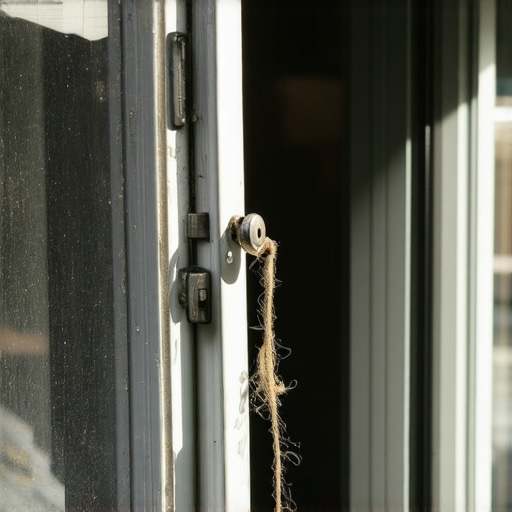
The Anatomy of a Failed Closure: Why Your Windows Are Fighting You
As a glazier with over two decades of hands-on experience, I have seen it all: from high-performance curtain walls in skyscrapers to the original wood sashes of 19th-century brownstones. When a homeowner calls me because a window won’t close all the way, they usually expect me to just spray some lubricant on the track and call it a day. But a window is a complex mechanical system, a managed puncture in your building envelope designed to handle thermal stress, wind loads, and moisture. If that window isn’t latching, it is often a symptom of a much deeper problem within the Rough Opening or the sash itself. You are not just dealing with a stubborn piece of glass; you are dealing with physics.
A few years ago, I was called to a job where a homeowner was convinced their new windows were defective. They were ‘sweating’ profusely, and several sashes would not seat properly into the sill. I walked in with my hygrometer and a digital level. The hygrometer showed an internal relative humidity of 65 percent in the dead of winter. It was not the windows that were failing; it was the interior environment causing the wood trim to swell and the hardware to bind. I had to explain that their lifestyle, involving a ventless gas fireplace and a lack of mechanical ventilation, was literally changing the geometry of their window openings. This is the reality of fenestration: everything is connected.
Structural Movement and the Rough Opening
The most common reason a window fails to close is that the Rough Opening is no longer square. Houses settle. Foundations shift. When a window is installed, we use a Shim to ensure the frame is perfectly plumb, level, and square, regardless of how crooked the studs might be. If the house shifts significantly, those shims can compress or the frame can be squeezed. If your frame is pinched, the sash will bind against the jambs. This is why a proper window repair often requires more than just a screwdriver; it requires an assessment of the structural header. If the header is sagging because it was undersized for the span, it puts direct pressure on the head of the window frame, bowing it downward. You can push that sash as hard as you want, but you will never get it to clear that bow without addressing the structural failure.
“Installation is just as critical as the window performance itself. A high-performance window installed poorly will fail.” AAMA Installation Masters Guide
Thermal Expansion: The Vinyl Variable
If you have vinyl windows, the culprit is often thermal expansion and contraction. Polyvinyl Chloride (PVC) has a high coefficient of linear thermal expansion. On a hot summer day, a dark-colored vinyl frame can expand significantly more than the glass unit it holds. This creates a dimensional mismatch. If the installer did not leave enough clearance in the Rough Opening, or if they over-fastened the window through the jambs without allowing for movement, the frame will ‘smile’ or ‘frown.’ This bowing prevents the sash from meeting the weatherstripping evenly. In many cases, people decide to replace windows because they think the seals have failed, when in reality, the frame material was simply not suited for the extreme thermal cycling of their climate.
In northern climates, where I do most of my work, the U-Factor is the most critical metric. The U-Factor measures the rate of heat loss. When you have a high-performance window with a Low-E coating on Surface #3, you are reflecting long-wave infrared radiation back into the room. This keeps the inner pane of glass warmer, which reduces the Dew Point at the glass surface and prevents condensation. However, if the window won’t close fully, you are losing all those thermal benefits to air infiltration. A gap of just one-sixteenth of an inch can negate the entire R-value of a triple-pane Insulated Glass Unit (IGU). This is why ensuring a tight seal is more than just about security; it is about the thermodynamic integrity of your home.
The Role of Hardware and Maintenance
Sometimes the issue is mechanical. In an operable casement window, the crank mechanism or the friction hinges can become misaligned. If the operator arm is bent even slightly, it will not pull the sash into the frame squarely. For double-hung windows, the balance system might be the problem. Whether it is a constant force spring or an old-fashioned weight and pulley, if the tension is uneven, the sash will tilt. A tilted sash will never seat properly in the sill. This is where a professional window cleaner often spots the problem first. They notice the buildup of grit and atmospheric pollutants in the tracks that impede the travel of the sash. Regular maintenance is not just for aesthetics; keeping the tracks clear and the Weep Holes open is vital for the longevity of the unit. If a Weep Hole is clogged, water can back up into the Sill Pan, causing wood rot or even causing the IGU to sit in standing water, which will eventually lead to seal failure.
“The window must be installed in a manner that provides a continuous air, water, and thermal barrier. Failure to integrate the window into the water-resistive barrier (WRB) using proper flashing tape is the leading cause of structural rot.” ASTM E2112 Standard Practice
Glazing Zooming: The Science of the Seal
When we talk about a window closing, we are talking about the compression of weatherstripping. High-quality windows use EPDM or silicone bulb seals that are designed to be compressed. If your window is not closing, it means you aren’t achieving that compression. This leads to drafts and ‘whistling’ during wind events. In cold climates, we want a window with a very low U-Factor and a warm-edge spacer. Traditional aluminum spacers are thermal bridges; they conduct cold from the outside to the inside, which is why you see ice forming on the inside of the Glazing Bead on old windows. Modern spacers like those made of structural foam or thermoplastic (TPS) break that bridge. But even the best spacer won’t save you if the sash is sitting crooked in the frame. The physics of heat transfer are unforgiving. Cold air is denser and will find its way through any gap in the lower portion of the window, while warm air escapes through the top. This ‘stack effect’ within a single window opening can significantly increase your heating bills.
Repair vs. Replacement: Making the Call
Do you need window repair or is it time to replace windows entirely? If the issue is a failed balance or a broken crank, repair is usually the most cost-effective path. However, if the frame itself is warped or the sills are rotted because the previous installer ignored the ‘Shingle Principle’ (where every layer of Flashing Tape and paper must overlap the one below it to shed water), then a full-frame replacement is the only permanent fix. Do not be fooled by ‘pocket replacements’ or ‘inserts’ if your original frames are compromised. An insert window is simply a new window slipped into an old frame. If that old frame is out of square or rotting, the new window will eventually face the same closure issues as the old one. We always recommend a full-tear out in cases where the structural integrity of the opening is in question. This allows us to inspect the Rough Opening, install a proper Sill Pan, and ensure the new unit is perfectly integrated into the home’s weather barrier.
Conclusion: Don’t Force It
If your window won’t close, the worst thing you can do is force the handle or the lock. Most modern locks are made of cast zinc or light aluminum and will snap under pressure. Instead, inspect the tracks. Check the Weep Holes. Look at the Glazing Bead to see if the glass has shifted within the sash. If the window is still under warranty, call the manufacturer. If not, call a glazier who understands the difference between a simple adjustment and a structural failure. Remember, a window is a high-performance machine. Treat it with the same respect you would give any other mechanical system in your home. Maintaining the seal and the alignment is the only way to ensure that your investment in energy efficiency actually pays off over the long haul. Keep it clean, keep it lubricated, and never ignore a sash that refuses to seat.