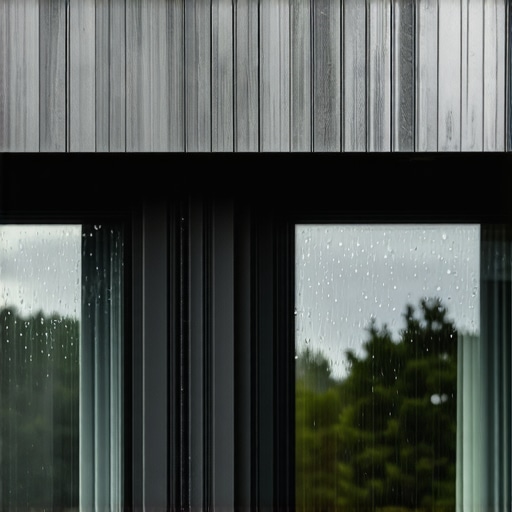
You spent thousands of dollars to replace windows, expecting a clear view and a lower energy bill, but now you wake up to a blurry, fogged-over mess on the exterior of the glass. Before you call the manufacturer in a rage or look for a window repair specialist to fix a perceived defect, you need to understand the physics of the thermal envelope. As a master glazier with a quarter-century in the field, I have seen this phenomenon increase as glass technology improves. It is a paradox: the better the window, the more likely it is to ‘sweat’ on the outside under specific atmospheric conditions.
“Condensation on the exterior surface of an insulating glass unit is a natural phenomenon and is not an indication of a defective glass unit or installation.” – NFRC Condensation Fact Sheet
I recall a specific homeowner in a humid coastal region who called me in a total panic. They had just invested in top-tier, triple-pane units. I walked into their living room with my hygrometer and a thermal imaging camera. I showed them that their indoor humidity was a comfortable 40 percent, but the exterior glass temperature was significantly lower than the outdoor dew point. It was not a failure of the window; it was a testament to its efficiency. Their lifestyle had not changed, but the glass was now so effective at blocking heat transfer that the outer pane remained cold, allowing moisture to transition from vapor to liquid on the surface. This is the condensation crisis that many face when upgrading from drafty, single-pane relics.
The Physics of the Dew Point and Surface Temperatures
To understand why your glass is sweating, we have to look at the relationship between the Sash, the glass, and the air. Condensation occurs when the temperature of a surface falls below the dew point of the surrounding air. In the case of older windows, heat from inside the house would leak through the glass, warming the exterior pane. This wasted energy kept the glass temperature above the dew point, preventing exterior fogging. When you install high-performance glazing, you are effectively severing that thermal bridge.
Modern glass utilizes Low-E (low-emissivity) coatings. These are microscopically thin layers of silver or other low-emissivity materials sputtered onto the glass surface. In a cooling-dominated climate, this coating is typically on Surface #2 (the inner face of the outer pane). This stack reflects long-wave infrared radiation, keeping the heat outside. Consequently, the outer pane of glass stays much cooler because it is no longer being warmed by the furnace or the ambient heat of the interior. When the night sky is clear and the wind is calm, the glass loses heat through radiative cooling. If the glass temperature drops just a few degrees below the ambient air temperature and hits that dew point, you get moisture. This is the same reason dew forms on the grass or your car’s windshield.
Anatomy of a High-Performance Window
When we examine the Rough Opening of a window installation, we are looking at how the entire unit manages heat and moisture. A high-quality installation involves more than just a few screws and some caulk. It requires proper use of a Sill Pan to direct potential water away from the structure and Flashing Tape to seal the perimeter against air infiltration. However, even the most perfect installation cannot change the laws of thermodynamics regarding glass temperature.
Inside the Insulated Glass Unit (IGU), the air or gas space is critical. Most modern replacements use Argon or Krypton gas between the panes. These gases are denser than air and have lower thermal conductivity, which further isolates the exterior pane from the interior environment. The Spacer that holds the panes apart also plays a role. Older aluminum spacers acted as a thermal highway, but modern warm-edge spacers, often made of structural foam or stainless steel, further reduce heat transfer at the Glazing Bead. This isolation is what keeps the exterior pane cold enough to sweat.
“Installation is just as critical as the window performance itself. A high-performance window installed poorly will fail to meet energy expectations, yet even a perfect installation cannot prevent external condensation under high-humidity conditions.” – AAMA Installation Masters Guide
The Role of the Window Cleaner and Maintenance
Interestingly, the cleanliness of the glass can affect how condensation forms. A professional window cleaner knows that microscopic contaminants or residues on the glass can provide nucleation sites for water droplets. Sometimes, a window might appear to be sweating unevenly. This often happens because of the Muntin bars or the way the glass was handled during manufacturing. The presence of oils or certain surfactants can change the surface tension of the water, making the condensation more or less visible. If you are constantly seeking window repair for ‘foggy windows,’ make sure the fog is actually between the panes. If it is on the outside, it is a surface condition. If it is between the panes, the seal has failed and the desiccant inside the spacer is saturated, which is a true mechanical failure.
[IMAGE_PLACEHOLDER]
Why Your Window Choice Matters
When you decide to replace windows, you must consider the SHGC (Solar Heat Gain Coefficient) and the U-Factor. In northern climates, we want a low U-Factor to keep heat in. In southern climates, we want a low SHGC to keep solar radiation out. Both of these goals result in a glass surface that is thermally disconnected from the interior. While the condensation might be an aesthetic nuisance for an hour or two in the morning, it is proof that your investment is working. The glass is doing exactly what it was designed to do: stop the flow of energy. Using a window cleaner with a hydrophobic treatment can sometimes help the water bead and shed faster, but it won’t stop the physics of the dew point.
During the installation process, we ensure every Shim is placed correctly to keep the frame square and Operable. We check the Weep Hole to ensure any water that gets into the glazing track can escape. We take these steps to protect the structure of your home, but the fog on the glass is a separate atmospheric event. It usually disappears as soon as the sun rises and warms the glass surface or a light breeze begins to circulate the air.
Conclusion: Embracing Thermal Efficiency
Do not let the ‘Tin Man’ salesmen convince you that exterior sweating is a reason to buy an even more expensive, ‘special’ coating unless that coating is specifically a hard-coat Low-E on Surface #1, which is designed to slightly increase the exterior surface temperature. For 95 percent of homeowners, the standard high-efficiency glass package is the correct choice. Your new windows are a sophisticated piece of technology designed to manage the invisible forces of radiant heat and conductive cooling. The morning dew on your glass is simply the physical evidence of a thermally tight home. Instead of worrying about window repair, enjoy the fact that your HVAC system isn’t working nearly as hard as it used to. Don’t buy the hype, buy the numbers, and understand that sometimes a little sweat is a sign of high performance.