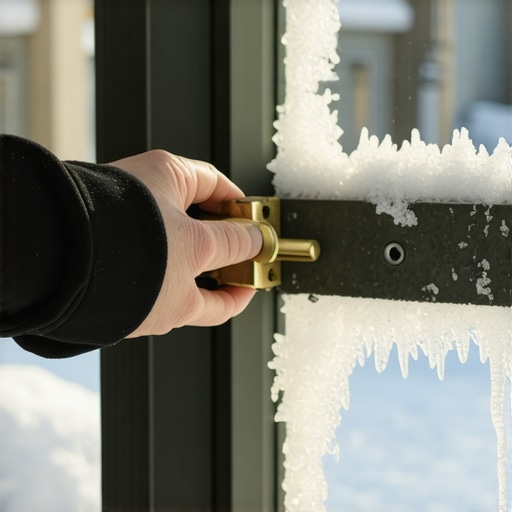
The January Struggle: When Hardware Meets Physics
Every year when the temperature drops below freezing, my phone starts ringing. Homeowners aren’t calling about the view; they are calling because they have to put their shoulder into a window just to get the cam lock to engage. As a glazier with over two decades in the field, I can tell you that a stubborn lock is rarely just a lock issue. It is a symptom of a larger struggle between material science and the environment. When the mercury retreats, your windows are literally shrinking, and if the original installation didn’t account for that movement, your hardware is the first thing to pay the price.
The Condensation Crisis: A Technical Autopsy
I recall a specific case where a homeowner called me in a panic because their new vinyl windows were sweating so profusely that the locks had actually iced over. I walked into that house with my hygrometer in hand and showed them that the interior humidity was hovering at 62 percent. It was not a failure of the windows; it was a failure of the home’s ventilation system combined with the tight seal of the new units. The moisture was migrating to the coldest point, the metallic lock assembly, and freezing inside the mechanism. This is why understanding the dew point is essential for any window repair strategy. If the air inside your home hits a cold enough surface, the gaseous water turns to liquid, or worse, ice, which acts like glue inside your sash.
“Installation is just as critical as the window performance itself. A high-performance window installed poorly will fail.” – AAMA Installation Masters Guide
Material Science: The Coefficient of Thermal Expansion
Why does the lock feel like it is out of alignment? Because it probably is. Different materials have different rates of expansion and contraction. Vinyl, or PVC, has a high coefficient of linear thermal expansion. A standard 72-inch tall vinyl window can actually shrink by up to a quarter of an inch when the temperature swings from a humid summer day to a frigid winter night. If the window was installed in the heat of July and the Rough Opening was tight, the frame might pull away from the Shim locations as it contracts in winter. This minor shift is enough to move the keeper a few millimeters away from the cam lock. When you try to turn that handle, you are no longer gliding into a slot; you are grinding against the edge of the hardware. This is where a professional window repair technician needs to look beyond the handle and check the squareness of the frame within the opening.
The Anatomy of a Cold-Weather Failure
When we perform an autopsy on a window that refuses to lock, we look at the entire assembly. We start at the Sill Pan to ensure no water has been trapped and frozen, which can heave the bottom Sash upward. Next, we examine the Glazing Bead. If the bead has become brittle or has pulled away, cold air can infiltrate the glass pocket, cooling the internal spacers and the hardware faster than the rest of the frame. This localized cooling creates a micro-climate where lubricants in the lock housing thicken and lose their viscosity. Using a window cleaner that contains harsh solvents can exacerbate this by stripping away the factory-applied lithium grease, leaving the metal-on-metal contact points vulnerable to the elements.
The North Climate Logic: U-Factor and Heat Management
In cold northern climates, the U-Factor is the most critical metric. We want a low U-Factor to keep the heat inside. This is achieved through multi-pane units where the Low-E coating is typically applied to Surface #3 (the exterior-facing side of the inner pane). This reflects long-wave infrared radiation back into the room. However, if the seal fails and the Argon gas escapes, the insulating value drops. The window becomes a giant heat sink. The cold glass then chills the sash, which chills the lock. If you are constantly struggling with hardware, it may be time to replace windows with units that feature warm-edge spacers. These spacers are made of less conductive materials than traditional aluminum, keeping the edges of the glass, and consequently the hardware, significantly warmer.
“The water resistive barrier must be integrated with the window flashing to ensure long-term performance of the fenestration assembly.” – ASTM E2112
The Role of the Installer and Proper Flashing
A window is only as good as the hole it fills. Many installers use what we call the caulk and walk method, where they rely on a bead of silicone to do the work that Flashing Tape and a Drip Cap should be doing. In the winter, if moisture has managed to penetrate the Rough Opening because of poor flashing, that water will freeze and expand. This pressure can actually bow the side jambs of the window frame inward. When the jambs bow, the Sash is squeezed, making it incredibly difficult to move the window up and down or to get the locks to line up. A professional window cleaner might notice the tell-tale signs of this pressure, such as cracked paint or specialized wear marks on the tracks, long before the homeowner realizes there is a structural issue.
Maintenance and the Weep Hole Mystery
One of the most overlooked components of cold weather window performance is the Weep Hole. These small outlets in the frame are designed to allow water to exit the track. If they are clogged with debris or frozen shut, water backs up inside the frame. In freezing temperatures, this water becomes ice, which can put immense pressure on the Sill and the bottom rail of the sash. This pressure often misaligns the locking mechanism. Part of any annual maintenance should involve ensuring these holes are clear. If you find yourself needing to replace windows frequently, it is often because these small drainage details were ignored, leading to rot and hardware fatigue.
Final Verdict: Repair or Replace?
If your locks are hard to turn, start by cleaning the tracks and the hardware with a mild soap. Avoid the high-pressure sales pitch of the person who says you need a total house replacement because of a sticking latch. Often, a simple adjustment of the Shim pressure or a proper lubrication of the cam mechanism can restore function. However, if the frame has undergone permanent thermal warping or if the seals are blown and the glass is constantly fogged, you are fighting a losing battle against physics. In those cases, looking for high-performance units with a low U-Factor and robust hardware is the only way to ensure that next January, your home stays tight and your windows stay functional.