The Myth of the Minor Glass Nicks
You notice it while cleaning the exterior of your double-pane windows: a tiny, shell-shaped mark near the corner of the sash. Most homeowners assume a window cleaner can simply buff it out or that it is a purely cosmetic annoyance. As a glazier with over two decades in the field, I can tell you that a glass chip is never just a blemish; it is a structural failure in progress. Glass is an amorphous solid, a material that exists in a state of permanent internal tension. When you introduce a chip, you are not just removing a sliver of silica; you are creating a stress concentrator that will eventually dictate the fate of the entire opening.
The Condensation Crisis: A Master Glazier’s Story
I remember a homeowner in Chicago who called me in a panic during a particularly brutal November. Their new, high-end windows were ‘sweating’ between the panes. They were convinced the manufacturer had sent them duds. I walked into the living room with my hygrometer and a thermal imaging camera. The humidity in the house was a staggering 65 percent because of a faulty humidifier setting, but that was not the whole story. Upon closer inspection of the ‘sweating’ pane, I found a microscopic chip at the very edge of the glass, right where it meets the glazing bead. That tiny chip had allowed the Argon gas to migrate out, replaced by moisture-heavy indoor air. It was not the windows that failed; it was a single point of impact that compromised the entire thermal barrier. This is why understanding the physics of glass is critical before you decide whether to pursue a window repair or a full replacement.
“Installation is just as critical as the window performance itself. A high-performance window installed poorly will fail.” – AAMA Installation Masters Guide
The Physics of the ‘Bite’: Sign 1 – Proximity to the Edge
The first sign that a chip requires professional attention is its location. In the glazing industry, we talk about the ‘bite’—the portion of the glass that is tucked into the sash frame. If a chip is located within an inch of the glazing bead, it is in the ‘high-stress zone.’ Windows are constantly moving. The rough opening of your home shifts with the seasons, and the shims holding the frame in place exert pressure. When the sun hits the glass, it expands. If a chip is near the edge, it acts as a starting point for a crack to travel across the entire pane. Unlike a chip in the center of the glass, an edge chip is subject to the mechanical leverage of the frame itself. If you see a chip near the perimeter, stop looking for a window cleaner and start looking for a specialist who understands frame-to-glass tolerances.
The Conchoidal Fracture: Sign 2 – Depth and Shape
Not all chips are created equal. If the chip is shell-shaped, known as a conchoidal fracture, it indicates that the impact was significant enough to send shockwaves through the annealed or tempered layers. This is especially dangerous in Northern climates where the U-Factor is the primary metric of success. A deep chip disrupts the Low-E coating, which is often a microscopic layer of silver or metal oxide. Once that coating is exposed to oxygen via a deep chip, it can begin to oxidize, leading to a permanent ‘bluing’ or ‘haze’ that no amount of window repair can fix. When the depth of the chip exceeds 25 percent of the glass thickness, the structural integrity is gone. At this point, the U-Factor, which measures the rate of heat loss, is essentially bypassed at that specific coordinate, creating a thermal bridge that will lead to ice buildup in the winter.
The Creeping Spider: Sign 3 – Visible Stress Lines
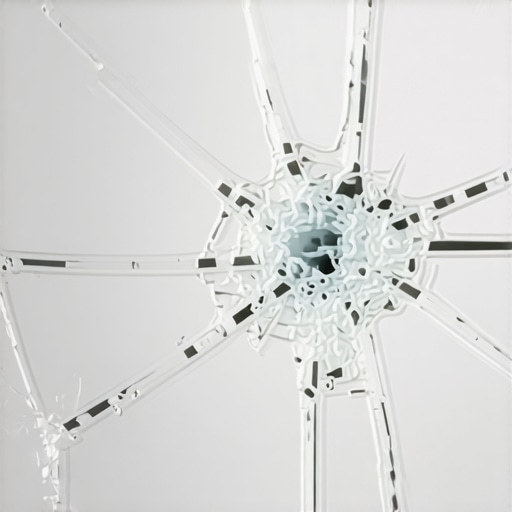
The third and most urgent sign is the presence of ‘legs’ or ‘tails’ emanating from the chip. This is the beginning of a stress crack. In a double-pane Insulated Glass Unit (IGU), the air gap is a pressurized environment. When a chip begins to ‘spider,’ it means the glass is trying to relieve the tension caused by temperature fluctuations. If you live in a region with high thermal swings, such as the Midwest or the North, the expansion and contraction cycles will force those cracks to grow by centimeters every day. This is the moment where you must decide to replace windows rather than patch them. A patch might hide the chip, but it will not stop the molecular separation of the silica lattice once a crack has initiated.
“Thermal stress is often the silent killer of insulated glass units, especially when surface integrity has been compromised by mechanical impact.” – NFRC Technical Bulletin
The Replacement Reality: Why the Installer Matters
When a chip leads to the decision to replace windows, the technical details of the installation are more important than the brand of the glass. A ‘caulk-and-walk’ installer will simply slap a new IGU into the old sash and hope for the best. A true professional will examine the rough opening to ensure it is plumb, level, and square. They will check the sill pan for proper water drainage and ensure the weep holes are not obstructed. If the original chip was caused by the sash being out of square, a new piece of glass will eventually suffer the same fate. We look at the shim placement to ensure there is no point-loading on the glass edges. Water management is a science, and a window is the most complex part of your home’s envelope. Whether you are dealing with a minor window repair or a full-scale upgrade, the goal is always the same: maintaining the integrity of the thermal envelope. Don’t be fooled by high-pressure sales pitches about ‘miracle’ glass repairs; if the chip has compromised the seal or the structural tension of the pane, replacement is the only path to long-term energy efficiency and safety.