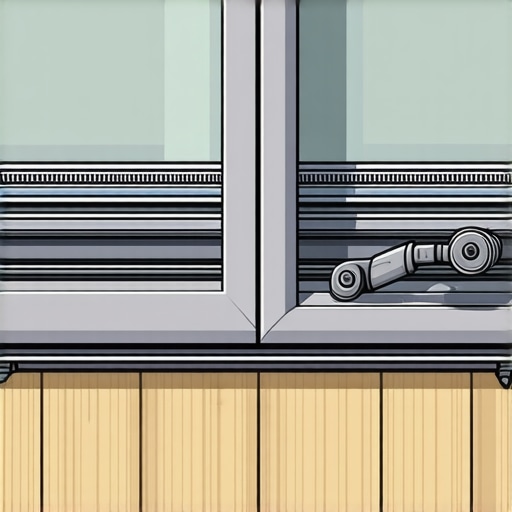
There is a specific, grating sound that every homeowner fears: the screech of metal on metal as a sliding patio door leaps from its guide. It is not just an inconvenience; it is a mechanical failure that signals a breakdown in the structural integrity or maintenance of your home’s largest operable aperture. When a sliding door begins to jump, most people reach for a can of generic lubricant and hope for the best. As a master glazier with a quarter-century in the field, I can tell you that this is a classic mistake. You are treating the symptom, not the pathology of the fenestration system. A sliding door is a heavy assembly of glass and metal that relies on precise geometry and physics to function. When that geometry is compromised, the door becomes a safety hazard and a thermal bridge that ruins your energy efficiency.
“Installation is just as critical as the window performance itself. A high-performance window installed poorly will fail.” AAMA Installation Masters Guide
A homeowner once called me in a panic because their new, expensive sliding doors were sweating and the track was constantly filling with water, causing the rollers to slip and jump. I walked in with my hygrometer and showed them the humidity was 60 percent. It was not a failure of the door or the glass; it was their lifestyle choices and the lack of proper ventilation in a tightly sealed home. This moisture was condensing on the track, attracting dust, and creating a sludge that eventually hardened into a physical obstruction. This story illustrates a fundamental truth in the glazing world: the environment and the installation are just as important as the hardware itself. If you are struggling with a door that refuses to stay seated, we have to look at the anatomy of the unit, from the rough opening to the glazing bead.
The Anatomy of the Jump: Rollers and Tracks
The primary reason a door jumps is the failure of the tandem roller system. These are not simple wheels; they are often sophisticated assemblies of stainless steel or nylon bearings housed in a galvanized steel casing. Over time, these bearings lose their lubrication or become flattened. When a roller flat-spots, it no longer rolls; it slides. This creates friction that forces the sash to climb the vertical rib of the track. If you are looking for window repair, the first place to check is the adjustment screw located at the bottom of the sash. By turning this screw, you are moving the roller assembly up or down to square the door within the frame. If the door is not level, the leading edge will strike the side jamb, causing the trailing edge to kick out and jump the track. This is basic physics. If the center of gravity is not perfectly aligned over the track rib, the door will seek the path of least resistance, which is usually off the rail.
The Role of the Rough Opening and Settling
Sometimes the issue is not the door at all, but the hole it sits in. A sliding door requires a rough opening that is plumb and square. In many houses, especially in regions with expansive clay soils, the header of the door can sag over time. This puts downward pressure on the top of the sash, squeezing it against the bottom track. In this scenario, no amount of window cleaner or lubricant will fix the jump. You are dealing with a structural compression. We use a shim to level the sill before the door is even fastened. If the sill pan was not installed with a proper back-dam, water can migrate under the track, rotting the subfloor and causing the track to dip. A dip of even an eighth of an inch is enough to throw the rollers out of alignment and cause a derailment.
Thermal Logic: Dealing with Solar Heat Gain
In hot, southern climates, a sliding door is a massive liability for solar heat gain. We are talking about a giant pane of glass that acts as a collector for infrared radiation. When I talk to homeowners about the need to replace windows or doors, I focus on the SHGC, or Solar Heat Gain Coefficient. In a southern exposure, you want a Low-E coating on Surface 2, which is the inward-facing side of the exterior lite of glass. This reflects the heat back outside before it can even enter the air gap of the insulated glass unit. If your door is jumping, it might also be due to thermal expansion. In extreme heat, lower-quality vinyl frames can expand at a different rate than the glass and the metal reinforcement inside. This warping changes the distance between the top and bottom tracks, making it easier for the door to pop out during the hottest part of the day.
“The fenestration product shall be installed level, plumb, and square within the rough opening.” ASTM E2112 Standard Practice
The Importance of the Sill Pan and Weep Holes
Water management is the most misunderstood aspect of window repair. Every sliding door track is designed to take on water; that is why they have weep holes. These holes are small valves or openings that allow water to exit the track via gravity. If these holes are clogged with debris, the track fills with water. This water eventually reaches the roller bearings, washing away the factory grease and causing premature rust. Once those rollers seize, the door will jump. Using a high-quality window cleaner to keep the track clear is not just about aesthetics; it is about maintaining the hydrodynamics of the sill. A proper installation includes a sill pan, which is a secondary line of defense that catches any water that bypasses the primary seals and directs it back to the exterior. Without it, you are one rainstorm away from a rotted header and a jumping door.
When to Repair vs. When to Replace Windows
If your track is scarred or pitted, or if the frame has bowed due to structural settling, repair is often a temporary fix. When you decide to replace windows or doors, you are looking for a unit with a high structural grade and a low U-factor. Modern fiberglass frames offer the best stability because they expand and contract at nearly the same rate as the glass itself, which prevents the frame-to-sash gaps that lead to drafts and jumping. We look at the glazing bead to ensure the glass is securely held and that the weatherstripping is making full contact. A door that jumps is telling you that the system has reached its limit. Whether it is a worn roller, a warped frame, or a clogged weep hole, ignoring the issue will only lead to more expensive repairs down the line. Keep your tracks clean, adjust your rollers seasonally, and never force a door that resists. The goal is a sash that glides with the touch of a single finger, a testament to proper glazing science.