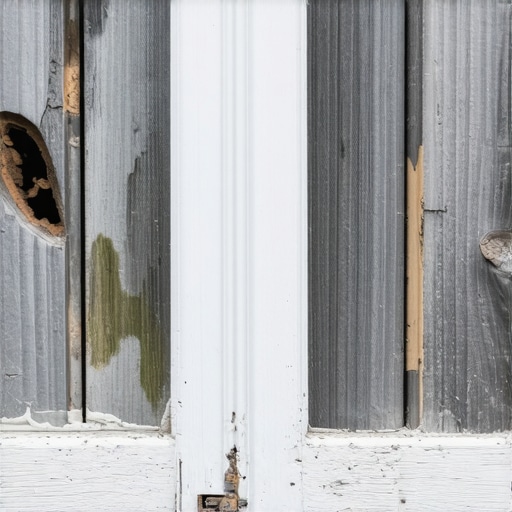
The Illusion of the Fresh Coat: Why Paint is Often a Mask for Structural Failure
I pulled a wood double-hung window out of a Victorian home in Boston and the entire subsill was a mushy, black mess of lignin-destroying fungi. Why? The previous owner had hired a window cleaner who also did some handyman work, and instead of identifying the failing glazing bead, they just caulked over the weep area and slapped on a fresh coat of oil-based paint. They trapped the moisture inside the cellular structure of the pine, creating a microbial greenhouse. This is the danger of the paint-and-pray method. To the untrained eye, the window looked immaculate. To a master glazier, the slight puffiness of the wood grain was a neon sign for total systemic failure. When you look at a window, you are looking at a complex moisture management system, not just a piece of glass in a frame.
The Biology of Decay: When Wood Becomes a Sponge
Wood rot is not a mysterious curse; it is a biological process involving fungi that require food, oxygen, and moisture. When a window cleaner or homeowner notices a soft spot, the instinct is often to reach for the putty. However, the secret to spotting wood rot behind a freshly painted frame lies in understanding the vapor pressure and the dew point within the wall cavity. If the flashing tape was never installed at the rough opening, or if the sill pan was omitted to save five dollars, water will find its way behind the casing. Once the moisture content of the wood hits the fiber saturation point (roughly 28 to 30 percent), the decay fungi begin to feast on the cellulose. A fresh coat of latex paint acts as a semi-permeable membrane that might let liquid water in through a tiny crack but prevents it from evaporating outward, effectively accelerating the rot from the inside out.
“Installation is just as critical as the window performance itself. A high-performance window installed poorly will fail.” – AAMA Installation Masters Guide
Technical Indicators: Reading the Signs of Sub-Surface Rot
How do you identify this without tearing the house apart? Start with the sash. An operable window should move freely. If a sash is sticking despite a new paint job, the wood fibers may be swollen with moisture. Look at the muntin bars. If the paint is peeling specifically at the joints, the capillary action is pulling water into the end grain. Use a moisture meter, a tool every window repair professional should carry. If the wood behind that fresh paint registers above 20 percent moisture, you are not looking at a cosmetic issue; you are looking at an impending structural replacement. The physics of the building envelope do not care about your curb appeal. If the shingle principle was violated during the initial installation (where each layer must overlap the one below it), the water will always win.
The Thermal Logic of the Cold Climate Window
In northern climates, the enemy is often interior condensation. When the U-factor of a window is too high, the interior glass surface becomes cold enough to hit the dew point. Water trickles down the glass, bypasses the glazing bead, and pools at the bottom of the sash. If you are considering the choice to replace windows, you must look at the spacer technology. A warm-edge spacer reduces the conductivity at the edge of the glass, keeping the surface temperature above the dew point and preventing the moisture that leads to rot. For those in the North, a triple-pane unit with an Argon gas fill and a Low-E coating on Surface #3 is the standard for preventing the very moisture cycles that necessitate a window repair in the first place.
“The primary purpose of a window is to provide light and ventilation while maintaining the integrity of the building envelope against environmental loads.” – ASTM E2112 Standard Practice
The Anatomy of a Proper Replacement: Beyond the Caulk
When you finally decide to replace windows because the rot has compromised the rough opening, you must avoid the pocket replacement trap if the underlying frame is soft. A pocket or insert replacement only replaces the sash and the inner tracks. If the subsill is rotted, you are just putting a new window into a decaying hole. A full-frame tear-out is the only solution. This involves removing the interior casing and exterior brick mold to expose the rough opening. From there, we install a proper sill pan with a rear dam. We apply flashing tape in a specific sequence: sill first, then jambs, then the head flashing. This ensures that any water that manages to penetrate the outer layer is directed back out through the weep hole system. This is the difference between a glazier and a salesman.