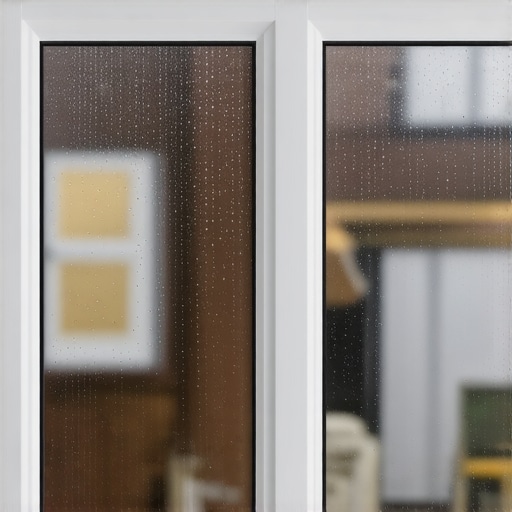
The Condensation Crisis: A Master Glazier’s Perspective
I walked into a suburban colonial last February where the homeowner insisted their new windows were defective because of the puddles on the sills. I did not reach for a multi-tool; I reached for my hygrometer. It registered 58 percent relative humidity inside while it was 10 degrees Fahrenheit outside. I had to explain that their humidifier and lack of ventilation were the culprits, not the glass. The windows were actually doing their job by reaching the dew point on the interior surface, which is exactly where physics says the water will land when the air is too wet. This is the reality of residential glazing: most people do not understand the thermal engine that is an Insulated Glass Unit (IGU). When we talk about why double glazing fails, we are not just talking about glass; we are talking about a failure of chemistry, physics, and often, the rough opening installation itself.
The Anatomy of an IGU Failure
Double glazing consists of two panes of glass separated by a spacer bar and sealed to create a dead air space or a gas-filled cavity. The primary seal, typically made of polyisobutylene (PIB), is designed to be the moisture vapor barrier. The secondary seal, often silicone or polysulfide, provides structural integrity. When you see fog between the panes, you are witnessing a total breach of this system. The desiccant, a molecular sieve material hidden inside the spacer bar, has reached its saturation point. It can no longer absorb the moisture that has migrated past the secondary seal. This is not something a window cleaner can wipe away. This is a terminal condition for the glass. Once that seal is gone, any argon or krypton gas that was providing your thermal resistance has leaked out, replaced by moist, conductive air.
“Installation is just as critical as the window performance itself. A high-performance window installed poorly will fail.” – AAMA Installation Masters Guide
The Physics of the North: Why U-Factor Governs Your Comfort
In cold climates, we are fighting a constant battle against heat loss. This is where the U-Factor becomes the most critical metric on the NFRC label. The U-Factor measures the rate of heat transfer; the lower the number, the better the window insulates. To achieve a high-performance rating, we utilize Low-E (low-emissivity) coatings, specifically on Surface #3 (the interior-facing surface of the inner pane). This coating reflects long-wave infrared radiation back into the room, keeping your furnace’s hard-earned heat where it belongs. When a window fails thermally, you will feel it. You will sense the radiant cold pulling heat from your body even if the air temperature in the room is 70 degrees. This is because the interior glass temperature has dropped significantly, often due to the loss of the argon gas fill which slows down the convection currents inside the unit.
The Installation Autopsy: Where Most Contractors Fail
I have performed hundreds of tear-outs, and the story is almost always the same. The window did not fail; the installation did. A proper installation begins with the sill pan. If you do not have a sloped sill pan with a back dam, you are relying entirely on caulk to keep water out of your wall cavity. We follow the shingle principle: every layer of flashing tape and weather-resistive barrier must overlap the one below it. When an installer ignores the rough opening tolerances and tries to bridge a one-inch gap with nothing but expanding foam and a prayer, the window sash will eventually bind. The frame will twist, putting stress on the glazing bead and eventually popping the seal of the IGU. This is why we shim meticulously at every hardware point and ensure the frame is plumb, level, and square within a sixteenth of an inch.
“The primary objective of a window installation is to provide a weather-resistive barrier that prevents water penetration and air leakage into the building envelope.” – ASTM E2112 Standard Practice
Identifying the Early Signs of Failure
How do you know if you need window repair or a total replacement? Look at the corners of your IGU. If you see a slight silvery or white haze, that is the beginning of seal degradation. Check your weep holes. If they are clogged with debris, water will back up into the glazing pocket, sitting against the secondary seal. Most secondary seals are not designed for prolonged water submersion; they will emulsify and fail. Another sign is the movement of the sash. An operable window should glide. If it requires significant force, the frame has likely shifted or the hardware is corroding due to hidden moisture. If you see wood rot on the brickmold or the interior trim, the window has likely been leaking for years, and the damage is no longer just cosmetic.
The Choice: Window Repair or Replace Windows?
Many homeowners are told they need to replace windows when a simple IGU swap would suffice. If the frames are made of high-quality pultruded fiberglass or thermally broken aluminum and are still structurally sound, we can simply pop the glazing bead, remove the failed glass, and drop in a new, high-efficiency unit. However, if the frame is a cheap, thin-walled vinyl that has warped from heat or if the wood sash has significant rot at the tenon joints, repair is a fool’s errand. You are better off investing in a full-frame replacement. This allows us to inspect the structural headers and replace the flashing system from the ground up, ensuring the hole in your wall is managed for the next thirty years. Don’t be swayed by high-pressure sales tactics focusing on aesthetics; look at the NFRC data and the installation protocol. A master glazier knows that the best window in the world is only as good as the flashing tape and the sill pan protecting it. [IMAGE_PLACEHOLDER]