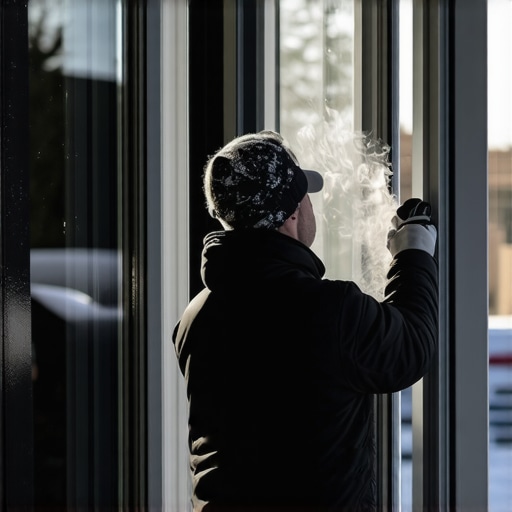
The Physics of Frozen Glass and the Glazier’s Perspective
In my twenty-five years of handling everything from high-rise curtain walls to intricate residential sash replacements, I have seen it all. Most homeowners view a window as a simple transparent barrier, but to a master glazier, it is a complex thermal boundary. When the thermometer drops below thirty-two degrees Fahrenheit, the behavior of glass changes. It becomes a heat sink, pulling energy from the interior of your home and creating a micro-climate on its exterior surface. Attempting to clean these surfaces with standard methods is a recipe for disaster, often resulting in instant ice sheets or, worse, catastrophic thermal shock. If you are looking to replace windows or seeking window repair because of a crack sustained during a winter cleaning attempt, you are already behind the curve. Understanding the interaction between the dew point and the surface temperature of the glass is the first step toward a successful winter maintenance routine.
The Condensation Crisis: A Narrative of Thermal Failure
A homeowner called me in a panic because their new windows were ‘sweating’ and then freezing into thick crusts of ice on the interior glazing bead. I walked in with my hygrometer and showed them the humidity was 60 percent. It was not the windows; it was their lifestyle. They were running a humidifier full blast while the exterior temperature was ten degrees. This created a situation where the interior surface of the glass, despite being a high-quality insulated glass unit, reached the dew point. When we talk about a window cleaner professional working in these conditions, we have to account for this thermal gradient. If you apply liquid to glass that is significantly colder than the liquid itself, you risk more than just ice. You risk the structural integrity of the pane. I have seen countless DIY attempts end in a stress crack because someone thought warm water would melt the frost faster. That is a rookie mistake that ignores the mechanical properties of silicate glass.
“Installation is just as critical as the window performance itself. A high-performance window installed poorly will fail.” AAMA Installation Masters Guide
The Science of Low-E Coatings and Exterior Surface Temperature
In northern climates like Minneapolis or Chicago, we prioritize the U-Factor. A lower U-Factor means the window is better at resisting heat flow. However, there is a secondary effect that most people ignore: the exterior pane of a high-efficiency window actually stays colder than a low-efficiency one. Why? Because the Low-E coating, typically situated on Surface #3 in cold climates, is reflecting the home’s internal heat back into the living space. This means the outer pane is not being ‘warmed’ by escaping heat. Consequently, when you go out to clean that glass, it is likely at the ambient outdoor temperature or even lower due to radiative cooling. This is where the challenge of water icing becomes a technical hurdle. If you use a standard window cleaner solution, the water molecules will bond to the cold glass surface and crystalize instantly. To prevent this, we have to alter the freezing point of our cleaning solution using chemistry, not heat.
The Glazier’s Winter Solution: Altering the Freezing Point
The secret to cleaning glass in the dead of winter is the strategic use of alcohols. Isopropyl alcohol or methanol are the glazier’s best friends when the mercury drops. By creating a mixture that is at least twenty percent alcohol, you significantly depress the freezing point of the liquid. This allows the solution to remain in a liquid state long enough to be squeegeed off the glass before it can bond. You must also consider the operable parts of the window. If you are cleaning a double-hung or a casement window, ensure the weep holes in the sill pan are clear of ice. If your cleaning solution drains into the frame and freezes, it can expand and damage the glazing bead or even the frame itself. This is particularly true for vinyl frames, which become brittle in extreme cold and have a high coefficient of linear thermal expansion. A shim that was perfectly placed in July might be loose in January, and a frozen weep hole can lead to water backing up into the rough opening of your wall.
“The selection of the proper sealant and the method of application are essential to the long-term performance of the window installation.” ASTM E2112
The Mechanics of the Squeegee in Sub-Zero Weather
The physical act of cleaning change in the cold. Professional tools are designed for standard temperatures. In freezing weather, the rubber blade of a squeegee becomes stiff and loses its ability to conform to the glass surface. This results in streaks and missed spots. A master glazier knows to keep their squeegee blades warm, often keeping a spare blade inside their jacket to maintain its flexibility. You also need to work in smaller sections. In the summer, you might soap up an entire storefront. In the winter, you soap and pull one sash at a time. This prevents the alcohol from evaporating too quickly, which would leave the remaining water to freeze. If you notice that your window repair needs are increasing every spring, it might be due to improper winter cleaning techniques that have stressed the seals of your Insulated Glass Units (IGUs). The constant cycle of freezing and thawing at the edge of the glass can compromise the secondary sealant, leading to argon gas loss and eventually, total seal failure.
Frame Material Science: Why Your Window Type Matters
The material of your window frame dictates how you should approach winter cleaning. Vinyl windows expand and contract significantly. If you are cleaning a vinyl window in ten-degree weather, the rough opening tolerances are at their maximum. You should avoid putting excessive pressure on the frame. Fiberglass, on the other hand, is much more stable because it is made of glass fibers and resin, which expand at a rate similar to the glass itself. Wood windows require the most care. If you get an alcohol-based solution on a painted or stained wood muntin, it can damage the finish. Always use a microfiber cloth to immediately wipe any runoff from the wood surfaces. If your windows are old and you are considering a replace windows project, fiberglass is the superior choice for extreme cold because it maintains its structural integrity and seal pressure better than vinyl or wood. The flashing tape and sill pan installation on a fiberglass unit are less likely to be stressed by thermal cycling.
Thermal Shock: The Hidden Danger of Hot Water
I cannot stress this enough: never use hot or even warm water on cold glass. Glass is a poor conductor of heat. When hot water hits cold glass, the surface layers expand while the center of the pane remains contracted. This differential expansion creates massive internal stress. If the window has even a microscopic nick on the edge—something common in older windows—that stress will concentrate at the nick and cause a crack to spider across the entire pane. This is not a simple window repair; it requires a full glass replacement. Stick to room temperature solutions with high alcohol content. If the window is covered in thick ice, do not scrape it with metal. Use a plastic scraper and your alcohol solution to slowly melt through the layers. A glazier’s goal is always to manage the dew point and the rough opening environment to ensure the window survives the winter without structural compromise.
Conclusion: Precision Maintenance for Longevity
Cleaning windows in freezing temperatures is not just about aesthetics; it is about maintaining the health of the aperture in your wall. By using the right chemical mixtures, respecting the physics of thermal shock, and understanding the limits of your frame materials, you can keep your view clear without risking a 1000 dollar replacement bill. Remember that the window is a system. The sash, the glazing bead, the weep holes, and the seals all work together to manage the harsh environment. Treat them with the technical respect they deserve. If you find that your windows are consistently failing or the icing is occurring between the panes, no amount of cleaning will help. It is time to call a professional to replace windows and restore the thermal envelope of your home. Stay warm, stay dry, and keep your squeegee blades limber.