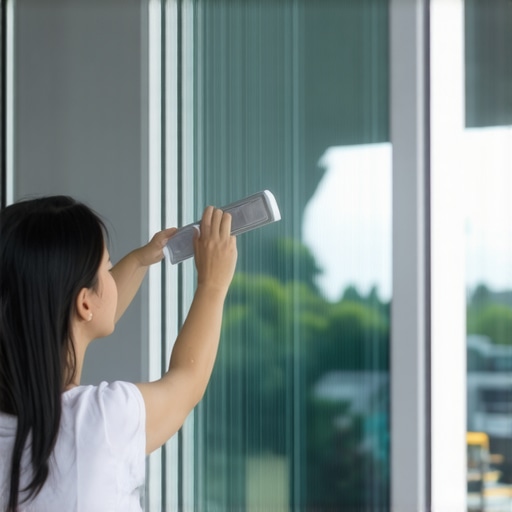
The Myth of the Quick Fix and the Reality of Glass Physics
In my twenty-five years of handling everything from high-profile curtain walls to delicate historic sash restorations, I have seen it all. Most people view a window as a simple piece of glass, but to a professional glazier, it is a complex thermal barrier. When a homeowner decides to apply a privacy film, they are not just changing the aesthetics; they are altering the thermal performance of the entire unit. I remember a specific case that perfectly illustrates the misunderstanding of window mechanics. A homeowner called me in a panic because their new windows were ‘sweating’ and they blamed the installation. I walked in with my hygrometer and showed them the humidity was 60 percent. It was not the windows; it was their lifestyle and the poorly applied DIY film that was trapping moisture against the glazing bead. This is why understanding the science of the rough opening and the glass itself is paramount before you ever touch a squeegee.
“Installation is just as critical as the window performance itself. A high-performance window installed poorly will fail.” AAMA Installation Masters Guide
The Anatomy of a Failed Application: An Autopsy
When I am called for a window repair involving failed film, the autopsy usually reveals the same three culprits: poor surface preparation, ignorence of the glazing bead, and a total disregard for the dew point. People use a generic window cleaner and think the glass is ready. In reality, micro-contaminants remain. If you do not achieve a clinically clean surface, the adhesive will never bond correctly, leading to those unsightly bubbles that are actually pockets of trapped air and outgassing chemicals. Furthermore, if you live in a cold climate like Chicago or Minneapolis, the U-Factor of your window is your primary defense against the winter. Applying a dark privacy film to the interior surface (Surface #4) of a double-pane unit can drastically change the temperature of the glass, potentially leading to thermal stress cracks. You are essentially turning your window into a heat sink. This is why we focus on the physics: a lower U-Factor is king in the north, and any modification must respect the window’s ability to manage radiant heat.
The Technical Protocol for a Bubble-Free Finish
To apply privacy film like a master, you must treat the process with the same precision as a full-frame replace windows project. We begin with the ‘Shingle Principle.’ Just as water must flow down and out of a sill pan, your application solution must be evacuated from the center to the edges without being allowed to pool. We use a specialized slip solution, not just dish soap, to manage the surface tension of the water.
“Water penetration resistance is a function of the entire window assembly, including the interface between the glass and the film.” ASTM E2112 Standard Practice
You must first inspect the sash and the muntin. If there is any debris in the corners, the film will lift. Use a stainless steel 1-inch blade to scrape the glass, ensuring you do not nick the soft Low-E coating if it is exposed. When you cut the film, you are not aiming for a perfect fit against the frame. You need a 1/16-inch gap from the glazing bead. This allows the water to be pushed out completely. If the film overlaps the gasket, it will suck air back under the surface as it dries, creating a line of bubbles that no amount of squeegeeing will fix.
Climate Considerations and Thermal Shock
In our northern climate, heat loss is the enemy. We want warm-edge spacers to prevent condensation at the perimeter of the glass. When you add a privacy film, you must ensure it does not move the dew point to a location within the wall cavity or against the wood frame, which causes rot. If I find a rotted header during a window repair, it is often because moisture was trapped by an improper seal. The film should enhance, not compromise, the window’s U-Factor. For those considering this as a cheaper alternative to replace windows entirely, remember that film cannot fix a failed IGU (Insulated Glass Unit) seal. If you see fogging between the panes, no film in the world will save that window. You are looking at a full sash replacement or a new unit. Professional glazing is about managing the transition between the conditioned interior and the harsh exterior. Whether you are using a heavy-duty squeegee or ensuring the weep holes are clear, every action must be intentional. Do not be a ‘caulk-and-walk’ installer. Take the time to measure the rough opening, check the level of the sill, and apply your film with the precision that a 25-year veteran would demand.