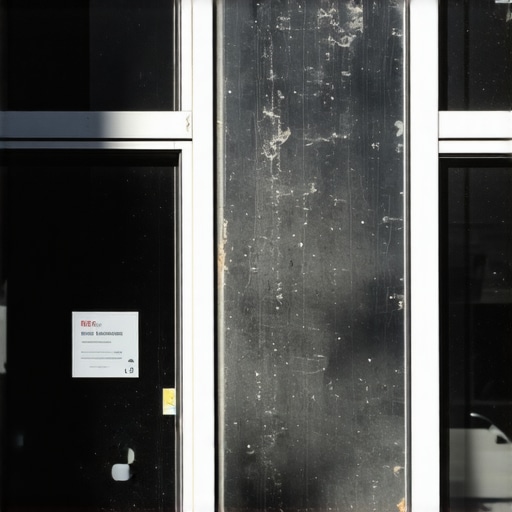
Understanding the Molecular Failure of Your Storefront
When you walk up to your business and see those tiny, stubborn craters or a milky haze on your storefront glass that no window cleaner can scrub away, you are not looking at dirt. You are looking at a molecular failure of the silicate structure. Most building owners mistake this for a maintenance lapse, but as someone who has spent over two decades in the glazing trade, I can tell you that glass is far more reactive than people realize. It is not just a solid barrier; it is a complex chemical matrix that can be compromised by environmental factors and poor architectural planning.
A building manager called me in a panic because their new windows were ‘sweating’ and looked permanently foggy. I walked in with my 10x magnification loupe and a hygrometer and showed them that the surface was actually undergoing Stage II corrosion. I had to explain that it wasn’t the glass manufacturer at fault; it was their building’s own runoff. The masonry hadn’t been sealed, and every time it rained, calcium and alkali were leaching out of the brick and onto the glass. It wasn’t the windows that were the problem; it was the building’s chemistry. This realization is often the first step in moving from frustration to a technical solution.
“Glass is generally considered a highly durable material, but it is not completely inert. Exposure to alkaline conditions can lead to surface degradation and loss of clarity.” – ASTM C1036 Standard Specification for Flat Glass
The Science of Pitting: Why Glass Corrodes
To understand pitting, we have to look at the Glazing Zoom level of detail. Glass is primarily made of silica, soda, and lime. The sodium ions in the glass are loosely bonded. When water stays on the glass for an extended period, it initiates an ion exchange. Hydrogen ions from the water replace the sodium ions in the glass. This creates a sodium-rich, high-pH solution on the surface. If this solution reaches a pH level above 9.0, it begins to dissolve the silicate structure itself. This is what we call glass corrosion or pitting. It is a permanent physical change to the surface that creates those micro-craters.
In an urban environment, this process is accelerated by industrial pollutants. Sulfur dioxide and nitrogen oxides mix with rainwater to create a mild acidic solution, but the real killer is the alkaline runoff from concrete, mortar, or stucco. When a new building is constructed, the lime in the masonry is highly reactive. If the Glazing Bead or the Sill Pan is not correctly integrated into the building’s drainage plane, this water sits on the glass or within the Rough Opening, causing accelerated decay at the edges that eventually creeps toward the center of the lite.
Blueprint for an Installation Autopsy: Where It Goes Wrong
If you are experiencing premature pitting, we need to perform an installation autopsy. The first place I look is the Weep Hole system. Every commercial storefront system is designed to take on a certain amount of water and then drain it back out. If the installer ‘caulked and walked,’ they might have blocked these critical drainage points. When water is trapped against the glass edge, it creates a localized high-humidity environment that facilitates the ion exchange process I mentioned earlier.
Furthermore, the Shim placement is critical. If a window is not shimmed correctly within the frame, the glass can sit too low in the pocket, coming into direct contact with stagnant water in the Sill Pan. This leads to edge corrosion that can eventually cause the glass to crack due to thermal stress. A window is a hole in the wall that must manage water, and if the flashing tape or the end dams of the sill are failed, you aren’t just looking at a leak; you’re looking at the eventual destruction of the glass surface itself.
“Proper drainage within the glazing pocket is essential to prevent prolonged moisture contact with the glass edge and laminate interlayers, which can lead to permanent surface damage or delamination.” – AAMA Aluminum Storefront Design Guide
The Climate Context: Urban and Coastal Stress
In a high-pollution urban center or a coastal environment, the strategy for protecting storefront glass changes. For these areas, we have to consider the Surface #1 (the exterior) coatings. In the North, we often focus on U-Factor to keep heat in, but for a storefront facing heavy pollution, we need to talk about oleophobic and hydrophobic coatings that prevent water from ‘sheeting.’ When water sheets, it holds pollutants against the glass longer. If we can get the water to bead and roll off quickly, we reduce the time available for the chemical reaction that leads to pitting.
For coastal properties, salt spray is the enemy. Sodium chloride crystals are abrasive and hygroscopic, meaning they pull moisture out of the air and hold it against the glass. This creates a perpetual brine that eats away at the glass and the aluminum frame. If your frames aren’t anodized or high-performance Kynar-coated, you’ll see the metal pitting alongside the glass. In these scenarios, a standard window cleaner isn’t enough; you need a specialized maintenance schedule that involves a de-ionized water rinse to neutralize the salts before they can bond to the silicate.
Window Repair vs. Replace Windows: The Reality Check
Can you fix pitted glass? The answer depends on the stage of corrosion. Stage I corrosion is a light white haze that can often be removed with a cerium oxide polishing compound and a high-speed buffer. This is a labor-intensive window repair that requires a skilled glazier; an amateur will leave ‘swirlies’ or ‘fish-eyes’ in the glass that look worse than the pitting. If you can feel the pits with your fingernail, you are in Stage II. At this point, you have lost significant material from the surface. While you can polish it, you risk creating optical distortion, making the storefront look like a funhouse mirror.
When the pitting is deep, the most cost-effective and aesthetically pleasing option is to replace windows. When I do a replacement for a pitted storefront, I don’t just swap the glass. I investigate the Sash and the perimeter Flashing Tape. If we don’t fix the reason the glass pitted in the first place—whether it’s building runoff or poor drainage—the new glass will look just as bad in five years. We might install a Drip Cap above the window to divert the alkaline runoff away from the glass surface entirely. This is the difference between a ‘Tin Man’ salesman and a master glazier; I’m not just selling you glass, I’m fixing a systemic building failure.
Conclusion: Protecting Your Investment
Your storefront is the face of your business. Pitted glass sends a message of neglect, but now you know it is often a technical issue of chemistry and installation rather than a lack of cleaning. To prevent this, ensure your window cleaner is not using abrasive pads or harsh chemicals that strip the glass of its natural defenses. Regularly inspect your Weep Holes to ensure they are clear of debris. And if you are seeing the signs of Stage II corrosion, don’t waste money on ‘miracle’ cleaning sprays. Consult a professional who understands the science of glazing to evaluate if a full-frame replacement or a targeted repair is your best path forward. Glass management is a science, and your building deserves a scientific approach.