The Hidden Chemistry of Window Failure
As a master glazier with a quarter-century in the field, I have seen every imaginable mistake a homeowner can make. But few things frustrate me more than seeing a high-performance, thermally efficient window system destroyed by a bottle of five-percent acetic acid. We often call it white vinegar. To the average person, it is a natural, green alternative to a chemical window cleaner. To a glazier, it is a slow-acting solvent that compromises the very elastomers designed to keep your home dry and warm. I remember a specific case in Milwaukee where a homeowner called me in a panic because their new windows were ‘sweating.’ I walked in with my hygrometer and showed them the humidity was sixty percent. It wasn’t the windows; it was their lifestyle. They were boiling water for pasta without a vent fan and then cleaning the resulting condensation with a heavy vinegar solution. They thought they were being diligent, but they were actually accelerating the degradation of their EPDM seals. The vinegar was wicking into the glazing bead, sitting in the channel, and slowly breaking down the polymer chains of the rubber. Once those seals lose their elasticity, the argon gas escapes, the U-factor skyrockets, and your expensive investment becomes little more than a foggy piece of glass.
“Installation is just as critical as the window performance itself. A high-performance window installed poorly will fail, but even a perfect installation cannot survive the chemical degradation of primary sealants.” – AAMA Installation Masters Guide
The Science of the Seal: Why EPDM and Vinegar Do Not Mix
To understand why you need to be careful with your choice of window cleaner, you have to understand what is holding your glass in place. Most modern windows use EPDM (Ethylene Propylene Diene Monomer) or similar synthetic rubbers for the glazing bead and the weatherstripping. These materials are engineered to withstand extreme UV radiation and temperature fluctuations from forty below to one hundred and twenty degrees. However, they are not designed for constant exposure to acids. When you spray vinegar on a sash, the liquid does not just stay on the glass. Gravity and capillary action pull it down into the crevice where the glass meets the frame. This is the glazing pocket. In a properly designed window, this area should be managed by a weep hole system. But if the vinegar sits there, it begins a process called environmental stress cracking. The acetic acid reacts with the plasticizers in the rubber, making the material brittle. Once the seal is brittle, it cracks. Once it cracks, the hermetic seal of the Insulated Glass Unit (IGU) is at risk. This is the point where most people start looking to replace windows because they see internal fogging. The irony is that the glass was fine; the maintenance killed the system.
Anatomy of a Failed Installation: The Shingle Principle
When I perform a window repair autopsy, I always look at the water management path. Every window installation should follow the shingle principle: every layer must shed water to the layer below it and eventually to the exterior. This starts with the drip cap at the head of the window and ends at the sill pan. If you are using a harsh window cleaner that degrades the seals, you are essentially punching holes in your first line of defense. When that primary seal at the glazing bead fails, water enters the glazing channel. If your installer didn’t set the window in a proper sill pan or neglected the flashing tape at the rough opening, that water won’t just sit in the frame. It will find the path of least resistance, which is usually your wall cavity. I have seen headers and king studs completely rotted out because a simple window cleaner choice led to a seal failure that allowed micro-leaks for five years. This is why the industry relies on standards like ASTM E2112. It provides a framework for ensuring that even if a seal fails, the building remains protected.
“The fenestration product is only as good as the seal between the frame and the wall, and the glass and the frame. Water management must be proactive, not reactive.” – ASTM E2112 Standard Practice
Climate Context: The Cold Weather Combat
In northern climates like Minneapolis or Chicago, the stakes are much higher. We deal with extreme vapor pressure differentials. In the winter, the warm, moist air inside your home is trying desperately to move toward the cold, dry air outside. The only thing standing in its way is your window system. The U-factor, which measures the rate of heat loss, is heavily dependent on the integrity of the gas fill between the panes. If you have been using vinegar and it has compromised the secondary seal of the IGU, that argon or krypton gas will leak out. It is replaced by humid air from your house. This is why you see that ‘milky’ look or actual droplets of water inside the glass. In these cold zones, we prioritize Low-E coatings on Surface Number Three to reflect heat back into the room. But that coating is sensitive to oxygen. If the seal fails, the coating can oxidize and peel. Suddenly, your high-tech window is performing no better than a single-pane unit from the nineteen-fifties. When this happens, a simple window repair is often impossible; you are looking at a full IGU replacement or, in many cases, the need to replace windows entirely if the frames have warped from the moisture.
Trade Technicalities: From Muntins to Weep Holes
Professional glaziers talk a different language because the details matter. When we look at a window, we aren’t just looking at the glass. We are looking at the rough opening tolerances. We are checking if the installer used a shim correctly to level the sill so the weep hole system can actually drain. If a window is out of level, the vinegar and water mixture will pool on one side of the sash, leading to localized seal failure. We also look at the muntins or grids. On many modern windows, these are applied to the exterior of the glass. The adhesive used for these muntins can also be weakened by acidic cleaners, leading to them sagging or falling off over time. Even the operable parts of the window, like the balance systems in a double-hung or the hinges on a casement, require specific pH-neutral lubricants. Vinegar can strip these lubricants, leading to a window that is difficult to open and eventually causing mechanical failure of the hardware.
The Correct Way to Maintain Your Investment
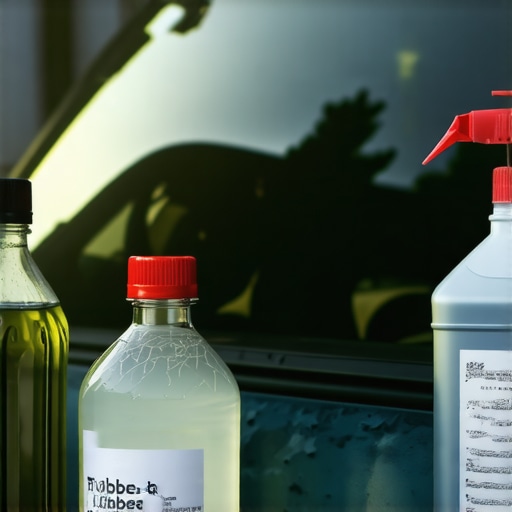
If you want to avoid the high cost of having to replace windows prematurely, stop using vinegar. The best window cleaner is actually very simple: a few drops of pH-neutral dish soap in a bucket of warm water. Use a professional-grade squeegee to remove the water entirely from the glass and, most importantly, use a microfiber cloth to dry the glazing bead and the weatherstripping. This prevents any liquid from sitting in the glazing pocket. If you notice that your seals are already looking dry or cracked, you might be able to perform a minor window repair by replacing the glazing beads if the manufacturer still produces them. However, if the fog is already inside the glass, the seal is gone. [IMAGE_PLACEHOLDER] Always remember that the window is a system. The glass, the frame, the sealants, and the installation materials like flashing tape all have to work in harmony. When you introduce a chemical that disrupts that harmony, you are starting a countdown to failure. Don’t buy the hype of ‘natural’ cleaners without looking at the MSDS (Material Safety Data Sheet) or the manufacturer’s warranty guidelines. Most warranties are actually voided if you use unapproved cleaners on the seals.