The Physics of the Fracture: Why Glass Fails
A crack in a windshield or a residential window is never a static event. It is a dynamic structural failure. In my twenty five years as a master glazier, I have seen thousands of these stress risers. When you see a hairline fracture, you are looking at a point where the molecular bonds of the silicon dioxide have been severed, and the tension stored within the glass sheet is looking for a path of least resistance. This is why a small chip becomes a spiderweb overnight when the temperature drops. The glass at the edge of the frame, often hidden by the glazing bead, stays colder than the center of the lite. This thermal gradient creates a pull that the compromised glass simply cannot resist.
A homeowner called me in a panic because their new windows were ‘sweating’ and one had developed a crack near the corner. I walked in with my hygrometer and showed them the humidity was at 60 percent. It wasn’t a defect in the glass unit itself; it was their lifestyle choices and a lack of proper ventilation. The moisture was pooling at the bottom of the sash, causing the wood to swell and putting localized pressure on the glass edge. That pressure, combined with the cold snap outside, resulted in a classic thermal stress fracture. It is a prime example of how the environment inside the house is just as critical as the weather outside.
The Emergency Intervention: Arresting the Spread
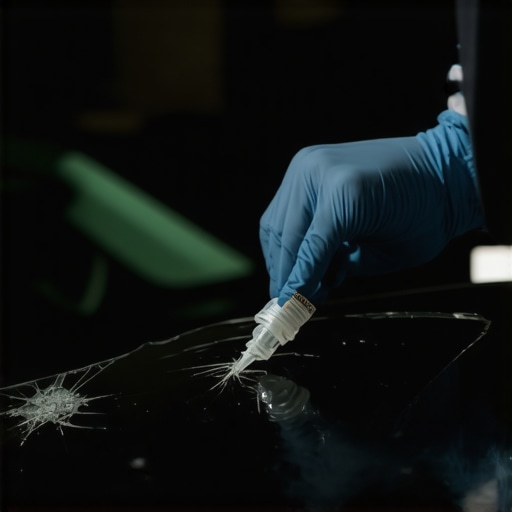
If you are dealing with a windshield or a single-pane residential window, the quick way to stop a crack from spreading is to relieve the surface tension. Professionals use a specialized bridge and injector to force a clear, UV-cured acrylic resin into the fracture. The resin has a refractive index nearly identical to glass, which not only hides the damage but structurally bonds the two sides of the crack. For a temporary DIY fix, many people turn to clear nail polish or superglue, but these are poor substitutes because they lack the capillary action necessary to fill the entire void of the fracture. If air remains trapped in the crack, the expansion and contraction of that air will eventually force the crack to continue its journey across the glass.
“Installation is just as critical as the window performance itself. A high-performance window installed poorly will fail.” AAMA Installation Masters Guide
The Installation Autopsy: Why Repairs Often Fail
When we talk about window repair or the decision to replace windows entirely, we have to look at the anatomy of the opening. I have performed countless installation autopsies where the window failed not because of the glass, but because of the rough opening management. If an installer neglects the sill pan, any water that bypasses the primary seal has nowhere to go but into the wall cavity. I have pulled out sashes where the wood was so soft you could poke a finger through it, all because the flashing tape was applied in the wrong order, defying the shingle principle where every layer must overlap the one below it.
A common mistake in the industry is the ‘caulk-and-walk’ method. This involves shoving a new window into an old, rotting frame and covering the gaps with a thick bead of sealant. This is a recipe for disaster. A proper installation requires that the window be level, square, and plumb, with shims placed exactly at the points where the hardware and hinges are located. Without proper shimming, the frame will bow over time, leading to air leaks and making the sash difficult to operate. When a window becomes hard to open, users often force it, which is the leading cause of cracked glazing beads and broken seals in IGU (Insulated Glass Units).
Climate Logic: The Cold Weather Defense
In colder northern climates, the enemy is heat loss and the dreaded dew point. When you are looking to replace windows, you must prioritize the U-Factor. This number represents the rate of heat loss. The lower the U-Factor, the better the window is at keeping the warmth inside. For these regions, we utilize triple-pane glass with a Low-E coating on Surface number 3. This specific placement reflects the long-wave infrared radiation (the heat from your furnace) back into the room rather than letting it escape through the glass. We also look for warm-edge spacers, which are the structural components that hold the panes apart. Older metal spacers act as a thermal bridge, conducting cold directly to the inner pane and causing condensation. Modern composite spacers break that bridge, keeping the glass edge warm and preventing mold growth on the sash.
“The National Fenestration Rating Council (NFRC) provides the only reliable way to compare the energy performance of different window products.” NFRC Performance Standards
The Science of the Window Cleaner
Maintenance is the final pillar of glass longevity. Using the wrong window cleaner can actually accelerate the degradation of your window components. Many off the shelf cleaners contain ammonia or harsh alcohols that can eat away at the rubber gaskets and the thin metallic films of Low-E coatings if they aren’t properly sealed. A professional glazier uses a simple solution of deionized water and a mild surfactant. This breaks the surface tension of the dirt without leaving a residue that attracts more dust. When you clean your windows, you should also inspect the weep holes in the bottom of the frame. These are small channels designed to let water out. If they are clogged with debris, water will back up and rot the sill or freeze and crack the glass.
Structural Integrity and the Rough Opening
The rough opening is the fundamental skeleton of your window system. If the rough opening is not properly prepared with a high-quality flashing tape and a sloped sill pan, the most expensive window in the world will not protect your home. During a full-frame replacement, we strip the opening down to the studs. This allows us to inspect for previous water damage and ensure that the new unit is integrated into the home’s water-resistive barrier. We use stainless steel fasteners to prevent corrosion and ensure that the shim space is filled with a low-expansion closed-cell foam. This foam provides both insulation and a secondary air seal, preventing the drafts that make a room uncomfortable even if the thermostat is set to seventy degrees.
The Math of Replacement: Beyond the Hype
Don’t believe the high-pressure sales pitch that new windows will pay for themselves in energy savings in five years. The reality is that the ROI for window replacement is measured in comfort, curb appeal, and the long-term protection of your home’s structure. You replace windows because the old ones are no longer operable, because they allow moisture to ruin your drywall, or because the noise from the street has become unbearable. When you choose a new unit, look at the Visible Transmittance (VT) as well. A window with a very low SHGC might keep the heat out, but it can also make your living room feel like a cave. Balancing light and thermal performance is the mark of a true glazing professional.