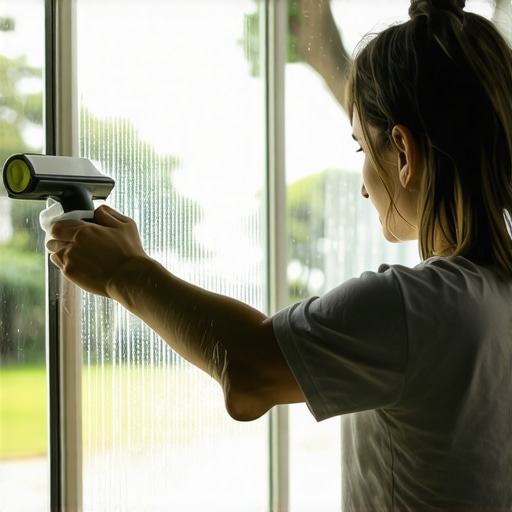
The Illusion of the Clear View
As a Master Glazier with over a quarter-century of experience in the field, I have seen every possible iteration of glass maintenance. From the old single-pane float glass of the 1960s to the most advanced vacuum-insulated glazing units of today, one thing remains constant: the homeowner desire for a streak-free view. However, the methods used to achieve this have not kept pace with the metallurgical and chemical advancements in the glass itself. When people ask about window cleaner techniques, they often reach for a roll of paper towels. To a professional who understands the molecular structure of an Insulated Glass Unit (IGU), this is the equivalent of using a wire brush on a silk tie. Modern windows are not just silica. They are complex assemblies involving metallic coatings, gas fills, and precision-engineered seals that manage the dew point and the solar heat gain of your living space. Using wood-pulp based paper products on these surfaces is a relic of a bygone era that can actually compromise the longevity of your window repair efforts.
The Condensation Crisis: A Master Glaziers Perspective
A homeowner called me in a panic because their new windows were sweating. I walked in with my hygrometer and showed them the humidity was 60 percent. It was not the windows; it was their lifestyle. They were running a humidifier in a sealed room while the outside temperature was dropping below freezing. But as we inspected the glass, I noticed something else. The condensation was not forming in uniform droplets. It was clinging to a series of microscopic scratches and a film of static-charged debris. The homeowner had been cleaning their windows with paper towels for months. Every swipe was essentially sanding the glass with wood fibers and leaving behind a residue that acted as a structural anchor for moisture. This is a classic case where a simple maintenance error leads a client to believe they need to replace windows when, in reality, they need to fix their chemistry. The interaction between the glass surface and the cleaning medium determines how the window manages moisture and light for years to come.
Installation is just as critical as the window performance itself. A high-performance window installed poorly will fail. – AAMA Installation Masters Guide
The Physics of the Surface: Glazing Zooming on Low-E
To understand why paper towels are detrimental, we must look at the glass through a microscopic lens. In our northern climate, where the primary enemy is heat loss and interior condensation, we utilize Low-Emissivity (Low-E) coatings typically on Surface 3. This refers to the third face of the glass counting from the outside in. By placing the coating here, we reflect long-wave infrared radiation back into the room. However, many modern units also feature hard-coat Low-E on Surface 4, which is the surface you actually touch inside your home. This coating is a thin layer of metal oxide. When you use paper towels, which are comprised of abrasive wood pulp fibers, you risk creating micro-scratches in this oxide layer. Furthermore, the friction of paper on glass creates a significant static charge. This charge attracts atmospheric dust and skin cells, meaning your windows get dirty faster the more you clean them with paper products. A professional window cleaner avoids this by using a rubber squeegee and a specific surfactant that breaks the surface tension of the water without creating a static field.
The Mechanical Integrity of the Window System
A window is an assembly of parts working in concert. We have the sash, which holds the glass; the muntin, which provides structural or decorative grids; and the glazing bead, which secures the IGU into the frame. When you apply the heavy pressure required to clean with paper towels, you are putting unnecessary stress on the glazing bead and the primary seal of the IGU. I have seen cases where aggressive cleaning contributed to the premature failure of the polyisobutylene seal, leading to argon gas escape and the eventual fogging of the unit. This is when window repair becomes mandatory. If the seal fails, the U-Factor of your window—the measurement of how well a window prevents heat from escaping—skyrockets. In a Minneapolis winter, a failed seal means your furnace is working overtime to compensate for a thermal bridge that should not be there.
Standardization in testing ensures that the U-Factor and SHGC ratings you see on the label are what you get in your home. – NFRC Performance Guidelines
Why U-Factor Matters in Maintenance
In the North, we prioritize a low U-Factor. We want to keep the heat in. This means our windows are designed to keep the interior glass surface warm. When you use paper towels and a common ammonia-based cleaner, you are often stripping away the very treatments designed to maintain that thermal performance. Ammonia can react with the silver or tin oxides in the Low-E coating if there are any existing micro-fissures. Instead, the goal should be to maintain the glass in a way that preserves its visible transmittance (VT) while protecting the integrity of the spacers. We use warm-edge spacers today because they provide better thermal resistance at the edge of the glass, reducing the chance of condensation. If you are cleaning so hard that you are vibrating the spacer bar, you are doing it wrong.
The Professional Protocol: Beyond the Paper Towel
If you want to avoid a premature need to replace windows, you must adopt a professional cleaning protocol. This starts with understanding the rough opening and how the window is seated. Ensure your weep holes are clear so that any water that reaches the sill pan can escape. When it comes to the glass, use a microfiber cloth or a professional squeegee. Microfiber is a synthetic blend that lifts dirt rather than pushing it around like wood pulp does. It does not create the same level of static electricity, and it is soft enough to protect the delicate coatings on Surface 4. If you have an operable window, such as a casement or a double-hung, check the weatherstripping during your cleaning process. If the weatherstripping is compressed or torn, your cleaning efforts are moot because air infiltration will continue to bring in dust and allergens.
When Cleaning Reveals Structural Issues
Sometimes, the process of cleaning is what alerts us to the need for window repair. If you are cleaning the interior and notice the glass is cold to the touch despite a high-quality IGU, you might have a gas-fill issue. If you see water pooling on the interior sill, the problem might not be your cleaning technique but a failure in the flashing tape or the lack of a proper drip cap at the head of the window. We follow ASTM E2112 standards to ensure that the shingle principle is applied: water must always flow down and out. No amount of cleaning will fix a window that was shimmed incorrectly or lacks a proper sill pan. A window that is out of square will have gaps in its seals, making it impossible to keep clean and impossible to keep efficient.
Conclusion: Longevity Through Correct Care
The transition away from paper towels is not just a trend; it is a technical necessity born from the evolution of glazing science. We have moved from simple holes in the wall to high-performance thermal valves. Treating these advanced materials with the respect they deserve ensures that your investment lasts for the thirty or forty years it was designed for. Focus on the numbers: the U-Factor, the SHGC, and the VT. Protect those numbers by using the right tools. If you find that no amount of professional cleaning can clear the haze, it is time to call a specialist to evaluate if your seals have reached their end of life. Remember, the glass is the soul of the window, but the installation and maintenance are its life support system. Use a squeegee, keep your weep holes clear, and leave the paper towels in the kitchen. [IMAGE_PLACEHOLDER]