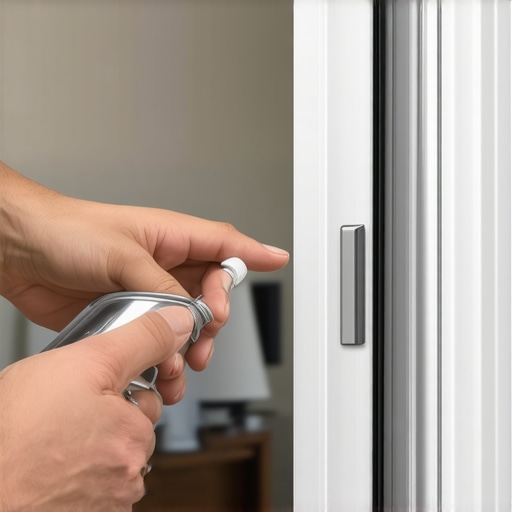
The Grinding Reality of Sliding Door Neglect
For twenty-five years, I have been the guy called in when a ‘simple’ sliding door becomes a two-handed aerobic workout just to let the dog out. I have stood in luxury penthouses and suburban ranch homes alike, listening to that distinctive, bone-jarring skritch-skritch of a door that is fighting its own track. Most homeowners make the same fatal mistake: they reach for a can of heavy-duty grease or, heaven forbid, white lithium spray. They think they are helping. In reality, they are creating a grinding paste that will eventually necessitate a full window repair or even a costly decision to replace windows and doors entirely. A sliding glass door is a heavy operable sash, often weighing upwards of 200 pounds, riding on two small tandem rollers. When you introduce grease into this environment, you are essentially creating a magnet for every piece of pet hair, skin cell, and dust mote that floats through your home.
The Grease Trap: A Narrative of Mechanical Failure
I recall a specific project in a high-wind coastal area where I was called to inspect a massive 12-foot sliding assembly that wouldn’t budge. I pulled the panel out of the Rough Opening and looked at the header—it was pristine—but the track was a disaster. The previous ‘handyman’ had packed the track with automotive grease. Over six months, the salt air and fine silica sand had mixed with that grease to form something resembling 80-grit sandpaper. It hadn’t just slowed the door; it had physically ground down the stainless steel track cover and flat-spotted the nylon rollers. Why? Because the installer relied on a quick fix instead of understanding the ‘Shingle Principle’ of maintenance. Water and debris must flow out, not get trapped in a sticky bog. This is why a professional window cleaner approach is the first step in any real mechanical restoration.
“Installation is just as critical as the window performance itself. A high-performance window installed poorly will fail.” – AAMA Installation Masters Guide
The Physics of Friction and the Dry Lubricant Solution
To understand why we avoid grease, we have to look at the metallurgy and material science of the Sill Pan and track. Most modern tracks are either extruded aluminum or have a stainless steel cap. The rollers are typically nylon, stainless steel, or brass. When these surfaces interact, they require a lubricant that reduces the coefficient of friction without building a film thickness that attracts contaminants. This is where PTFE (Polytetrafluoroethylene) or high-quality dry silicone comes into play. These substances ‘wet’ the surface at a molecular level but dry to a hard, slick finish. In a South-facing installation where the sun is beating down on that track, the radiant heat can reach 140 degrees Fahrenheit. Traditional grease will liquefy, run into your Weep Hole, and clog the drainage system of the door, leading to sub-floor rot. A dry lubricant stays where you put it and continues to reflect the heat-intensive demands of the environment.
Thermal Considerations and the Large Glass Gap
In hot climates like Phoenix or Miami, a sliding door is more than an exit; it is a giant thermal bridge. When we talk about replace windows or doors, we are looking at the Solar Heat Gain Coefficient (SHGC). If your door is sticking, it is likely not sealing correctly against the weatherstripping. A door that sits ‘cocked’ in the frame because of debris in the track allows conditioned air to escape and hot, humid air to enter. This causes the internal Glazing Bead to expand and contract at different rates, potentially stressing the glass. By maintaining a clean, dry-lubricated track, you ensure the sash seats perfectly into the jamb, allowing the Low-E coating on Surface #2 to do its job of reflecting long-wave infrared radiation back to the outside. A smooth door is an energy-efficient door.
“Proper drainage of the sill and track area is essential to prevent water infiltration and maintain the structural integrity of the window or door assembly.” – ASTM E2112
The Professional Cleaning Protocol
Before any lubricant touches the metal, the track must be surgically clean. I use a HEPA-filter vacuum with a crevice tool to pull the bulk of the grit out. Then, I use a dedicated window cleaner or a denatured alcohol solution to wipe down the track. You must look for the Weep Hole—those small slots designed to let water escape the track. If those are clogged with old grease, your Sill Pan will back up during the next rainstorm, and you will find water under your baseboards. Use a small Shim or a toothpick to clear those channels. Once the metal is bare and dry, then—and only then—do you apply a light coat of dry PTFE spray. Slide the door back and forth ten times to distribute the molecules, then wipe away any excess with a microfiber cloth. This is the difference between a ‘caulk-and-walk’ amateur and a master glazier.
When Maintenance Becomes a Replacement Conversation
There comes a point where no amount of PTFE can save a door. If the track is ‘pitted’—meaning there are physical divots in the metal—the rollers will bounce and eventually shatter. If the Rough Opening has settled and the frame is no longer level, the door will bind regardless of how slick the track is. In these cases, a window repair is a temporary bandage on a structural wound. When I tell a homeowner it is time to replace windows and doors, it is because the structural integrity of the sash or the thermal seal has been compromised beyond the point of ROI. We look for fiberglass frames in these high-traffic areas because they are as stable as the glass itself, meaning less expansion and fewer alignment issues over a thirty-year lifespan. “