The Hidden Draft: Why Your Home is Losing Heat Through the Sash
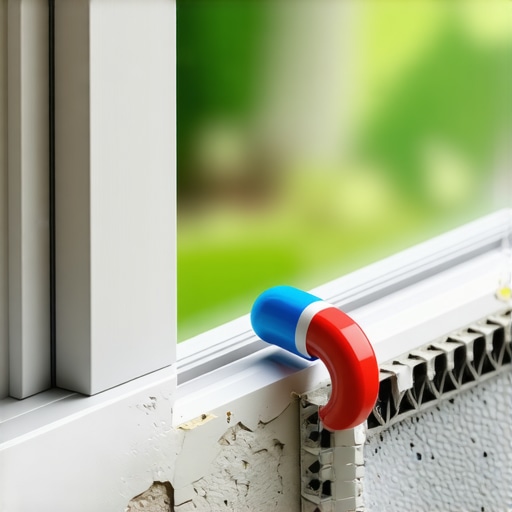
Most homeowners believe that a drafty room is simply the price of living in an older house. They feel that chill near the glass and assume the only solution is to spend thirty thousand dollars to replace windows. Before you call a high-pressure sales office, you need to understand the physics of a Rough Opening. Air doesn’t just leak through the glass; it migrates through the interface between the Sash and the frame, often due to a failure in the weatherstripping’s compression. I have seen countless window repair jobs where the homeowner was convinced the seal was blown, when in reality, the frame had simply bowed over time. This is where the two-dollar magnet trick comes in. By using a thin, flexible refrigerator magnet, you can test the physical integrity of your window’s seal. If you can slide that magnet between the weatherstripping and the jamb while the window is locked, you don’t have a window; you have an air intake. [IMAGE_PLACEHOLDER]
The Condensation Crisis: A Master Glazier’s Perspective
A homeowner called me in a panic because their new windows were ‘sweating.’ I walked in with my hygrometer and showed them the humidity was 60%. It wasn’t the windows; it was their lifestyle. They were boiling pasta and running a humidifier in a sealed house without proper mechanical ventilation. But it also pointed to a deeper issue: the thermal bridge. When the interior surface of the glass drops below the dew point, moisture must manifest. In colder climates, this often happens at the edge of the glass where the spacer bar sits. If you have an aluminum spacer, you are inviting a cold-sink into your living room.
“Installation is just as critical as the window performance itself. A high-performance window installed poorly will fail.” – AAMA Installation Masters Guide
This highlights why a professional window cleaner might be the first person to notice your windows are failing. They see the mineral deposits left behind by persistent condensation long before the average homeowner notices the rot starting in the Sill Pan.
The Installation Autopsy: Where Most Contractors Fail
When I perform a forensic analysis of a leaking window, the culprit is almost always the same: a total disregard for the ‘Shingle Principle.’ This principle dictates that every layer of Flashing Tape and building wrap must overlap the layer below it to shed water downward. Many installers rely on the nailing fin of a vinyl window as their primary water barrier. This is a recipe for disaster. I have pulled units out of walls where the header was crumbling because the installer skipped the drip cap. Water is relentless. It finds its way into the Rough Opening, sits on the Shim, and begins the slow process of organic decay. A proper installation requires a sloped Sill Pan and a backer rod with a high-quality sealant. If your installer just fills the gap with ‘great stuff’ foam and calls it a day, they are a ‘caulk-and-walk’ amateur, not a glazier. You need a continuous air barrier that ties the window frame into the house wrap. Without it, you are just heating the outdoors.
“The continuity of the air barrier at the window-to-wall interface is paramount to preventing both air infiltration and moisture accumulation within the wall cavity.” – ASTM E2112 Standard Practice
This standard isn’t a suggestion; it is the difference between a window that lasts fifty years and one that fails in five.
The Physics of the Gap: Why U-Factor Matters
In northern climates, the U-Factor is the most critical metric on the NFRC label. While the Solar Heat Gain Coefficient (SHGC) is vital for the South, the North demands a low U-Factor to prevent heat loss. This isn’t just about the glass; it’s about the convection loops inside the Insulated Glass Unit (IGU). Within that thin space between the panes, air is constantly moving. Warm air rises against the inner pane and falls against the outer pane, creating a circular current that transfers heat out of your home. By replacing that air with a denser gas like Argon, we slow that loop down. However, the gas is only as good as the Glazing Bead and the primary seal holding it in. If you see fog between the panes, the desiccant is saturated and the gas is gone. At that point, a window repair is often more expensive than a partial replacement. You also have to consider the ‘Warm-Edge’ spacer. Old-school aluminum spacers act like a highway for heat to leave your house. Modern fiberglass or structural foam spacers act like a roadblock. When you combine this with a Low-E coating on Surface #3, which reflects long-wave infrared radiation back into the room, you finally achieve true thermal comfort.
The Magnet Test and the Bowed Sash
Why a magnet? Most modern vinyl windows are reinforced with steel or aluminum inside the hollow chambers of the frame. If a Sash is improperly sized or if the Rough Opening was too tight, the frame can bow. When the frame bows, the Operable parts of the window no longer meet the weatherstripping with even pressure. By taking a flexible magnet and running it along the vertical jamb, you can feel where the magnetic pull weakens. That weakening indicates a gap where the metal reinforcement is too far from the surface, meaning the frame is warped. This gap is where the wind whistles through on a Tuesday night in January. If the magnet doesn’t stick at all, or if it slides through the gap with zero resistance, your weatherstripping has ‘taken a set’ and lost its resiliency. In many cases, you don’t need to replace windows; you just need to replace the bulb seals or adjust the Shim pressure to straighten the frame. This level of technical diagnostic is what separates a Master Glazier from a salesman with a brochure.
Conclusion: Buying the Numbers, Not the Hype
Don’t be fooled by marketing terms like ‘super-insulated’ or ‘space-age tech.’ Look at the NFRC sticker. If you live in a cold climate, you want a U-factor below 0.27. If you are in the South, look for an SHGC below 0.25. And regardless of where you live, the installation is the final word. A window is a complex system of water management and air control. It requires a Weep Hole that is clear of debris, a Muntin that doesn’t compromise the glass strength, and a glazier who understands that a 1/16th inch gap is a failure. Use the magnet, check your humidity, and remember that water always wins unless you have a plan to move it. If you follow these principles, you’ll have a home that is quiet, dry, and efficient for decades to come.