The Ghost in the Fenestration: Why Your Windows Chatter
There is a specific frequency of frustration that only a homeowner with a rattling window understands. It is that rhythmic, staccato tapping against the stops during a November gale that signals a failure in the building envelope. As a glazier with over two decades in the trade, I have seen too many people convinced by high-pressure sales tactics to replace windows that had another thirty years of life in them, provided they received twenty dollars worth of proper maintenance. A rattling sash is not a death sentence for the unit; it is a diagnostic symptom of mechanical play, material shrinkage, or failed weatherstripping. To understand the fix, we must first look at the physics of the assembly. A window is a precision-engineered valve for light and air. When the tolerances between the operable sash and the jamb exceed a few millimeters, the wind uses the glass as a sail, creating a harmonic resonance that sounds like a poltergeist. Before you call a window cleaner or a contractor to rip out the frames, you need to understand the structural anatomy of what is actually happening inside that rough opening.
The Sales Pitch Takedown: A Case Study in Over-Selling
I recall sitting in a kitchen in a drafty Victorian district where a homeowner was being cornered by a representative from a national window franchise. The salesman was using a thermal leak detector to show ‘massive energy loss’ and quoting forty thousand dollars for a full-frame replacement of twelve double-hung units. I asked to see the ‘failed’ windows. I walked over to the primary culprit, a beautiful old growth Douglas fir sash, and gave it a firm shake. It moved nearly a quarter inch. The issue wasn’t the glass or the wood; the bronze spring stripping had simply lost its tension over seventy years. I told the homeowner to buy a pair of pliers and a roll of high-density foam tape. The salesman’s ROI calculation was based on a lie: he claimed the new windows would pay for themselves in five years through energy savings. In reality, even with modern low-E coatings and argon fills, the thermal bridge of the existing wall was so poor that the new windows would have taken over a century to reach a break-even point. We fixed the rattle for the cost of a lunch, and the comfort level in that room improved by sixty percent instantly.
The Physics of Air Infiltration and Thermal Performance
In colder climates, a rattling sash is more than a noise nuisance; it is a direct conduit for convective heat loss. When the sash does not sit tight against the stop, the U-factor of the entire opening skyrockets. The U-factor measures the rate of non-solar heat loss, and in a North/Cold environment, every gap acts as a chimney. We are looking for a low U-factor, but that number is only valid if the air infiltration rate is controlled.
“Installation and maintenance of the perimeter seals are just as critical as the glass package itself. A high-performance window with a failed weatherseal is essentially an expensive hole in the wall.” – AAMA Installation Masters Manual
This is why we focus on the glazing bead and the interface between the sash and the jamb. If the glass is loose within the sash, the rattling is caused by the failure of the glazing compound or the wood muntins. If the entire sash moves, the issue is the balance system or the weatherstripping. Most homeowners confuse the two, leading them to search for ‘replace windows’ when a ‘window repair’ is all that is required.
Step 1: The Diagnostic Shake Test
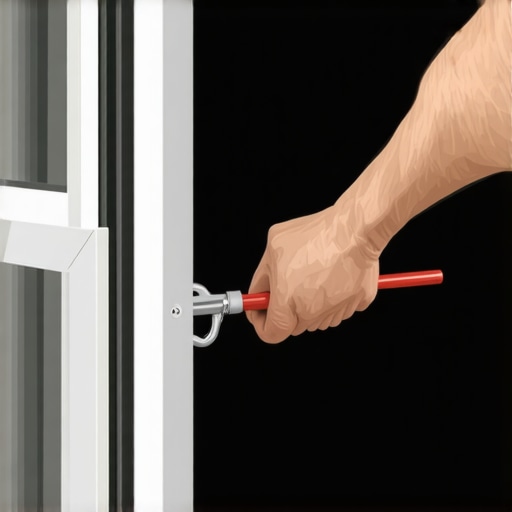
Start by locking the window. If it still rattles when locked, the meeting rail (where the two sashes overlap) is not pulling the units together tightly. This is often caused by a misaligned sash lock. Over years of house settling, the rough opening can shift, causing the lock and the keeper to misalign by a fraction of an inch. If the rattle persists only when the window is unlocked, the problem lies in the side channels or the sill engagement. Use a shim to test different points around the perimeter. Wherever you can slide a thin shim into the gap while the window is closed, you have found a source of air infiltration and a source of the rattle. This is where we apply the science of compression.
Step 2: Restoring the Weatherseal Integrity
Modern windows rely on bulb seals or fin seals, while older units use metal tension strips. If you have vinyl or fiberglass windows, check the weep hole area for debris. If the sash isn’t seating fully because of grit in the sill pan, the lock won’t engage the weatherstripping. For wood windows, the fix often involves ‘tuning’ the stops. The stops are the vertical pieces of trim that hold the sash in its track. By carefully prying the stop and moving it inward by a thirty-second of an inch, you can eliminate the play that causes the rattle. Be careful not to make it so tight that the unit is no longer operable. We are looking for a ‘sliding fit,’ not a ‘friction fit.’
Step 3: Addressing the Glass-to-Sash Bond
Sometimes the rattle isn’t the sash in the frame, but the glass in the sash. This happens when the glazing bead (the strip holding the glass) shrinks or the putty becomes brittle and falls out. This is common in single-pane units. To fix this, you don’t need a professional window repair crew; you need a tube of high-quality glazing silicone or new glazing points and putty. By re-establishing the bed of sealant around the perimeter of the glass, you create a dampened assembly that resists vibration.
“The primary defense against air and water penetration is the continuity of the seal at the glazing interface.” – ASTM E2112 Standard Practice
When the glass is secure, it acts as a structural diaphragm for the sash, making the entire unit more rigid and less prone to movement under wind load.
The Role of Hardware and Lubrication
A rattling sash is often a symptom of a balance system that has lost its tension. Whether you have old-fashioned sash weights and cords or modern constant-force springs, the balance is responsible for holding the sash steady. If the balance is weak, the sash doesn’t sit square in the opening, leaving a wedge-shaped gap. Lubricating the tracks with a dry Teflon spray can often help the sash seat more deeply into the weatherstripping at the head and sill. Never use oil-based lubricants on vinyl or wood, as they attract dust which turns into an abrasive paste, eventually destroying the sash’s ability to create a tight seal.
When Repair Is Not Enough
While I advocate for repair whenever possible, there are times when the structural integrity of the sash is gone. If you see black mold on the interior of the frame or if the wood is soft to the touch at the corners (the mortise and tenon joints), the window may have reached its end of life. At this point, no amount of weatherstripping will stop the rattle because the frame itself is racking. When you do decide to replace windows, focus on the NFRC label. Look for a low SHGC (Solar Heat Gain Coefficient) if you are in a southern climate to block radiant heat, or a high-performance U-factor for northern climates. But remember, the most expensive window in the world will still rattle if the installer doesn’t shim the frame square and level within the rough opening. Proper flashing tape and a well-sloped sill pan are the only things standing between a dry house and a rotted header.
Final Thoughts for the Savvy Homeowner
Don’t be intimidated by the technical jargon of the window industry. A window is a mechanical assembly. Like any machine, it requires calibration. Before you invest thousands in new units, spend an afternoon with some weatherstripping, a screwdriver, and a tube of sealant. You will likely find that the ‘rattle’ was just your window’s way of asking for a little bit of maintenance. By tightening the tolerances, you’ll improve your home’s acoustics, reduce your heating bills, and keep those beautiful original features for another generation. Check your weep holes, adjust your locks, and ensure your sash is seated. Silence, in the world of glazing, is the ultimate sign of a job well done.{“@context”:”https://schema.org”,”@type”:”HowTo”,”name”:”How to Fix a Rattling Window Sash”,”description”:”Step-by-step guide to silencing a rattling window sash and improving energy efficiency without full replacement.”,”step”:[{“@type”:”HowToStep”,”text”:”Identify the source of the rattle by shaking the locked sash to check for play in the tracks or the glass.”},{“@type”:”HowToStep”,”text”:”Adjust the sash lock and keeper to ensure they pull the meeting rails together tightly when closed.”},{“@type”:”HowToStep”,”text”:”Inspect and replace worn weatherstripping with high-density foam or V-strip to fill gaps between the sash and frame.”},{“@type”:”HowToStep”,”text”:”Re-glaze loose glass panes by applying new glazing compound or silicone to the perimeter of the glass.”},{“@type”:”HowToStep”,”text”:”Lubricate the tracks with dry Teflon spray to ensure the sash seats fully into the head and sill seals.”}]}