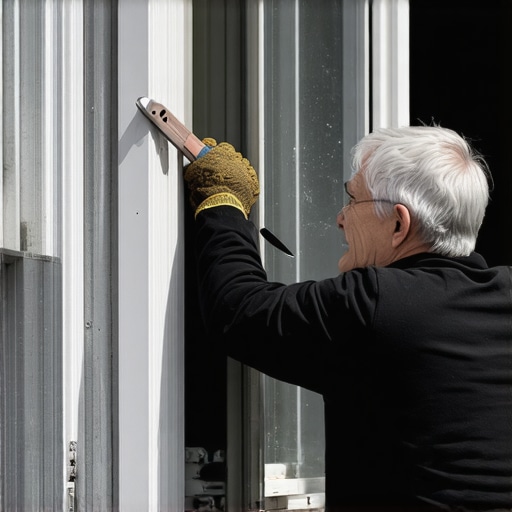
The Anatomy of a Seized Sash: Why Windows Stick
I pulled a wood double-hung out of a historic home in Chicago last October and the header was completely black with rot. The previous owner had attempted a DIY window repair by simply painting over the gaps to stop drafts. What they actually did was seal the weep hole areas and trap moisture against the rough opening. When I finally pried the sash loose, the wood literally crumbled in my hands. This is the danger of the ‘paint-it-closed’ mentality. It is not just about an inoperable window; it is about the structural integrity of your wall system. When a window is painted shut, it is usually because a previous painter failed to move the sash during the drying process, creating a mechanical bond between the glazing bead, the sash, and the window stop. This bond can have a shear strength that exceeds the structural integrity of the wood fibers themselves.
“Installation is just as critical as the window performance itself. A high-performance window installed poorly will fail.” – AAMA Installation Masters Guide
The Physics of the Paint Bond
To understand how to break this bond, we must look at the chemistry of the coating. Older windows often have layers of lead-based oil paint covered by modern acrylics. These layers expand and contract at different rates, but the bridge across the stop remains rigid. When you try to force the window open, you are fighting the combined tensile strength of these layers. A window cleaner might tell you to just use a little elbow grease, but as a glazier, I tell you to use a score line. If you do not break that surface tension first, you will pull the wood grain right off the sash. This is why we focus on the ‘kerf’ or the tiny gap where the moving parts meet the frame. If you are in a cold climate like Minneapolis or Chicago, this bond is even more problematic because the U-Factor of your window is already compromised by the lack of a proper seal at the meeting rail.
The Professional Method for Unsticking a Window
The first rule of window repair is to do no harm. You need a heavy-duty putty knife, a 5-in-1 tool, or a specialized ‘window zipper’ which is essentially a small, serrated pizza wheel designed to cut through paint bridges. Start on the interior. You must score the line between the window stop and the sash around the entire perimeter. Do not forget the muntins if they are touching the frame. You are not trying to pry yet; you are creating a clean break in the paint film. Once the interior is scored, you must go outside and do the same thing between the sash and the blind stop. Many people forget the exterior, and that is where the real window repair failure happens. If the window is operable but stubborn, it is often because the paint has dripped into the jamb liner or the tracks where the sash cord or balance resides.
The Mechanical Advantage: Using Shims and Bars
If scoring doesn’t work, we move to mechanical pressure. I never use a pry bar directly on the sill. That is the fastest way to crush the wood cells and create a permanent dip where water will pool and rot your sill pan. Instead, I use a wide-blade putty knife as a guard and gently tap a shim into the gap at the corners. We are looking for microscopic movement. In a cold climate, the wood is often contracted, which is the best time to do this. If you are dealing with a replace windows situation, you might not care about the frame, but if you want to preserve the original architecture, patience is the only tool that works. You are fighting decades of neglect. Once the sash moves a fraction of an inch, the seal is broken. Now, you can use a window cleaner solution of diluted vinegar to lubricate the tracks and wash away the dust and paint chips that have fallen into the weep holes.
“The air leakage of a window is a primary factor in the overall thermal performance of the building envelope.” – NFRC Performance Manual
Thermal Realities and the Decision to Replace
In the North, we obsess over U-Factor. A single-pane wood window, even if you get it unstuck, has a U-factor of about 1.1. That is essentially a hole in your thermal envelope. Even with a storm window, you are lucky to hit 0.50. When I evaluate a stuck window, I am looking at the spacer and the condition of the glass. If the wood is punky or the muntins are falling apart, it is time to replace windows. Modern units with Argon gas fills and Low-E coatings on Surface #3 are designed to reflect long-wave infrared radiation back into your living room. This prevents the ‘cold glass’ feel in January. If you decide to keep the old windows, you must ensure that after unsticking them, you install high-quality weatherstripping. Without it, your newly operable window is just a source of convective heat loss. A window that was painted shut was likely ‘sealed’ against drafts, albeit poorly. Once you open it, you have reintroduced those air paths. You must manage them with modern seals, not more paint.