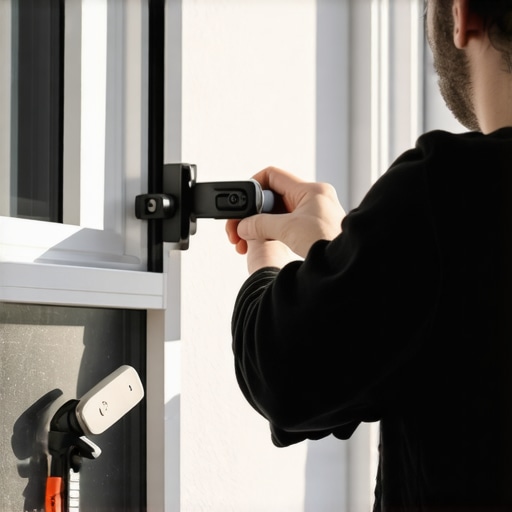
The Rattling Truth: Why Your Window Latch is More Than a Lock
You hear it before you see it. It is a cold Tuesday in January, and the wind is kicking up at twenty miles per hour. That rhythmic tapping against the frame is not just an annoyance: it is the sound of your energy bills climbing. As a master glazier with twenty-five years in the field, I can tell you that a loose window latch is rarely just about a screw that needs a turn. It is a symptom of a systemic failure in the window’s alignment or an invitation for air infiltration to wreck your home’s thermal envelope. When that latch fails to pull the sash tight against the weatherstripping, you are no longer living in a house; you are living in a sieve. I have seen homeowners spend thousands to replace windows when all they needed was a technical understanding of the rough opening and sash physics. We are going to look at the mechanics of why these components fail and how to execute a professional-grade window repair in minutes.
The Narrative Matrix: A Lesson in Condensation and Air Leakage
A homeowner once called me in a panic because their brand-new, high-performance windows were ‘sweating’ so badly that water was pooling on the sill. They were convinced the units were defective. I walked in with my hygrometer and a simple smoke pen. I showed them that the interior humidity was sixty percent, but more importantly, the latch on the primary operable sash was not engaging the keeper correctly. It was not the windows; it was a combination of their lifestyle and a simple mechanical misalignment. Because the latch was loose, cold air was hitting the warm, moist interior air right at the meeting rail, causing immediate dew point transition. Once we realigned the sash and tightened the hardware, the ‘defective’ window magically stopped sweating. This is why understanding the mechanics of your glazing is vital.
“Installation is just as critical as the window performance itself. A high-performance window installed poorly will fail.” – AAMA Installation Masters Guide
The Physics of the Cam-Lock: More Than a Security Feature
In the world of fenestration, the latch is technically a cam-action fastener. Its primary job is not to keep burglars out, though it does that too, but to create a compression seal. When you rotate that handle, the curved face of the cam pulls the meeting rail of the bottom sash and the top sash together. This compresses the bulb seals and the pile weatherstripping. If you are in a cold climate like Chicago or Minneapolis, this seal is your only defense against the U-factor failing. The U-factor measures the rate of heat transfer; the lower the number, the better. But that number is calculated based on a perfectly sealed unit. A loose latch increases your air infiltration rate, effectively nullifying the argon gas fill and the Low-E coatings you paid a premium for. We want the Low-E coating on Surface #3 in these cold zones to reflect long-wave infrared radiation back into the room, but that does nothing if the air itself is escaping through a gap in the sash.
The 5-Minute Fix: A Technical Walkthrough
Before you reach for a screwdriver, you need to perform a diagnostic. Open the window and inspect the glazing bead and the tracks. Often, a ‘loose’ latch is actually a sash that has shifted out of square within the rough opening. Step 1: The Cleaning. You would be surprised how often a window cleaner can solve a mechanical issue. Dirt and debris in the sill or the tracks prevent the sash from seating fully. If the sash does not seat, the latch cannot reach the keeper. Clean the tracks thoroughly. Step 2: Inspect the Shims. If the window frame was not shimmed correctly during installation, the side jambs can bow. This moves the keeper away from the latch. Use a level to ensure the meeting rails are perfectly horizontal. Step 3: Hardware Adjustment. Most modern latches have elongated mounting holes. Loosen the screws, move the latch toward the interior of the house by a millimeter, and retighten. This increases the draw and forces a tighter seal. Step 4: Lubrication. Use a dry silicone spray on the moving parts. Do not use WD-40 or oil-based lubricants as they attract dust which creates a grinding paste that destroys the hardware over time.
“The NFRC rating is valid only when the product is installed and used according to manufacturer instructions, including proper closure and latching mechanisms.” – NFRC Performance Manual
When Window Repair Becomes Replacement
There comes a point where a simple fix is just putting a bandage on a gunshot wound. If your frames are made of low-grade vinyl, they are subject to massive thermal expansion and contraction. In extreme heat, that vinyl can warp to the point where the latch and keeper will never meet again. This is common in southern climates where the solar heat gain coefficient (SHGC) is high. In these cases, you might need to replace windows with a more stable material like fiberglass or thermally broken aluminum. Fiberglass has a thermal expansion coefficient similar to glass itself, meaning the frame and the glazing move together, maintaining the integrity of the seals and the hardware alignment for decades. If you see daylight between the sash and the frame even when latched, your frame has likely lost its structural integrity.
The Role of the Window Cleaner in Longevity
Maintenance is the enemy of replacement. A regular schedule with a professional window cleaner involves more than just making the glass transparent. It involves clear-cutting the weep holes. Weep holes are the small valves at the bottom of the frame that allow water to exit the sill pan. If these are clogged, water backs up, rots the wood sub-frame, or causes the metal hardware to corrode and loosen. When the hardware corrodes, the screws lose their bite in the vinyl or wood, leading to that ‘loose latch’ feeling that no amount of tightening can fix. If you find your screws are spinning freely, you may need to move to a larger gauge screw or use a structural epoxy to rebuild the anchor point. This is why we insist on precision: a window is a high-performance machine, not a static piece of furniture. You must treat the hardware with the same respect you treat the glass.