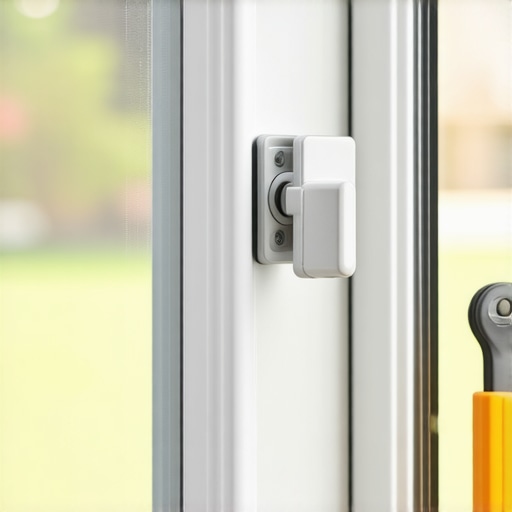
The Anatomy of a Failing Latch: Why Your Window Won’t Lock
I pulled a vinyl window out of a house in the suburbs last autumn and the header was completely black with rot. Why? The previous installer relied on the nailing fin instead of proper flashing tape, and the resulting water intrusion caused the entire rough opening to swell and shift. When the wood moved, the window frame followed, and suddenly the owner found themselves wrestling with a window latch that refused to engage. They thought they needed to replace windows entirely, but the reality was a structural failure caused by a ‘caulk and walk’ installation. Most homeowners encounter a similar frustration: the latch on an operable sash starts to wobble, or the cam doesn’t quite reach the keeper. You find yourself pulling the sash handle with one hand and throwing your weight against the frame with the other just to get the lock to click. This is not just a nuisance; it is a breach in your home’s thermal envelope.
“Installation is just as critical as the window performance itself. A high-performance window installed poorly will fail.” – AAMA Installation Masters Guide
In my 25 years as a master glazier, I have seen thousands of homeowners convinced they need a total window repair or a full-frame replacement when the issue is actually a simple matter of sash alignment and mechanical tolerance. When a window latch becomes wobbly, it is usually because the sash has undergone what we call ‘sash sag’ or because the house has settled, moving the keeper out of reach of the lock. In a cold climate, the enemy is heat loss. When that latch doesn’t pull the sash tight against the weatherstripping, you aren’t just dealing with a security risk; you are allowing cold air to bypass the interlock, creating a draft that makes your furnace work double time. This is where the physics of the U-Factor comes into play. If the lock doesn’t create a compression seal, the low-E coating on your glass is essentially useless because the air is moving around the sash rather than being blocked by the thermal barrier.
The $2 Solution: Precision Shimming for Hardware Alignment
The trick I am about to share involves using a simple plastic shim or a thin nylon washer to restore the mechanical relationship between the lock and the keeper. You do not need a professional window cleaner or a structural engineer to diagnose this. First, examine the keeper: the small metal piece on the upper sash of a double-hung or the frame of a casement window. If the cam lock on the lower sash is hitting the top of the keeper or failing to grab it entirely, the sash is likely sitting too low in the frame. Instead of drilling new holes, which weakens the vinyl or wood sash rail, you can use a $2 shim. By placing a thin, weather-resistant shim behind the keeper, you project the hardware further into the path of the cam, ensuring a tight ‘over-center’ lock that compresses the bulb seal. This restores the air-tight integrity of the unit without the cost of new hardware.
Thermal Expansion and the Science of the Gap
Why does this happen in the first place? If you live in a northern climate, you deal with extreme temperature swings. Vinyl frames have a high coefficient of thermal expansion. In the dead of winter, the material contracts. If the window was installed during a heatwave, that contraction can be enough to pull the hardware out of alignment by an eighth of an inch. That eighth of an inch is the difference between a sealed home and a drafty one. We often talk about the dew point when discussing window repair. When a latch is loose, warm moist air from your kitchen or bathroom hits the cold surface of the glass and the frame, leading to condensation. This isn’t a glass failure; it is a mechanical failure of the locking system. The shim trick ensures that the meeting rail is pulled tight, maintaining the internal temperature of the glass surface and keeping the dew point at bay.
“The fenestration system must be installed in a square, level, and plumb condition to ensure the proper operation of all locking mechanisms and weather-sealing components.” – ASTM E2112 Standard Practice
The Step-by-Step Fix for a Wobbly Latch
To execute this fix, you will need a screwdriver, a set of thin plastic shims (often sold as plumbing or furniture shims), and a bit of patience. First, open the operable sash and locate the screws holding the latch and the keeper. Back them out carefully. If you find that the screws are spinning freely, the substrate is stripped. This is common in cheap vinyl windows where the screws only bite into a thin wall of uPVC. In this case, your ‘shim’ might actually be a larger gauge stainless steel screw or a plastic anchor designed for hollow walls. Once the hardware is off, place your shim behind the keeper. This moves the keeper vertically or horizontally depending on where the misalignment is occurring. Re-install the hardware and test the sweep. You should feel a firm resistance as the cam engages. This resistance is the sound of your weatherstripping actually doing its job. This is far more effective than simply hiring a window cleaner to wipe away the grime; it addresses the functional geometry of the opening.
When Shims Aren’t Enough: Identifying Structural Failure
While the shim trick is a fantastic ‘hack’ for minor settling and thermal movement, there are times when it points to a larger problem. If you have to shim a keeper more than a quarter-inch, your window frame is likely ‘bowed’ or ‘racked.’ This happens when the installer didn’t use enough shims during the initial installation or when the rough opening header is sagging under the weight of the roof. In these scenarios, you aren’t looking at a simple window repair; you are looking at a structural correction. As a glazier, I always tell people to check their ‘reveals.’ A reveal is the gap between the sash and the frame. It should be uniform all the way around. If the gap is wide at the top and narrow at the bottom, your window is out of square. The latch is just the canary in the coal mine. If the frame is distorted, the glazing bead might also begin to pop out, and the glass could eventually stress-crack.
Maintenance Beyond the Lock
To keep your windows functioning for 30 years instead of ten, you must look at the system as a whole. Use a silicone-based lubricant on the tracks and the locking mechanism once a year. Avoid using an abrasive window cleaner on the hardware, as it can strip the protective plating and lead to corrosion. Ensure the weep holes in the bottom of the frame are clear of debris. If water backs up in the sill pan because of a clogged weep hole, it can rot the wooden subfloor and cause the very shifting that misaligns your latches in the first place. High-performance window care is about managing the movement of water and air with precision. Whether you are performing a DIY window repair or deciding to replace windows with modern fiberglass units, understanding how the sash interacts with the frame is the key to a comfortable, energy-efficient home.