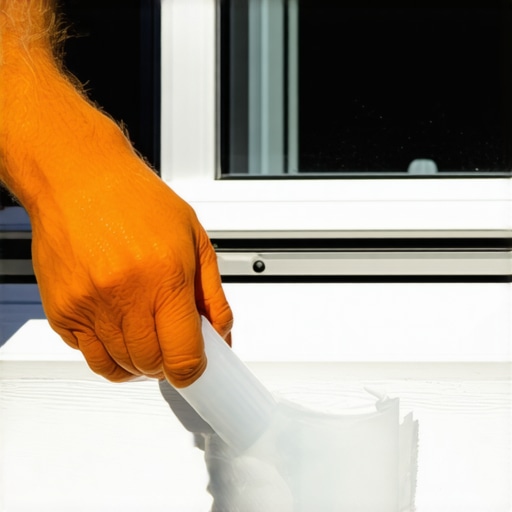
The Critical Barrier: Why a $4 Tube of Silicone is Your Window Trim’s Best Friend
In my twenty-five years as a master glazier, I have seen thousands of windows fail. Most people assume a window fails when the glass breaks or the seal between the panes fogs up. But the most insidious failures happen where the window meets the wall. A window is essentially a controlled hole in your building envelope, and the only thing standing between your interior finish and a catastrophic structural repair is a series of precise seals. Often, the difference between a window that lasts forty years and one that rots out in five is a simple, high-quality bead of silicone applied at the right moment in the right place.
The Rot Repair: A Tale of Missing Sealants
I recall a specific project where I was called to inspect a luxury home where the homeowner noticed the paint peeling on the interior stool and apron. I pulled a wood-clad window out of a house where the header was completely black with rot. Why? The previous installer had relied solely on the nailing fin of the unit instead of employing proper flashing tape and a secondary sealant joint. They skipped that final bead of silicone where the exterior casing met the window frame. Water had been migrating behind the trim through capillary action for three seasons. By the time it manifested as a small bubble in the interior paint, the structural jack studs were so compromised I could put a screwdriver through them with one finger. This wasn’t a failure of the window unit itself; it was a failure of the installation chemistry.
The Science of Silicone: Acetoxy vs. Neutral Cure
When I talk about a $4 tube of silicone, I am not talking about the cheap latex caulk you find in the bargain bin. To save your window trim, you must understand the glazing zooming of sealant chemistry. For most window repair and maintenance tasks, we look at 100% silicone. Silicone is inorganic, meaning it does not provide a food source for mold and is virtually immune to the UV degradation that causes acrylic caulks to shrink and crack within eighteen months.
However, not all silicone is equal. As a glazier, I differentiate between acetoxy-cure and neutral-cure silicones. Acetoxy-cure releases acetic acid (it smells like vinegar) as it cures. It is fantastic for glass-to-glass joints but can corrode certain metals and delaminate the coatings on some modern vinyl frames. Neutral-cure silicone is the industry standard for perimeter seals. It has superior adhesion to a variety of substrates, including wood, vinyl, and masonry, and it can handle the extreme thermal expansion that occurs when a dark-colored window frame sits in the direct July sun. When you replace windows, the perimeter sealant must be able to stretch and compress by at least 25% to 50% without losing its bond to the rough opening.
“Installation is just as critical as the window performance itself. A high-performance window installed poorly will fail.” – AAMA Installation Masters Guide
The Shingle Principle and Water Management
In the world of professional glazing, we live by the Shingle Principle: every layer of the window assembly must shed water to the layer below it and eventually to the exterior. This is why the sill pan is the most critical component of the rough opening. If water bypasses your primary seals, the sill pan acts as a secondary gutter to direct that moisture back out through weep holes. If an installer plugs those weep holes with a $4 tube of silicone because they don’t understand the system, they are actually trapping water inside the wall, guaranteeing rot.
Proper water management requires a technical approach to the sash and frame interface. When we perform a window repair, we are often looking for where the original glazing bead has pulled away from the glass. This gap allows water to sit in the glazing pocket. Over time, this standing water attacks the laminated glass or the spacer of the Insulated Glass Unit (IGU), leading to premature seal failure. A precise application of silicone at these transition points can extend the life of the unit by a decade.
The Cold Climate Context: U-Factor and Condensation
In northern climates, our primary enemy is the dew point. When the exterior temperature drops, the interior surface of the glass becomes the coldest point in the room. If your window cleaner reveals a constant layer of moisture along the bottom rail, you are at high risk for wood rot. This condensation is not just an aesthetic nuisance; it is liquid water that will eventually find its way into the muntin joints and the window stool.
To combat this, we prioritize the U-Factor. A lower U-factor means the window is a better insulator. In these environments, we use triple-pane units with Low-E coatings on Surface #3 to reflect heat back into the home, keeping the interior glass temperature above the dew point. But even the best triple-pane window will fail if the shim space isn’t properly insulated with low-expansion foam and capped with a continuous interior air seal. Air leakage carries moisture, and moisture carries rot.
“The air barrier and the water barrier must be continuous. Any breach in the sealant joints at the window-to-wall interface compromises the entire building envelope.” – ASTM E2112 Standard Practice
Maintenance: Using Your Window Cleaner as a Diagnostic Tool
I always tell my clients that their window cleaner is their best inspector. When you are cleaning your windows, you shouldn’t just be looking for streaks; you should be looking at the glazing bead and the condition of the operable parts. If you see the silicone pulling away or if the sash is difficult to move, the window is under stress. This stress could be from the house settling or from thermal expansion that has exceeded the sealant’s capacity.
Regularly inspecting the exterior sealant joints is the cheapest insurance you can buy. If you see a crack in the bead of silicone, don’t wait for a leak to manifest inside. Scraping out the old, failed sealant and applying a fresh, tooled bead of high-performance silicone is a $4 fix that prevents a $4,000 replace windows project. Water is a patient enemy; it only needs a microscopic path to begin the process of wood decay.
The Math: Repair vs. Replacement
Homeowners often ask me if they should replace windows or simply opt for a window repair. The ROI on total replacement can take decades if you are looking strictly at energy savings. However, the ROI on a window repair that involves re-sealing the exterior and replacing failed weatherstripping is almost immediate. By maintaining the integrity of the sealant joints, you are protecting the structural integrity of your home’s framing. Once rot enters the rough opening, the cost of repair triples because you are no longer just replacing a window; you are rebuilding a wall.
In conclusion, never underestimate the power of proper sealant. Whether you are a DIYer or hiring a pro, ensure that the silicone used is appropriate for the climate and the materials. A technical, precise application of a $4 tube of silicone is the ultimate defense against the elements, ensuring that your windows remain a source of light and comfort rather than a source of structural decay.