The Friction Paradox: Why Your Wooden Windows Are Fighting You
In my twenty-five years as a master glazier, I have seen homeowners spend thousands of dollars to replace windows that simply needed a bit of respect for the laws of physics. We often forget that a window is a mechanical system, not a static piece of furniture. When you have a wooden window that refuses to budge, you are likely dealing with a combination of atmospheric moisture, paint-locking, and the breakdown of the original lubrication. To understand why your window is stuck, you have to understand the hygroscopic nature of wood. Wood is essentially a bundle of straws that sucks up moisture from the air. In high-humidity environments, these fibers expand, increasing the physical dimensions of the sash until the tolerances within the rough opening are non-existent. This is where the battle begins.
“A high-performance window installed poorly will fail, but a well-constructed window that is not maintained will eventually become a liability to the building envelope.” AAMA Installation Masters Guide
The Condensation Crisis: A Narrative of Expansion
I recall a specific project in a historic district where a homeowner called me in a panic because their new custom-milled white oak windows were ‘sweating’ and refusing to open just six months after installation. I walked in with my hygrometer and showed them that the interior humidity was hovering at 60 percent. It wasn’t a manufacturing defect; it was the interior climate causing the wood to swell against the glazing bead and the tracks. They were ready to sue the manufacturer, but the reality was simpler: the wood was doing exactly what wood does. We had to stabilize the environment before we could address the mechanical friction. This taught them that window repair starts with moisture management, not just a pry bar.
The ‘Soap Rub’ Secret: Why Dry Lubrication Wins
When a window sticks, the amateur reaches for the WD-40 or a silicone spray. This is a critical mistake. Petroleum-based lubricants or wet sprays can actually penetrate the wood fibers, causing them to swell further or attracting airborne dust that turns into a grinding paste. The professional’s secret is a simple bar of dry soap or paraffin wax. The chemical composition of soap allows it to act as a surfactant and a lubricant without being absorbed deeply into the grain. When you rub a dry bar of soap along the tracks, you are depositing a thin, microscopic layer of lipids that reduces the coefficient of friction between the sash and the frame. This is the most cost-effective window repair technique in existence. It provides a glide that lasts for months without the greasy residue that ruins paint jobs.
The Glazing Zoom: Molecular Friction and Wood Grain
To truly appreciate the soap rub, we have to look at the cellular level. Old-growth wood has tighter annular rings, which makes it more stable, but modern replace windows often use new-growth pine which is much more reactive to vapor pressure. When you apply the soap, you are filling the microscopic peaks and valleys of the wood grain. This prevents the wood fibers from ‘interlocking’ when the sash moves. This is particularly important in northern climates where the U-Factor is a priority. In these regions, we want the window to be tight enough to prevent air infiltration but loose enough to be operable. If your window is too tight, you risk snapping the sash cords or damaging the muntins when you force it open.
IMAGE_PLACEHOLDER_1
Step-by-Step: Restoring the Glide
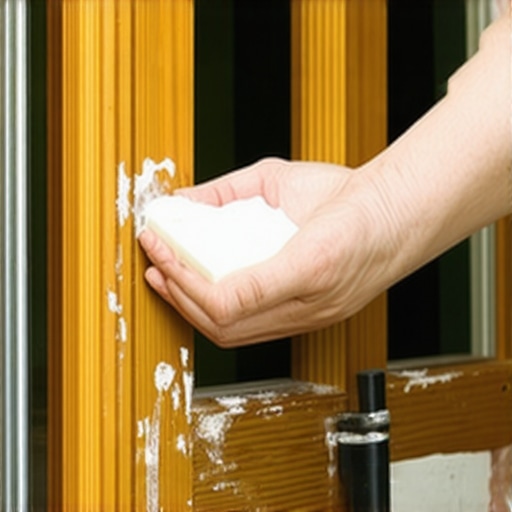
Before you apply the soap, you must ensure the surface is clean. Using a high-quality window cleaner that does not contain ammonia is essential; ammonia can strip the finish off the wood, leading to more moisture absorption. Wipe down the tracks and the edges of the sash to remove any grit or old, flaky paint. If the window has been painted shut, you will need a sash saw or a thin-bladed putty knife to carefully break the seal between the stop molding and the sash. Once the window is free, slide it up as far as it will go. Rub the bar of soap vigorously along the inner tracks. You want to see a visible, waxy residue. Repeat this for the outer tracks and the meeting rail. Cycle the window up and down several times to distribute the lubricant evenly. You will notice an immediate change in the force required to move the unit.
“Standard practice for the installation of exterior windows requires that all moving parts be checked for clearance and lubricated according to manufacturer specifications to ensure long-term functionality.” ASTM E2112
Climate Logic: The Cold Weather Struggle
In colder climates, the U-Factor becomes the primary metric of concern. A window that doesn’t close properly because it is ‘stiff’ is a window that is leaking expensive heated air. When the temperature drops, the air becomes drier, and the wood may actually shrink, but the mechanical hardware (like spring balances or pulleys) can become brittle. Regular maintenance with dry lubricants ensures that the weatherstripping makes a tight seal against the sill pan. If you are in a region with extreme winters, the soap rub is your first line of defense against frozen sashes that refuse to budge during a mid-winter thaw. It prevents the weep holes from becoming clogged with debris that can freeze and crack the frame.
When the Soap Rub Isn’t Enough: Identifying Structural Failure
While the soap rub works wonders for friction, it cannot fix a rough opening that has settled or a frame that was never shimmed correctly. If you see that the gap between the sash and the frame is uneven, you likely have a structural issue. In these cases, window repair might involve removing the trim and adjusting the shims to square the frame. If the wood is soft to the touch or shows signs of fungal growth, no amount of soap will save it. This is when you must look at the flashing tape and the drip cap to see where the water management system failed. A master glazier knows that we are not just installers; we are forensic engineers of the building envelope.