The Weight of the Past: Facing Lead in Window Restoration
When you approach a 100-year-old double-hung window, you are not just looking at a piece of architecture; you are looking at a complex assembly of vintage materials designed for a different era of building science. As a glazier with over two decades in the field, I have seen too many DIY enthusiasts and ‘caulk-and-walk’ contractors dive into a window repair project without acknowledging the toxic reality beneath the surface. Before you reach for the scraper or call a window cleaner to prep the glass, you must understand that the ‘chalky’ white residue on your sills is likely not just dust, it is lead carbonate. I remember a specific project on a Queen Anne home where the owner wanted to restore the original mahogany sashes. I pulled a sash out of the frame and noticed the header was failing due to decades of poor water management. The previous installer had ignored the flashing tape and simply slapped a layer of latex over a century of lead-based primer. As soon as I touched the sash, the paint began to ‘alligator,’ flaking off in brittle, diamond-shaped patterns. That was the first red flag. Lead paint is a different beast than modern coatings. It was prized for its durability and fast drying times, but it creates a hazardous environment when those friction surfaces like the sash and the jamb rub together during operation.
The Visual Autopsy: Identifying Lead Paint by Sight
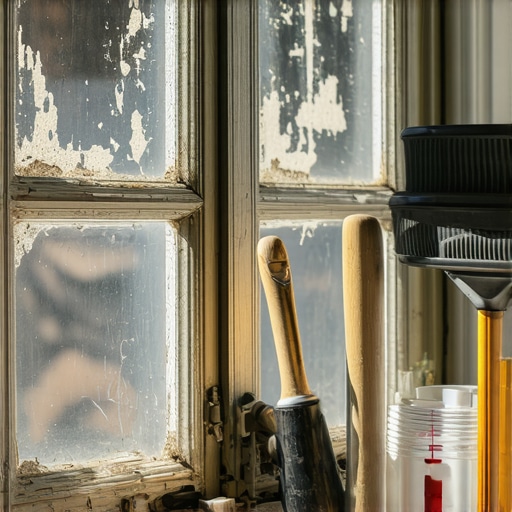
Identifying lead paint requires a trained eye and an understanding of how these coatings degrade over time. The most common sign is ‘alligatoring.’ Unlike modern latex paint which tends to peel in large, flexible sheets, lead-based paint is extremely brittle. It cracks into small, rectangular or hexagonal patterns that resemble the skin of a reptile. If you see this pattern on the muntin or the glazing bead, you are almost certainly looking at lead. Another sign is ‘chalking.’ Lead was used as a pigment and a dryer, and as the binder breaks down from UV exposure, it leaves a fine, white powder. If you run your finger along the exterior sill and it comes away white, do not just assume it is dirt. This is the moment where window repair becomes a matter of public health rather than just aesthetics. You must consider the rough opening and the friction zones. Every time an operable window is opened or closed, the meeting rail and the stiles grind against the jamb. This friction creates microscopic lead dust that can settle into the floorboards and carpets of your home.
“Window units are high-friction surfaces. The opening and closing of a sash creates lead dust that is often invisible but highly toxic.” – EPA RRP Guidance
The Science of Testing: Beyond the Naked Eye
If the visual signs are inconclusive, we move to chemical and mechanical testing. The gold standard for a glazier is the EPA-recognized swab test. These kits, using sodium rhodizonate or similar reagents, change color when they contact lead. However, you cannot just swipe the surface. You must use a clean blade to cut a small notch into the paint layers, exposing the ‘history’ of the window. You want to reach the base layer, often a gray or off-white primer applied directly to the wood. When the swab turns bright pink or red, the restoration plan changes immediately. In a professional setting, we often use XRF (X-Ray Fluorescence) analyzers. These devices can ‘see’ through twenty layers of paint to detect lead molecules without disturbing the surface. This is critical when you are trying to decide whether to restore or replace windows. If the lead concentration is high in the wood grain itself, the cost of safe abatement often exceeds the cost of a high-performance fiberglass replacement.
The Thermal Reality: Lead, Glass, and Climate Logic
In colder climates like Chicago or Minneapolis, the presence of lead paint is often coupled with the failure of the window’s thermal envelope. Old wood sashes are usually single-pane glass with a U-Factor hovering around 1.0, which is essentially a thermal hole in your wall. When I analyze these windows, I look at the dew point. In January, the interior surface of that lead-painted sash will be cold enough to cause condensation. This moisture then saturates the lead-painted wood, accelerating the ‘chalking’ and ‘alligatoring’ we discussed earlier. If you are in the North, your enemy is heat loss. While a window repair can fix a broken pane, it won’t fix the lack of a thermal break or the absence of Low-E coatings. Modern replacements utilize Argon gas fills and Low-E coatings on Surface #3 to reflect heat back into the room. If your old windows are riddled with lead, the ROI on a full frame tear-out often makes more sense than a labor-intensive restoration that still leaves you with a drafty house.
“Installation is just as critical as the window performance itself. A high-performance window installed poorly will fail.” – AAMA Installation Masters Guide
Navigating the Restoration Process Safely
If you choose to proceed with restoration, you must adopt a lead-safe mindset. This means no dry sanding and no heat guns above 1100 degrees Fahrenheit. The goal is to keep the lead in place or remove it in a controlled, wet environment. You need to inspect the sill pan and the flashing. If water has been getting behind the lead-painted casing, the wood is likely soft. A soft sash cannot hold a new glazing bead or a heavy piece of insulated glass. You also need to check the weep holes in any existing storm windows. If they are clogged, the moisture trapped between the storm and the primary window will turn the lead paint into a toxic slurry. This is why a professional window cleaner is often the first to notice lead issues; they see the residue that homeowners overlook. Whether you decide to repair or replace, you must manage the dust. Use HEPA-filtered vacuums and plastic sheeting to isolate the work area. The rough opening should be cleaned thoroughly with a high-phosphate detergent after the sash is removed to ensure no dust remains to contaminate the new installation or the restored unit.
The Final Verdict: Restore or Replace?
The decision to keep lead-painted windows is a balance of historical preservation and modern safety. If the muntins are thin and elegant and the glass is original wavy ‘cylinder’ glass, restoration is a noble pursuit. But if the windows are non-original or the wood is structurally compromised by rot, the most responsible path is to replace windows with modern, lead-free alternatives. A new fiberglass or thermally broken aluminum frame will provide better SHGC (Solar Heat Gain Coefficient) control and eliminate the friction-induced lead dust. Remember, a window is a system. It includes the shim, the sash, the balance, and the weatherstripping. If any part of that system is shedding lead, the entire assembly is a liability. Focus on the numbers, the U-Factor, and the safety of the occupants. Don’t let a ‘Tin Man’ salesman talk you into a cheap insert that doesn’t address the lead in the original jamb. If you are going to do it, do it once, and do it right.