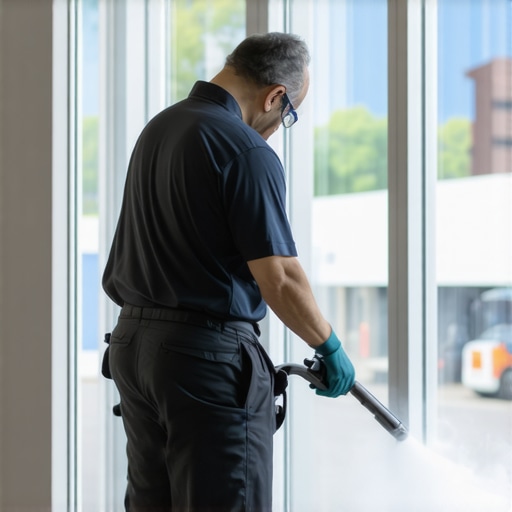
The Critical Nature of Clinical Fenestration Maintenance
In the high-stakes environment of a healthcare facility, a window is never just a piece of glass. It is a critical component of the building envelope that must manage thermal transfer, air infiltration, and most importantly, biological containment. When we discuss the sterilization of window tracks in hospitals, we are moving beyond the realm of a standard window cleaner and into the territory of infection control. A dirty track is not just an eyesore, it is a reservoir for pathogens that can be aerosolized every time the operable sash is moved. I have spent over two decades examining the failure points of commercial glazing, and the track is consistently the most neglected area. We see dust, skin cells, and moisture collect in the sill pan, creating a biofilm that defies standard wiping methods. This is where professional steam sterilization becomes the only viable path to maintaining a sterile field.
“Installation is just as critical as the window performance itself. A high-performance window installed poorly will fail, especially when subjected to the rigors of clinical maintenance protocols.” – AAMA Installation Masters Guide
The Condensation Crisis: A Narrative of Microbial Risk
A few years ago, I was called into a neonatal intensive care unit in a northern climate where the facility manager was in a state of panic. They believed their new high-performance windows were failing because they saw liquid water pooling in the tracks during the dead of winter. The assumption was a seal failure requiring a massive window repair project. I walked in with my hygrometer and a thermal imaging camera. It was not a window failure; it was a maintenance and lifestyle crisis. The indoor humidity was being pushed to 55 percent to protect the infants, while the outdoor temperature was negative ten degrees. The dew point was being hit right at the aluminum glazing bead. Because the tracks had not been properly sterilized, the standing water was feeding a colony of black mold. I had to explain that they did not need to replace windows; they needed a pressurized steam protocol to kill the spores and a reconfiguration of their HVAC output to move air across the glass surface. This experience solidified my belief that steam is the only tool for deep-track clinical sterilization.
The Physics of Dry Steam in Glazing Systems
Using steam on a window system requires an understanding of thermal stress. If you blast a cold pane of annealed glass with 300-degree steam, you risk a thermal stress fracture that will necessitate an immediate window repair. In a hospital, we are usually dealing with tempered or laminated safety glass, which has higher resistance, but the principle remains. We utilize “dry steam” which contains only about 5 percent to 6 percent water. This allows us to reach temperatures that denature proteins and kill 99.9 percent of bacteria and viruses without flooding the rough opening. When the steam hits the weep hole system, it flushes out debris that a vacuum or brush cannot reach. You must understand the shingle principle: water must always have a downward, unobstructed path to the exterior. If your steam cleaning process clogs these holes with dislodged gunk, you have just created a future rot problem for the shim spaces and the wall cavity.
“The presence of moisture within the window system, if not properly managed through drainage or evaporation, will inevitably lead to the degradation of peripheral components and building health.” – ASTM E2112 Standard Practice
Technical Execution of the Sterilization Method
To perform this correctly, the technician must first inspect the weatherstripping. Steam can cause low-quality vinyl or foam seals to lose their elasticity, a common issue when people try to replace windows with cheaper alternatives. Once the integrity is confirmed, the steam nozzle is moved at a rate of one inch per second along the track. This dwell time is vital for sterilization. We focus specifically on the junction between the sash and the frame, where the glazing bead meets the glass. This is a primary collection point for contaminants. In northern climates, where the U-Factor is the priority, we must be careful not to overheat the spacer bar between the glass panes. If the internal desiccant is overwhelmed by a sudden spike in temperature and moisture, you could cause a secondary seal failure, leading to permanent fogging of the unit. This is why a master glazier, not just a general window cleaner, should oversee hospital sterilization protocols.
When Sterilization Reveals the Need for Repair
During the cleaning process, you will often find that the operable hardware is corroded or the sill pan is cracked. If the steam reveals deep-seated rot or if the flashing tape behind the frame is visible and peeling, the conversation must shift. You cannot clean your way out of a structural failure. In many older facilities, the cost of ongoing window repair on obsolete aluminum frames outweighs the capital expenditure to replace windows with modern, thermally broken fiberglass units. These newer units offer better SHGC (Solar Heat Gain Coefficient) ratings and are designed with much smoother tracks that resist the accumulation of biofilms, making future sterilization cycles much more effective. In a hospital, the ROI of a window is measured in patient outcomes and infection rates, not just energy bills. The precision of your maintenance determines the lifespan of the building envelope. If you manage the moisture, you manage the health of the room.