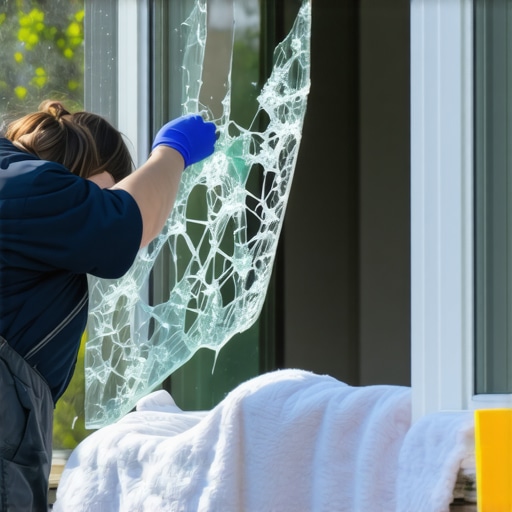
The Critical First Minutes: Safety and Containment
The sound of shattering glass is unmistakable. It is the sound of your building envelope failing in real-time. Whether it was a localized thermal stress fracture or an external impact, a shattered front window is more than an inconvenience; it is a breach of security and a thermal disaster. As someone who has spent over two decades in the glazing industry, I have seen every possible failure mode. The very first thing you must do is secure the area. Keep children and pets away from the fall zone. Glass shards, especially from non-tempered annealed glass, can travel surprisingly far and remain hidden in carpet fibers for years. Put on heavy-duty leather work gloves and thick-soled shoes immediately. This is not the time for aesthetic concerns; this is about preventing a trip to the emergency room.
I once pulled a vinyl window out of a house in a damp coastal region and the header was completely black with rot. Why? The previous installer relied on the nailing fin instead of proper flashing tape. When the window eventually took a minor hit and cracked, water was already deep in the wall cavity. That is why the immediate response to a break is so vital. If you do not manage the moisture and the opening correctly, you are inviting structural decay. While you might be tempted to call a window cleaner to help with the mess, your first call should be to a professional who understands the structural integrity of the rough opening. You need to assess if the frame is still square and if the sill pan has been compromised by the impact.
The Anatomy of the Break: Why Did It Happen?
Before you jump into a window repair, you must understand what failed. If the glass broke into thousands of tiny, relatively harmless cubes, you had tempered safety glass. This is standard for modern doors and large windows near floor level. If it broke into large, jagged daggers, it was annealed glass. This tells me your home might be older and likely lacks modern thermal efficiencies. We often see ‘spontaneous’ breakage in high-performance units due to nickel sulfide inclusions or extreme thermal gradients. For example, if you have heavy drapes closed on a freezing day, the heat trap between the glass and the fabric can cause the inner pane to expand at a different rate than the outer pane, leading to a stress crack. This is the ‘Glazing Zooming’ reality: every millimeter of glass is under constant physical pressure from the atmosphere and temperature.
“Installation is just as critical as the window performance itself. A high-performance window installed poorly will fail.” AAMA Installation Masters Guide
If you are in a northern climate like Chicago or Minneapolis, a shattered pane is an emergency because of the U-Factor. The U-factor measures the rate of non-solar heat loss. Without that glass, your furnace is essentially trying to heat the entire neighborhood. In these regions, we focus on Low-E coatings on Surface #3 to reflect heat back into the room. If you are in the south, the Solar Heat Gain Coefficient (SHGC) is your primary concern. A hole in your wall in Phoenix means the radiant heat from the sun will spike your interior temperature within minutes. For southern repairs, we look for glass with coatings on Surface #2 to reject that heat before it even enters the home.
The Professional Board-Up: Managing the Rough Opening
Temporary containment is a science. Do not simply tape a trash bag over the hole. This provides zero security and even less thermal resistance. You need to measure the rough opening and the sash dimensions. Use 1/2 inch or 3/4 inch exterior grade plywood. If the frame is still intact, you can often use ‘pressure-fit’ blocks. Cut the plywood to the size of the glazing bead area. Use 2×4 bracing on the interior to ‘sandwich’ the plywood against the exterior frame. This prevents you from driving screws directly into your operable window frame, which would turn a window repair into a full-scale replace windows project. A master glazier knows that every hole you drill into the frame is a potential leak path for future water intrusion.
While the window is boarded up, use this time to inspect the flashing tape and the weep holes. Weep holes are the small outlets at the bottom of the frame that allow moisture to escape. If these are clogged with debris or were painted over by a previous owner, your frame is likely holding water. This is the ‘Installation Autopsy’ phase. I have seen countless windows where the shim was placed directly over a weep hole, effectively damming the water inside the wall. If you see signs of mold or soft wood on the interior muntins or the sill, a simple glass replacement will not suffice. You are looking at a full-frame tear-out.
Decoding the Performance Labels for Replacement
When you finally sit down to replace windows, do not get distracted by the salesman’s pitch about ‘triple-pane krypton’ unless the math supports it. Look at the NFRC (National Fenestration Rating Council) label. This is the only way to compare apples to apples. If you live in a climate with extreme winters, the U-Factor is the only number that matters. You want a value below 0.27. If you are in a hurricane-prone or coastal area, the DP (Design Pressure) rating is paramount. This measures how much wind force the window can take before it blows out or leaks water. In these zones, we utilize laminated glass, which is essentially two panes of glass bonded with a clear interlayer of polyvinyl butyral (PVB). Even if it shatters, the glass stays in the frame, maintaining the building’s pressure seal.
“Proper flashing is the primary defense against water intrusion in the fenestration assembly.” ASTM E2112
Consider the frame material carefully. Vinyl is the most common because it is cost-effective and has decent thermal properties, but it has a high coefficient of thermal expansion. This means it grows and shrinks significantly with the seasons. If not installed with the correct tolerances in the rough opening, the frame can bow, causing the sash to bind. Fiberglass is more stable and mimics the expansion rate of the glass itself, leading to fewer seal failures over time. Wood offers the best insulation and aesthetic but requires a level of maintenance that many modern homeowners are not prepared for. Regardless of the material, the glazing bead must be perfectly seated to prevent air infiltration.
The Reality of Window Replacement ROI
Many companies will tell you that new windows will pay for themselves in energy savings within five years. As a veteran in this trade, I am here to tell you that is rarely true. The real ROI of a window replacement after a shatter event is comfort and structural protection. You are eliminating drafts, reducing UV damage to your furniture, and ensuring that water is being managed by a modern sill pan and flashing system. A high-quality installation will last 30 years, while a ‘caulk-and-walk’ job will be leaking within three. When you hire a contractor, ask them about their shim placement and how they intend to seal the rough opening. If they do not mention backer rod and high-grade silicone sealant, they are not the right professionals for the job.
Managing a shattered window is about technical precision. From the moment the glass breaks to the final glazing bead being snapped into place on the replacement unit, every step must be calculated. Do not settle for a quick fix that ignores the physics of your specific climate. Whether you are dealing with the intense solar load of the south or the biting cold of the north, your windows are the most technical part of your home’s exterior. Treat them with the respect that 25 years of glazing experience dictates. Always verify the NFRC ratings and never skip the sill pan during a full-frame replacement. Your home’s longevity depends on it.